Ensuring food security during extreme weather events by building supply chain resilience
By Rania Nasrallah-Massaad
One of the major lessons from the COVID-19 pandemic is how frail supply chains are during a crisis. With borders shutting down to travel and uncertainty about the resulting financial turmoil, governments were struggling to secure food supplies and other commodities. Nobody will forget the initial panic over toilet paper shortages, where a trip to major chain stores like Costco and Walmart was comparable to the famous “gold rushes” of the 19th century. Social media posts and memes about people stockpiling toilet paper or finding creative substitutions went viral within days of the initial lockdown, and this was only a snapshot of how helpless we were. It was terrifying to see empty food shelves and not know what to expect next: we were facing our apocalypse.
The world is also confronting a climate crisis that threatens our food security, among other things. As a result of climate change, we are seeing more extreme weather events that are affecting many sectors, disrupting food supplies, and causing considerable socioeconomic challenges. According to the United Nations, it is not too late to win the race against climate change “This will require fundamental transformations in all aspects of society — how we grow food, use land, transport goods, and power our economies.” A better understanding of the supply chain vulnerabilities of past crises can help build resilience to ensure that businesses and governments are better prepared to respond to, and recover from, extreme weather events or other crises in the future.
What is this research about?
Professor Sara Hajmohammad has been awarded a Social Sciences and Humanities Research Council Insight Grant to study how supply chain resilience can be enhanced in response to extreme weather events. She will explore the vulnerabilities of supply chain systems during past crises to develop a model that can help build resilience capabilities in supply chains. Her research will examine multiple tiers of the supply chain system, including a business’s own operations, its upstream suppliers, or its downstream customers.
Project title: Enhancing Supply Chain Resilience to Extreme Weather Events
When asked about her interest in this project, Professor Hajmohammad said “I have been interested in the sustainability of supply chains for a decade now. Although climate change seems to be inevitable, businesses and their supply chains are not prepared to deal with its intertwined socio-economic consequences. The pandemic showcased the dismissive mentality, ill-preparedness, and experimental responses of businesses to such rare and unlikely events. I believe now is the best time for managers to find out how they can build resiliency into their operations and supply chain processes because the lessons and takeaways from the COVID era are still fresh in their minds. This project is set in the context of food supply chains because they are highly susceptible to extreme weather events and crucial in fulfilling social needs. However, part of the results could be generalized and applied to other supply chain contexts as well.”
Who will benefit from this research?
The knowledge gained from this work will shed light on how businesses can secure their supply chains and overcome the negative consequences of extreme weather events by enhancing their ability to prepare for, respond to, and recover from, these events. The insights generated will also help guide future research on supply chain resilience in the face of rare and highly unpredictable events, like pandemics and extreme weather. They will also help the food sector, and other sectors, understand the threat that climate change poses to their supply chains and help these sectors transform their practices accordingly. The resilience models developed will also help community organizations and policy makers develop regulations and incentive programs to enhance community resilience.
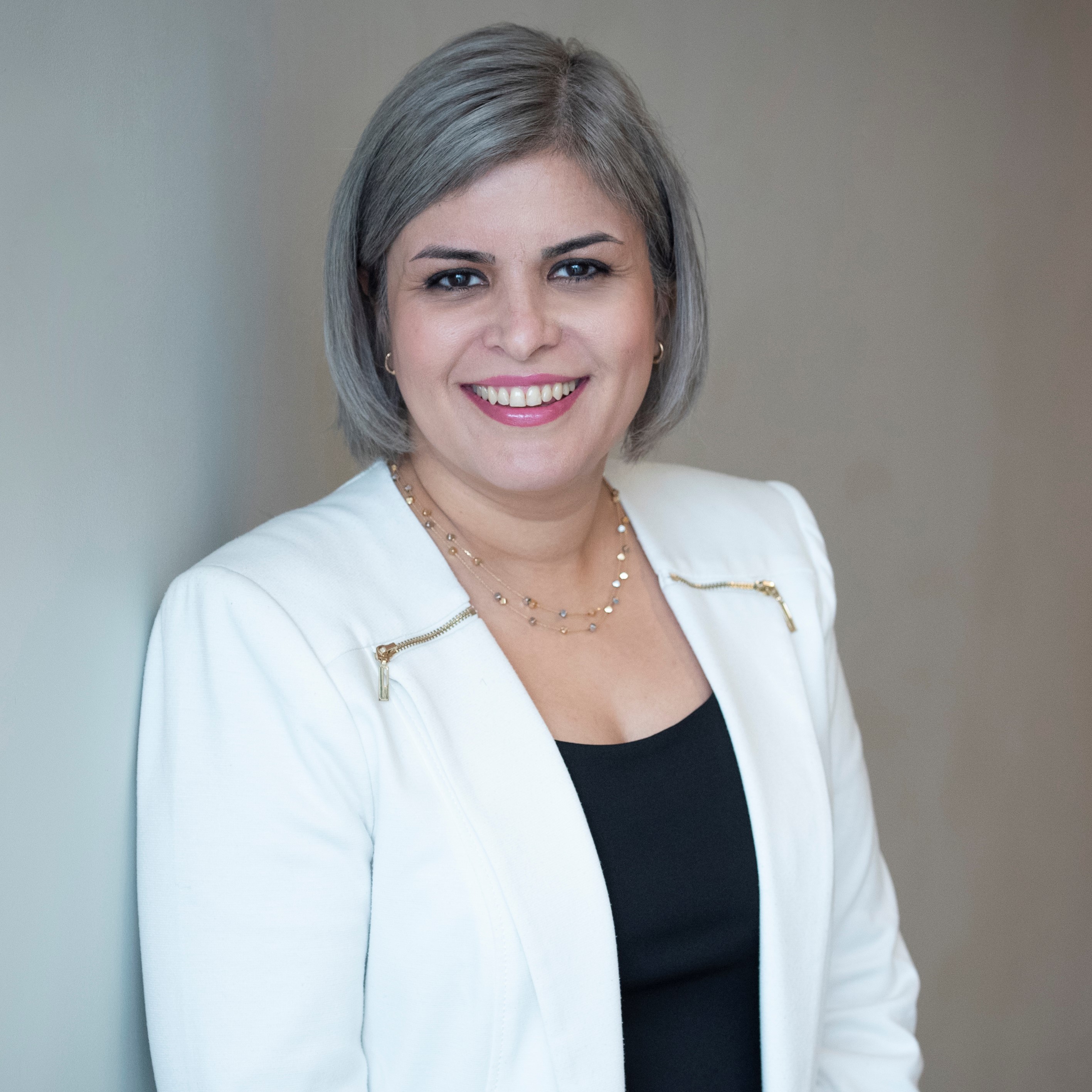
Dr. Sara Hajmohammad is an Associate Professor of Operations and Project Management at the Telfer School of Management, University of Ottawa. Prior to joining Telfer in July 2019, Sara was a Professor of Supply Chain Management at the Asper School of Business, University of Manitoba. Learn more about her work.

PhD Spotlight — Alexander Chung
By Rania Nasrallah-Massaad
Alexander Chung joined the PhD in Management program at Telfer in 2016, after receiving a master’s in systems science from uOttawa. He is working with Drs. Pavel Andreev and Lysanne Lessard in the Health Systems program. We interviewed him to learn more about his research interests in information systems and business analytics.
Why did you choose to study health systems? Any personal motivation behind your interest?
I chose to pursue a PhD in management and, specifically, management information systems because of its applicability and relevance in our everyday lives. Technologies continue to shape how we behave and it’s important to understand how these systems can be designed to support us to achieve behaviours that we desire.
What is your research about and what will it contribute to academic literature?
My research looks at how information systems can be designed to help users change existing behaviours and form new habits. To this effect, I’m developing a theory to explain and predict how information systems-supported habits are achieved. Based on this theory, I will derive actionable insights that systems designers and developers can use to create more effective solutions for users in various contexts.
You recently presented your research at the Hawaii International Conference on System Sciences. What are some highlights from it?
In this work, I derived actionable insights that can be used to build systems that help people break established habits and adhere to preventive behaviours (e.g., social distancing, hand washing) during pandemics. We demonstrated how the insights can be applied using an illustrative case of a student returning to school. Such a system would support her as she navigates the new policies and practices laid out to ensure a safe return to campus.
How can your thesis research improve the lives of Canadians?
The actionable insights derived from my thesis can impact how information systems are designed to better serve Canadians. The insights provide guidance for practitioners in both government and private industries to develop systems that can effectively support practices, such as the self-management of chronic diseases or the upkeep of personal health and hygiene for Canadians.

Telfer Forum - Learning Health Systems: Facilitating Health Care Innovation and Integration
Health care leaders and professionals have been working to make the health care system more agile and integrated. The COVID-19 pandemic has only exposed and accelerated the need for this transformation. Learning health systems align science, informatics, incentives and culture for continuous improvement and innovation. They allow health care organizations to share best practices and integrate new knowledge seamlessly.
On May 26, health system researchers and health care practitioners discussed the benefits and challenges of learning health systems. Lysanne Lessard (Telfer School of Management), Wojtek Michalowski (Telfer School of Management), Michael Fung-Kee-Fung (University of Ottawa and The Ottawa Hospital), and Peter Liu (University of Ottawa Heart Institute) also explained how researchers and practitioners can collaborate to implement this framework in Canadian health care organizations.
Would you like to learn more about learning health systems? Watch the event highlights now:
The Telfer Forum is a series of public events designed to connect thought leaders from the Telfer School of Management with the community. In these engaging conversations, academics and leading experts in the public and private sectors share their knowledge, to support organizations tackling our most pressing challenges. Learn more about our past Telfer Forums.
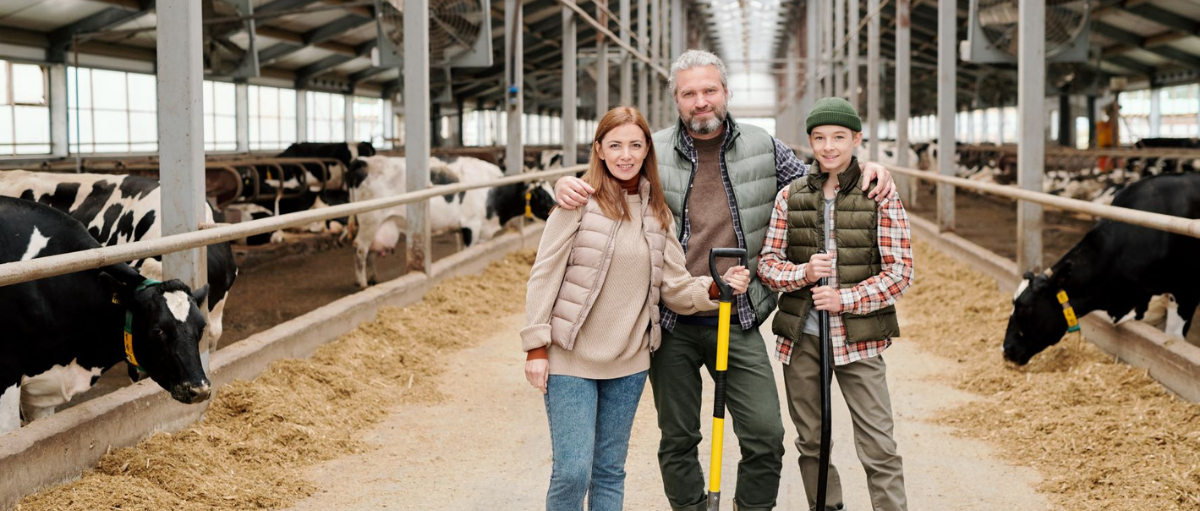
Family Businesses: When Gender Bias Influences Entrepreneurial Support for the Children
A new Telfer study shows that gender preference influences how entrepreneurial families prepare the next generation and support their business education and careers.
When nurturing the next generation, entrepreneurial families often prepare their children differently for careers, based on gender. Now, Telfer professors Peter Jaskiewicz, James Combs and Sabine Rau have shown how this gender bias affects the succession strategy in multi-generational family firms.
Gender bias influences how some families raise sons and daughters and whether they get involved in the family firm. But it also has long-lasting consequences even for children who don’t get involved in the family firm or who choose to pursue their entrepreneurial passion elsewhere.
Little support for daughters
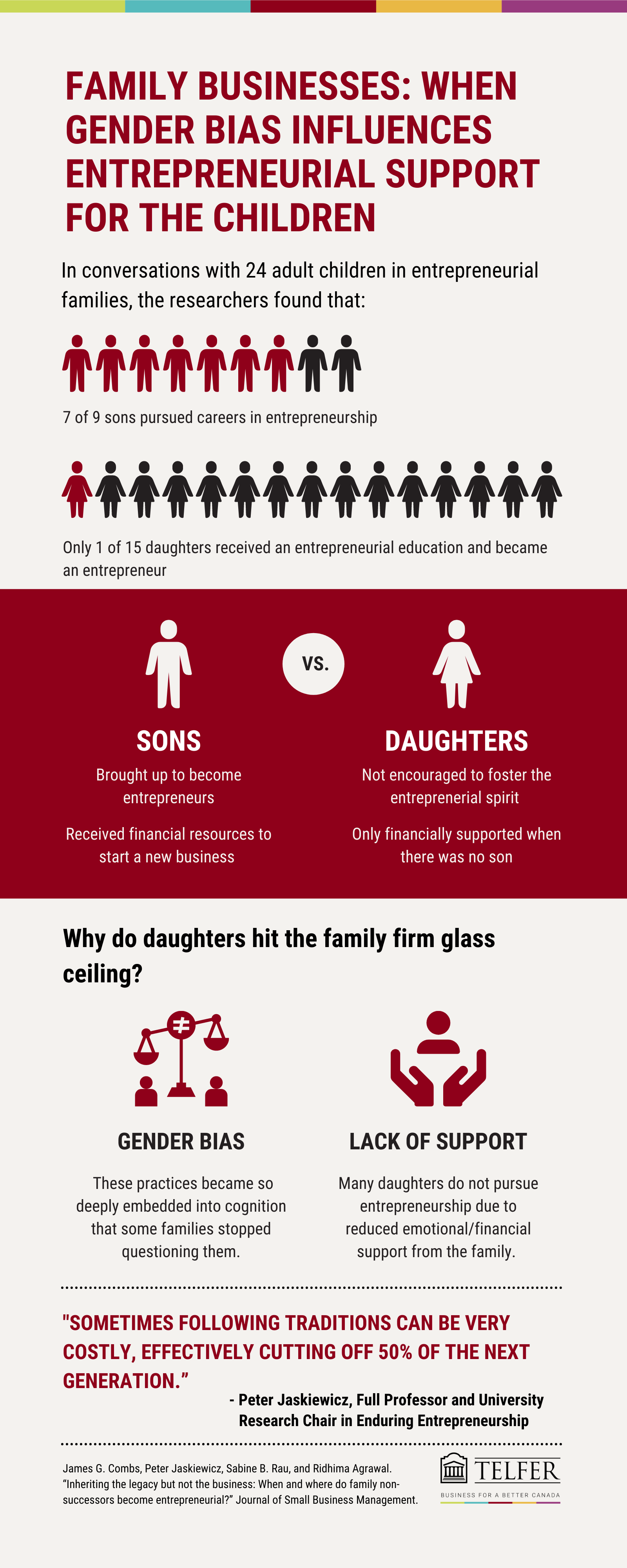
- Seven of the nine sons (78%) pursued careers in entrepreneurship.
- Only one of the 15 daughters (7%) received an entrepreneurial education and became an entrepreneur.
- Daughters were not encouraged to pursue an education in entrepreneurship, gain business experience or start new ventures.
- Families offered financial support or seed funding to sons who wished to start a new business, but not to daughters.
Sons were often brought up to be entrepreneurial, whether this meant taking over the firm, assuming a leadership role in another firm or starting their own venture. But daughters received little or no incentive to develop their own leadership skills and foster their entrepreneurial spirit.
The team also found some surprises:
- Even some of the less traditional families studied didn’t offer financial support for daughters to pursue entrepreneurship, although the daughters had business education and relevant experience.
- Daughters were only supported in entering the family firm’s leadership or starting their own businesses when there was no son.
Old traditions die hard
The researchers wondered why daughters hit the family firm glass ceiling, even in families with an entrepreneurial legacy. They noted that many of the multi-generational businesses studied were founded centuries ago. With the exclusion of women from power normalized in institutions like religion, law and the family, Jaskiewicz believes that “these practices became so deeply embedded into cognition that some families stopped questioning them.”
First-hand examples of gender bias
Emma O’Dwyer, regional manager at Family Enterprise Canada and Susan St. Amand, founder, CEO and president of Sirius Group Inc. and Sirius Financial Services, grew up in families that owned firms. O’Dwyer recognizes how hard it can be for the next generation to identify or challenge traditions. “Gender bias can be present in family interactions every day, but as a child you just do not know any different to what you are experiencing,” she says.
Thinking of her family, St. Amand says that “Daughters were meant to find husbands, marry and stay home to raise children and grandchildren.” As for O’Dwyer’s family, the boys were far more encouraged to develop their professional skills at a very early age. “Once they were 14, they went to work in the family business for long days throughout the summer, no questions asked.”
Long-lasting impact on women
For Jaskiewicz, “Families need to understand that gender bias favours men while discouraging women from building their legacies in the family business or pursuing entrepreneurial experiences elsewhere,” he explains. In doing so, these families limit women’s contribution to business.
He also believes that gender bias also has long-lasting consequences. “Even when these female non-successors have opportunities to acquire relevant knowledge and work to start a business, becoming entrepreneurial can still be an uphill battle,” he says.
Many women don’t pursue entrepreneurship outside of the family because of the reduced emotional and financial support from the family. Jaskiewicz adds:
“Sometimes (families) following traditions can be very costly, effectively cutting off 50% of the next generation.”
Read the study
James G. Combs, Peter Jaskiewicz, Sabine B. Rau, and Ridhima Agrawal. “Inheriting the legacy but not the business: When and where do family non-successors become entrepreneurial?” Journal of Small Business Management.
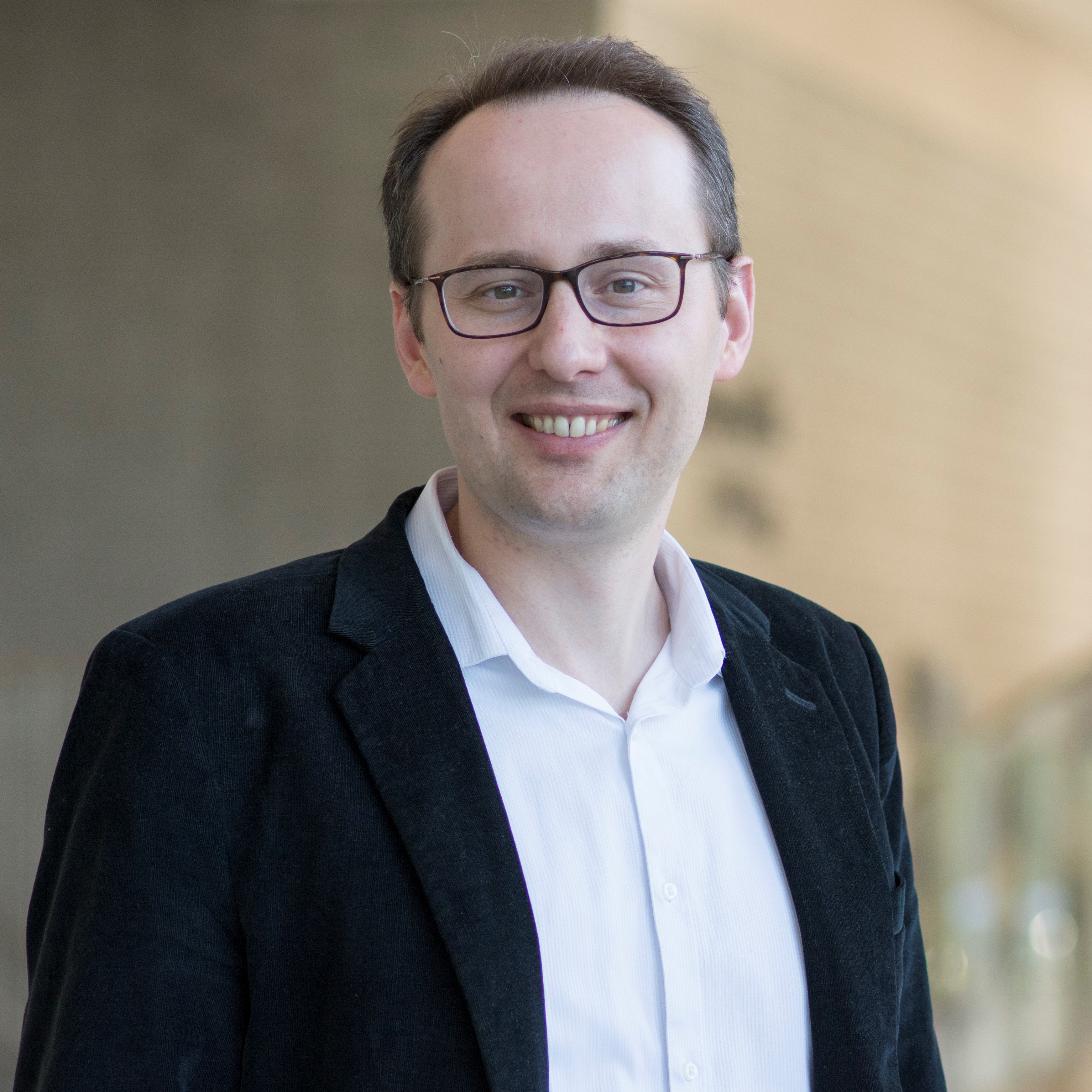
Professor Jaskiewicz is a Full Professor and University Research Chair in Enduring Entrepreneurship at the Telfer School of Management. His research focuses on entrepreneurship and family business. Learn more about his work.
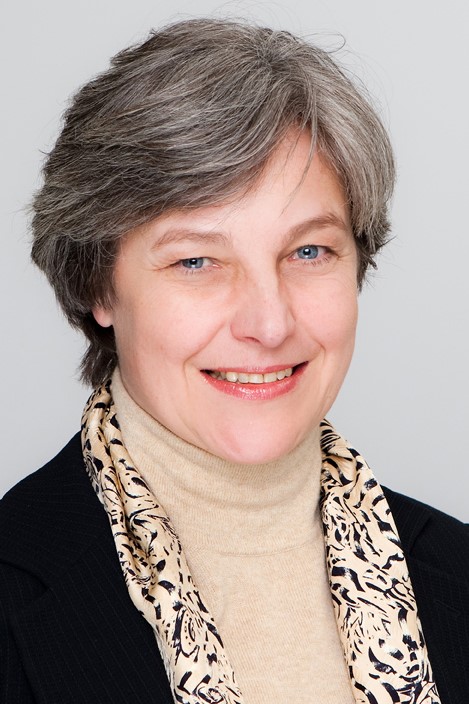
Sabine Rau is a Visiting Professor at the Telfer School of Management and at ESMT, Berlin. She is also is Partner at Peter May Family Business Consulting. Her research focuses on the intersection of family and family business.

James Combs is a Visiting Professor at the Telfer School of Management and a Full Professor at the Univeristy of Central Florida. His research interests include franchising, the role of family dynamics in family firms, and the factors that foster entrepreneurship in family firms. Learn more about his research.
Improving wildfire emergency evacuation responses by modelling best outcomes
By Rania Nasrallah-Massaad
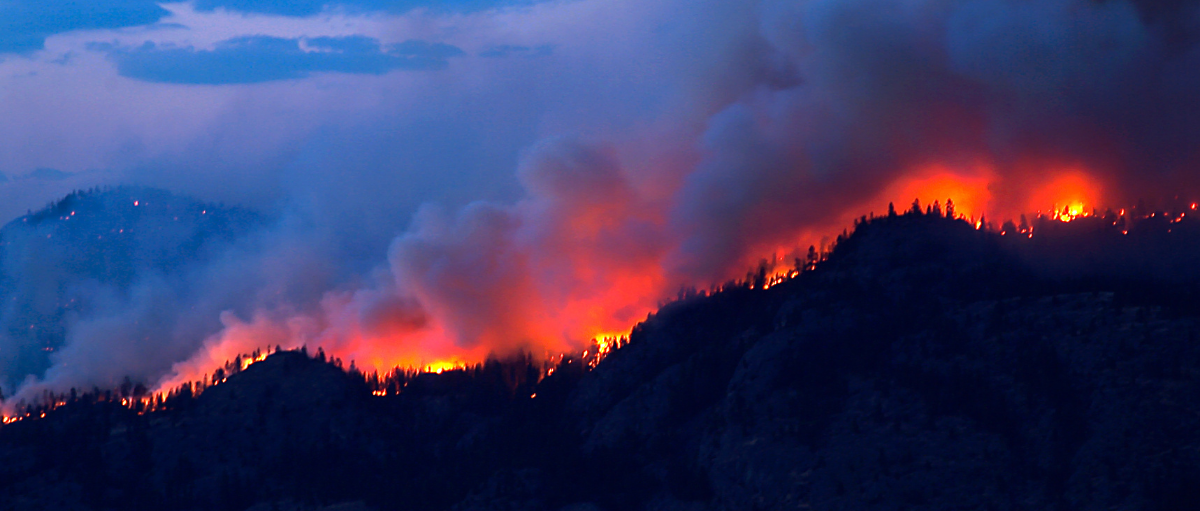
In 2020, while the world was confronting the COVID-19 pandemic, record-breaking wildfires were emerging globally, devastating Brazil and the Amazon, the Arctic and Siberia, Australia, and California. The resulting damage to communities, the loss of billions of animal lives, and the human death toll, will have a lasting impact for decades to come.
What is causing these wildfire events? Surely a combination of various factors may be at play, including climate change, human behaviour, population growth, and inappropriate forest management. Wildfires can have many detrimental consequences to society: they uproot communities, incur costly damage to property and infrastructure, and place immeasurable demands on resources. Since dangerous wildfires will continue to plague our future, we clearly need to prepare by better coordinating emergency wildfire response procedures and wisely allocating resources. As stated in the Climate Atlas of Canada, “Fire is inevitable, and climate change will make it more common and more dangerous: it only makes sense to plan how we build, work, and live near forests with fire safety in mind.”
Those who fight wildfires use simulation modelling and other advanced analytical techniques to guide their decision-making, but the current tools do not account for all the decision support that emergency services need. For example, these tools do not consider the evolution of the fire and the changing resources needed at different stages of the emergency response. We can mitigate the devastating impact of a fire by creating better evacuation plans and improving fire management responses, but to do so, we need more sophisticated integrated models to better coordinate evacuation efforts and resource allocation, thereby minimizing damage and saving lives.
What is this research about?
Telfer School of Management professors Jonathan Patrick and Antoine Sauré, and their doctoral student Afshin Kamyabniya, received a National Research Council of Canada (NRC) Ideation Fund – Small Teams Initiative grant to study evacuation protocols and resource allocation during wildfires. In partnership with the NRC Fire Safety Team and collaborators from other universities, Telfer researchers will contribute to the Resilience and Adaptation to Climatic Extreme Wildfires (RACE Wildfires) project.
They will develop integrated simulation-optimization modelling tools to improve operational evacuation decisions at multiple stages of a wildfire response plan. They believe there is a need for an integrated tool that ensures efficient and safe evacuation while also making sure that the right resources are delivered to the right place at the right time. This would help coordinate search and rescue operations with follow-up services and ensure that adequate resources are available as needed.
We asked Jonathan Patrick about his personal motivation for this project: “I have always been motivated by doing research that has a discernible societal impact. Disaster management, however, was a new area for me that we began to explore as the result of Afshin’s strong interest in the area. This partnership with the NRC allows us the opportunity to apply some of the tools we have developed in other settings to disaster management, and hopefully improve the ability of governments to mitigate the negative impacts of wildfires.”
What is the potential impact of this research?
This research will give insight into the resource requirements that arise throughout the wildfire evacuation response and follow-up period to help coordinate the emergency response efforts and better allocate resources. The modelling tool developed will help inform decision-makers of the best strategies to employ in real time to reduce the ecological and socio-economic impacts of wildfires.
We asked Antoine Sauré what he thinks will be the major impact of this research. “The decision support tools resulting from this research should allow emergency responders and managers to allocate and dispatch resources in less time and in a more efficient manner. This, in turn, should ultimately translate into a positive impact by reducing human losses, infrastructure damage, and economic costs in Canada and other similar countries that are constantly exposed to the potential impact of extreme wildfires.”
Ultimately, in a world where extreme weather events and catastrophic wildfires will be widespread, we can lessen the social, economic, and political consequences with the help of integrated modelling tools to guide decisions and mitigate risks to communities and first responders.
How does a graduate student benefit from this research and working with a partner organization?
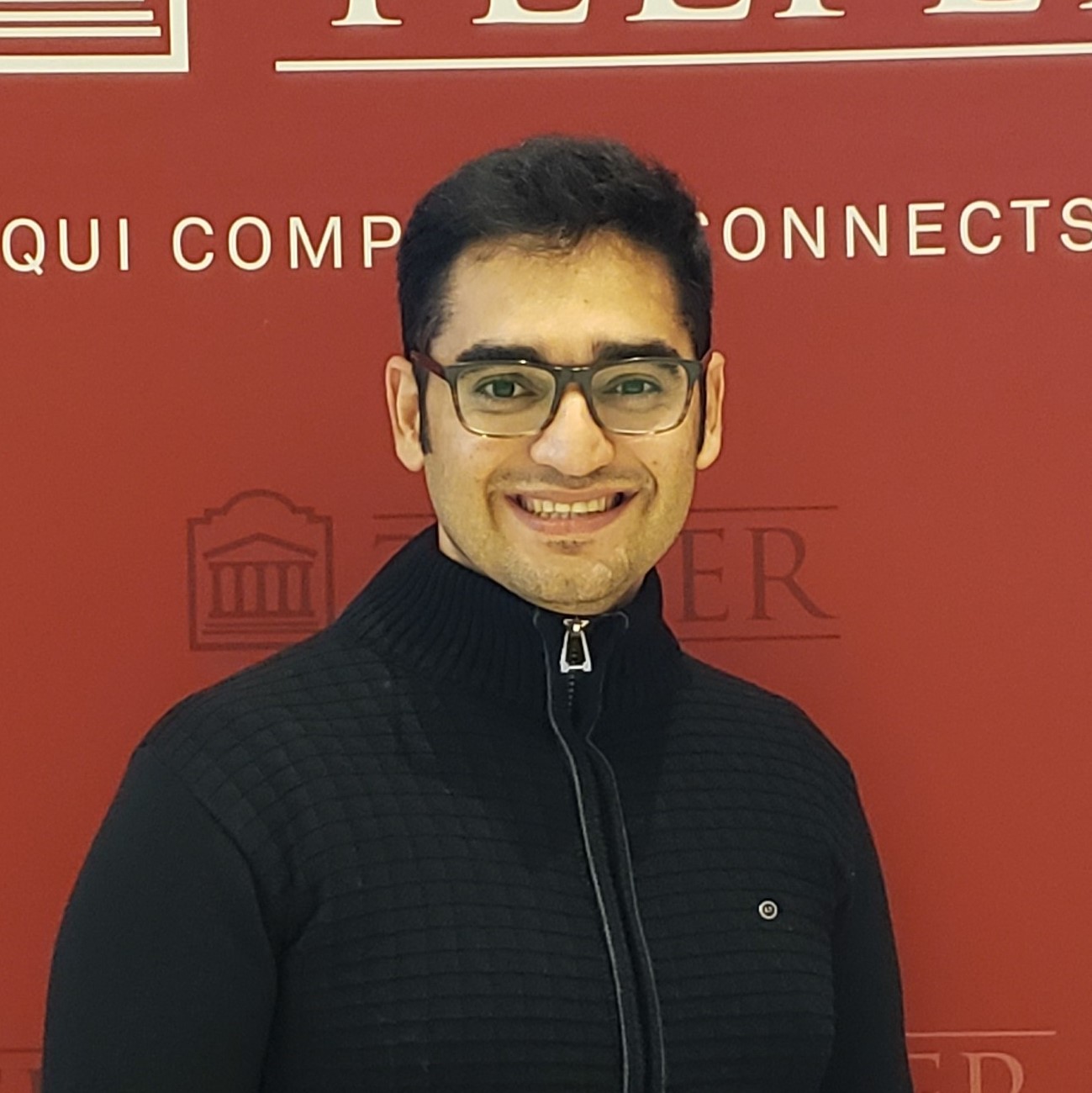
“The importance of managing humanitarian relief operations has been my passion since 2015, and I have come to realize that one of the most neglected research areas is wildfire response. I became involved in such projects to help increase community resilience against wildfires. My main interest in doing any research on wildfires is to provide the affected population with enough relief commodities and improve the evacuation of the injured from the affected regions. I joined the NRC fire safety department to help design an integrated logistics network to enhance wildfire responses in real time.”
When asked what he hopes to gain from the project and from working with the NRC, he replied, “I am learning a lot about fire safety and wildfire response management by working with great researchers and collaborators at the NRC. I hope that working on such a critical project contributes to the research community and helps provide the relief agencies and government with more efficient relief logistics to fight Canadian wildfires. I expect to gain significant experience and knowledge to pursue my future career in the disaster management field, either in academia or industry. Finally, I believe that undertaking NRC research will encourage other students and researchers across Canada to be more engaged in humanitarian relief operations.”
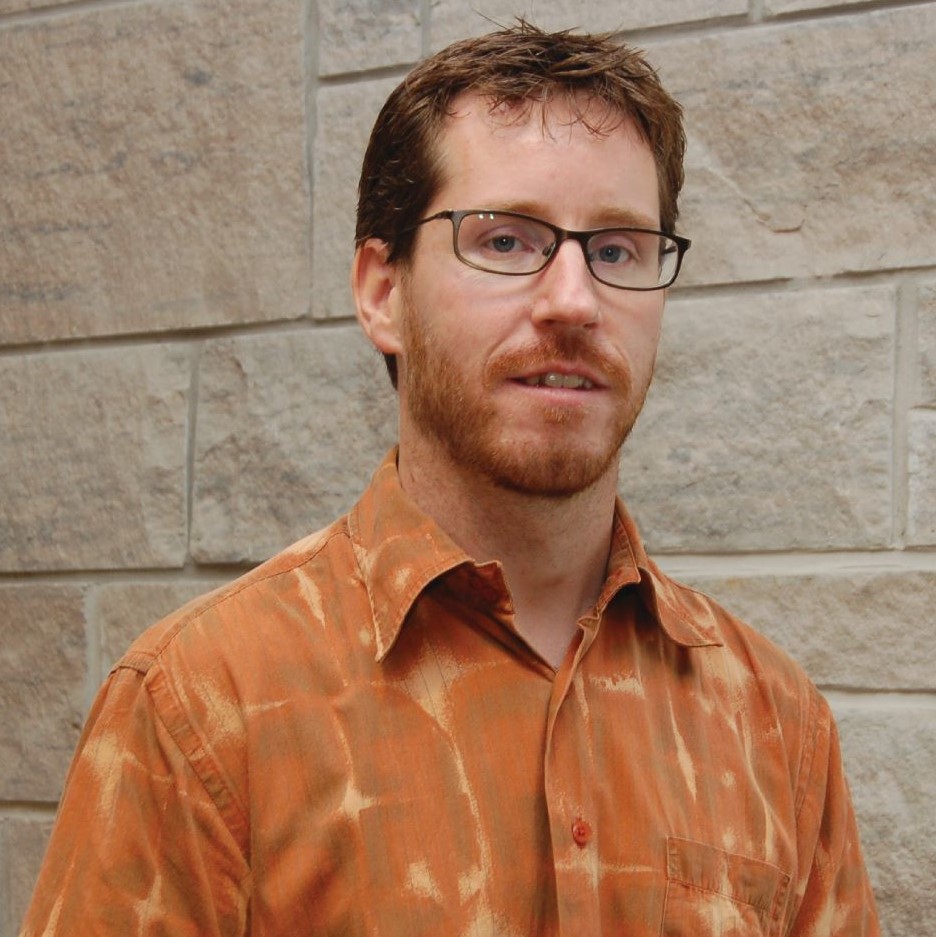
Jonathan Patrick is a Full Professor at the Telfer School of Management, where he is also Vice-Dean (Faculty) and Program Director, MSc in Health Systems. His current research interests are in capacity planning within health care as well as continuing to explore scheduling challenges. Learn more about his work.
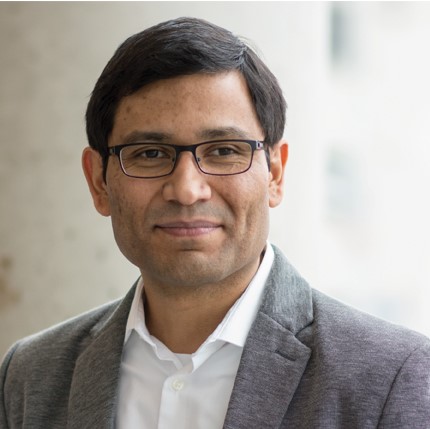
Antoine Sauré is an Assistant Professor at the Telfer School of Management. His research interests include advanced modelling and decision-making under uncertainty and their applications to large-scale problems in service operations. Learn more about his work.
- Governance and Corporate Social Responsibility: How Well-Connected and Diverse Boards Can Help Companies Tackle the World’s Biggest Challenges
- Does Corporate Social Responsibility Performance Depend Primarily on its Location?
- The Future of the Family Business: 4 Strategies for a Successful Transition
- Gender Entrepreneurship Education and Training Plus: Building Entrepreneurial Ecosystems to Support Underserved Entrepreneurs