
IT, ADHD and Inclusion: Towards Better Practices for Staff and Managers
How can information technologies be used to increase inclusion of staff members with attention deficit disorder (with or without hyperactivity) in the workplace? This is the question that Professor Muriel Mignerat and her colleagues will try to answer thanks to a SSHRC Insight Development Grant they’ve recently received.
When we asked Mignerat why this project was important, she said, “Between 25% (University of Ottawa) and 55% (Université de Sherbrooke) of students living with a disability registered with their respective support centres have an ADHD diagnosis and have therefore received accommodations during their studies. There are more and more of these young professionals in the workforce (the annual increase in graduates with ADHD entering the workforce is around 10%!), and the numbers are probably underestimated, given the stigmatization, prejudices and stereotypes associated with the diagnoses. Non-neurotypical people are often seen initially as employees who’ll work better alone, in lower-level or highly technical or specialized jobs. However, accommodations (processes, technologies) to help break the vicious circle of exclusion and prejudice are worthy of consideration in a situation of full employment where it’s in every employer’s interest to keep their talent.”
A collaboration with uOttawa’s CO-OP programs and the Student Academic Success Service (SASS)
Mignerat will start her study by conducting a series of interviews with students in CO-OP placements, who normally enjoy SASS support during their time at the University. This qualitative study, carried out with the help of the CO-OP office and SASS, will enable greater understanding of how IT, taking into account different work settings (in person or from home), can help or hinder performance of staff with ADHD.
From a management point of view, the results of this research will allow for a better understanding of how organizations can act so that IT plays a positive role for staff with ADHD, furthering their inclusion in organizations and in society. Mignerat says, “When I suggested that they take part in this study, the CO-OP service and SASS immediately accepted, with an enthusiasm I didn’t expect. The employees I met to prepare the project would tell me that they are often contacted by our young alumni’s employers, who want to know how to better equip them, what technologies to use and how ... And at this point, University employees don’t know what to answer.”
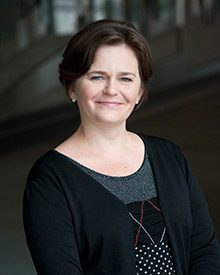
Dr. Muriel Mignerat is a professor of management at the Telfer School of Management. She specializes in information technologies, particularly IT project management practices. Recently, she has been interested in the use of IT by people with special needs or living with a cognitive disability. She helped found Open, a social enterprise, where she is an administrator.
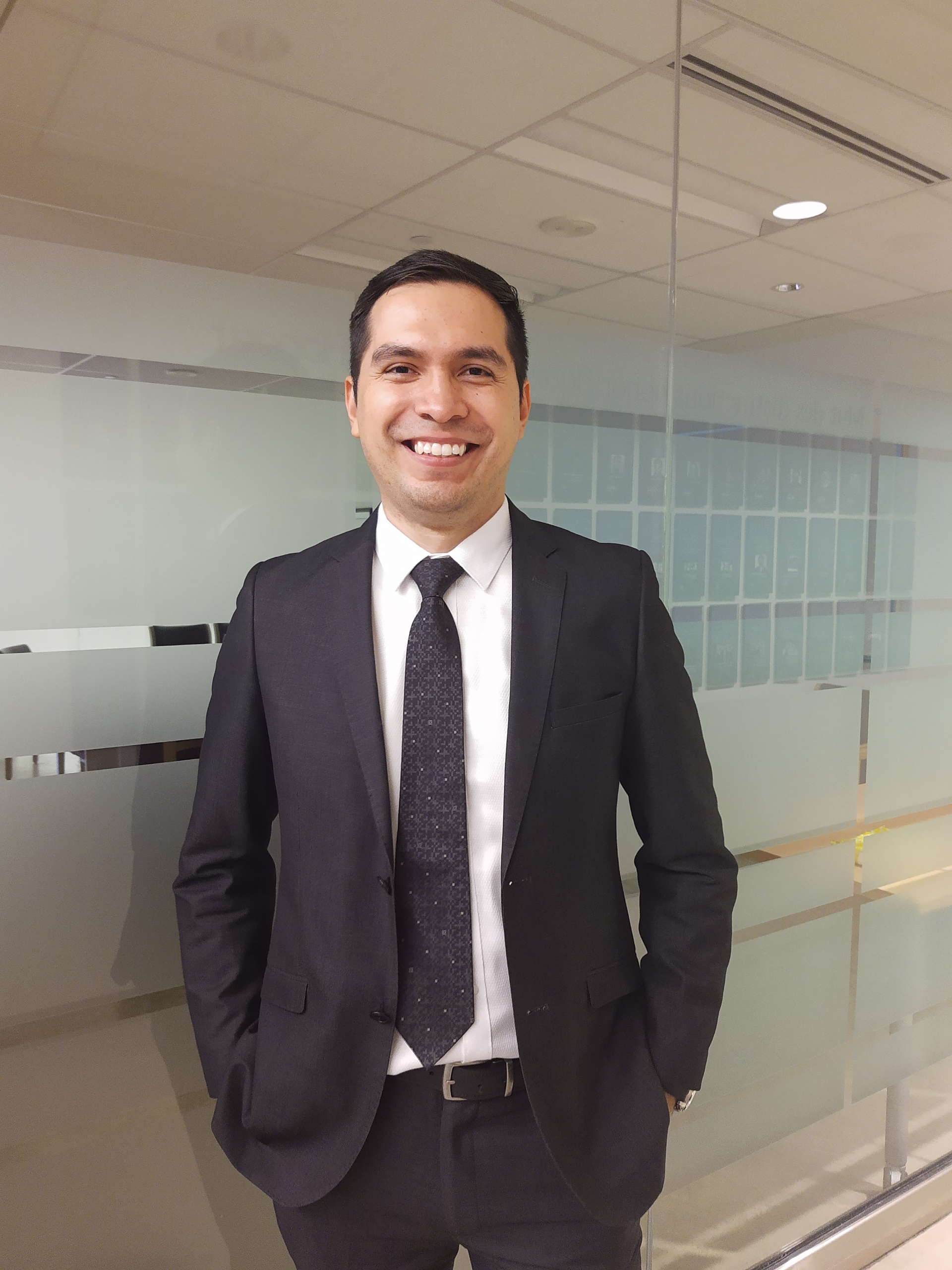
PhD Spotlight – Renato Lazo Paz
Renato Lazo Paz is a Ph.D. candidate in the Finance specialization working under the supervision of Professor Fabio Moneta. His current research interests center around institutional investors, empirical asset pricing, and behavioral finance. His prior research has focused on topics such as the mutual fund flow-performance relation in emerging markets, the relation between fixed-income funds and the real economy, and the behavioral determinants of capital structure decisions.
We interviewed Renato to learn more about his research interests.
Why did you choose to study finance at Telfer?
After finishing my undergraduate studies in Industrial Engineering, I started working as a Financial Consultant and Buy-side analyst at a small consulting firm in Peru. However, my daily work left me with more questions than answers. That is when I knew I wanted to start a career in academic finance.
What is your research about and what will it contribute to academic literature?
In my doctoral thesis, I explore aspects related to empirical asset pricing and institutional investors (e.g., mutual funds, Hedge funds). I hypothesize that mispricing can arise and persist due to trading activity by such investors. Moreover, I analyze if this effect is an unintended consequence of trading on popular investment strategies. My research aims to contribute to the current discussion on institutional investors' role in financial markets' stability and efficiency.
You recently presented research at several conferences. What are the highlights?
The first chapter of my doctoral thesis, co-authored with professors Fabio Moneta and Ludwig Chincarini, has been presented at several finance conferences. This paper shows that crowded trading positions, in which many investors hold the same securities, pose additional risks to investors due to concerns of sudden price declines when facing challenging market conditions. This situation may limit price correction, reducing market efficiency.
What impact could your research have in financial markets?
A growing concern in financial markets is the dominant role that institutional investors have in capital markets. This situation led to increased ownership concentration in a few investors, which posed new challenges to overall market efficiency. My thesis analyzes how this phenomenon creates additional risk concerns for investors. My objective is to provide investors with information that helps them forecast increasingly risky positions to help them reduce the negative impact of worsening market conditions.
By Kelsey Oldland

PhD Spotlight – Andrew Scarffe
Andrew Scarffe joined Telfer’s PhD in Management program in 2018, with a concentration in Health Systems. Under the supervision of Dr. Kevin Brand and Dr. Wojtek Michalowski, Andrew’s research focuses on people’s decision-making as it relates to preventative medicine decisions. Andrew is the recipient of the Ontario Graduate Scholarship, the 2022 & 2021 Telfer PhD Engagement award, the Queen Elizabeth II Graduate Scholarship for Science and Technology, and the Mitacs Accelerate Entrepreneurship Scholarship. He is also the student representative on the Executive Committee for the Healthcare Management Division at the Academy of Management.
We interviewed Andrew to learn more about his research interests, more specifically, individual decision thresholds regarding preventative health measures.
Why did you choose to study health systems at Telfer?
Before joining Telfer, I worked for the Ivey International Centre for Health Innovation at the Ivey Business School (Ivey) at Western University. During this time, I realized that health systems management could greatly benefit from insights gleaned from the management research and organizations found outside the traditional health systems. As a result of my interest in coupling management and health systems, I was drawn to Telfer’s PhD in Management program that had a concentration in health systems.
What is your research about and what will it contribute to academic literature?
My doctoral research focuses on why people make different decisions as it relates to preventative health measures (e.g., vaccines, face masks, lifestyle changes, cancer screening, etc.) even when they are presented with the same information. Through exploring an individual’s decision threshold, I am looking to identify how an individual’s cultural worldview predisposes them to anticipate greater (or lesser) regret as it relates to uncertain outcomes (e.g., adverse events associated with treatment, adverse events associated with forgoing treatment, etc.), which consequently changes an individual’s decision threshold. My research contributes to the scientific knowledge by coupling worldview and a decision model that takes into account so-called objective and subjective points of view (the dual processing model of decision-making) as it relates to the assessment of implicit decision thresholds.
You recently published research in the BMC journal Cost Effectiveness and Resource Allocation. What are the highlights from that study?
Aside from my doctoral research, I have a program of research that relates to estimating the cost-effectiveness of a primary care intervention for patients with Chronic Obstructive Pulmonary Disease (COPD). The findings of this study were recently summarized and appeared in The Conversation. This research shows that the ‘Best Care’ integrated disease management program for high risk, exacerbation prone, patients with COPD is cost-effective and preferred (i.e., patients have better outcomes at a reduced cost) compared to the usual standard of care in Ontario.
What impact could your research have on preventative health measures in public policy?
Public policy is ripe with exemplars of where the public does not agree on what is the ‘best’ course of action. Consequently, this often creates polarization and a tendency to dismiss the dissenting views to be “irrational”, “stupid” or “crazy”. Understanding how people justify their decisions and specifically how they arrive at these decisions by subconsciously calculating their implicit decision threshold – a subject of my work - is critical to advancing public discourse.
By Kelsey Oldland

How Could a Situated Learning Program for Environmental Sustainability Accelerate Social Innovation for Indigenous Reconciliation?
Professor Sharon O’Sullivan has received a School of Management Indigenous Research Support Grant to gain insight into Indigenous reconciliation through social innovation. She hopes to define the factors through which intercultural situated learning, namely engaging in community-based informal learning practices, helps to inspire social innovations for Indigenous communities. Professor O’Sullivan will investigate this relationship by considering how and why situated learning factors may facilitate or hinder positive intercultural contact experiences.
Professor O’Sullivan will be working primarily with Indigenous Clean Energy (ICE) and its organizational partners, which include public and private sector energy, utility, and consulting organizations, public service departments, and non-profits involved in the green sector. Through this affiliation, she aims to interview at least 30 participants in order to discover (1) the antecedent conditions that produce positive inter-group relations and (2) the features of those inter-group contact experiences that encourage activism for social innovation. Some of her specific social innovation research questions include whether the involvement of ICE’s organizational partners in the ICE network has raised their appreciation for the overall importance of full Indigenous engagement or influenced their intentions to proactively work toward inclusion (beyond their own organizations).
What will the research contribute?
Professor O’Sullivan’s primary goal is to determine how to maximize the positive social impact of intercultural contact from an organizational and public policy perspective. Through her research, Professor O’Sullivan ultimately aims to promote both environmental sustainability and the inclusion of Indigenous peoples’ traditional priorities.
By Kelsey Oldland
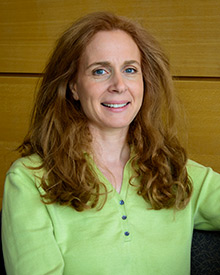
Sharon L. O'Sullivan specializes in cross-cultural communication for knowledge exchange and expatriate adjustment, power and diversity/inclusion issues in formal training and career development, and situated learning alliances for environmental change. Over the course of her career, she has collaborated with a variety of tri-sector organizations, including Canadian Feed the Children, Oxfam Canada, CARE Canada, the Canadian Food Inspection Agency, the Institute of Public Administration of Canada, and the Government of Canada's Diversity and Inclusion Joint Union-Management task force. Learn more about Sharon O'Sullivan's research.

Global Environmental Policies: Why Differences Between Countries Matter
Tiemei Li has received a School of Management Research Grant to study the impact of differences in environmental sustainability policies around the globe.
Research has encouraged countries to adopt environmentally sustainable policies. However, there are still significant differences in environmental sustainability standards across international borders.
Professor Li will explore whether varying environmental sustainability standards have an impact on the overall global environmental performance, as well as on the environmental performance of multinational corporations.
Li’s project will consist of data extraction and analysis from five environmental sustainability databases. Using the data, she will examine how, and if, varying environmental sustainability regulations allow multinational corporations to complete environmentally unsustainable operations by using international environmental sustainability policy arbitrage.
Research impact
This research will use a broad, global approach, adding to the environmental sustainability policy literature. It could benefit policy makers and international corporations by showing the complexity of international differences in environmental sustainability policies, the value in global collaborations and the role of multinational corporations in global environmental performance. Insights gained could influence future policies on reducing global carbon emissions.
By Phoenix Hudson

Tiemei (Sarah) Li is an associate professor of accounting at the Telfer School of Management at the University of Ottawa. Before earning her Ph.D in accounting from Concordia University, Canada, she worked in the Chinese financial industry. Professor Li teaches both financial and managerial accounting courses at the undergraduate level, along with an accounting seminar in the Ph.D. program. Her current research interests focus primarily on financial reporting quality, corporate finance, and the effects of accounting information on capital markets. Learn more about Tiemei Li’s research.