
Looking at digital innovation in the workplace
By Rania Nasrallah-Massaad
Yao Yao was hired last July as an assistant professor of organizational behaviour and human resources at the Telfer School of Management. She completed her PhD in industrial relations and human resources at the University of Toronto. We interviewed her to learn more about her research interests in industrial relations.
Why did you choose to study industrial relations and human resources?
I have always been fascinated by the interplay among different actors in complex systems. Industrial relations is one such system where employees, labour unions, employers and the state interact to strike a balance among their interests. It is also a practical field that concerns real-world problems relatable to workers, such as changes in the labour markets and employee voices in the workplaces.
How has your PhD training informed your current research program?
Industrial relations is known for its relations to different disciplines: organizational theory, organizational behaviour, labour economics and sociology. In my PhD training, I was exposed to different theoretical and methodological approaches for dealing with the same issues. This experience helped shape my current openness to using various perspectives to construct research questions and using different methods to answer various research questions. This openness and flexibility in my research has enabled me to converse with different disciplines.
Do you have any new research highlights or interesting publications in the pipeline that you are excited about?
My research interest revolves around the conflicts between the old norms in the workplaces and changes introduced by technological innovations. For instance, one of my recent publications in the British Journal of Industrial Relations, entitled “Uberizing the Legal Profession? Lawyer Autonomy and Status in the Digital Legal Market,” looked at how online platform work, which is known for its quick turnaround, low pay and customer review systems, is impacting lawyers, who are known to enjoy high pay, high social status and autonomy at work. This study shows the struggles professional workers may have to face when platform-based work extends to a wide range of occupations.
How can your research influence businesses in Canada?
Digital transformation will be an irreversible trend in the next few decades. My research seeks to generate a better understanding of the impact of digital innovations in the workplaces. This new knowledge about the digital transformation of different occupations can help prepare Canadian workers and policymakers for heightening digitalization in the 2020s. To get ready for the future of work, our students, as the next generation of workers, managers and policymakers, must keep updating their skillsets and mindsets to excel in the digital era.
Please join us for Yao Yao's New Faculty Seminar. Click here to register!

Exposing the power gap in Canada’s C-Suite and challenging the language of merit in corporate disclosures
By Lidiane Cunha
Telfer alumna and McKinsey & Company Geneviève Bonin (MBA’96) explains that while Canadian companies prioritize gender inclusion, there is still a long way to go. New research by University of Ottawa professors Walid Ben Amar and Philip McIlkenny, Carleton University professor Merridee Bujaki and Wilfrid Laurier University professor Bruce McConomy suggests that how Canadian corporations disclose information about their board diversity tells a lot about their openness to become inclusive or resistance to change. What are the main challenges and how can corporations promote gender diversity in Canada’s C-suite?
The glass ceiling exposed in Canada’s C-suite
The COVID-19 pandemic has threatened several years’ worth of slow progress for women in the workplace. According to a report by McKinsey & Company, one out of four women in U.S. companies are contemplating downshifting their careers or leaving the workplace altogether. The impact of the pandemic on women’s trajectory to leadership roles cannot be ignored, but the pandemic has simply exposed many systemic barriers that have persisted in Canada’s C-suite.

There is not only a gender gap in Canada’s workforce. The low representation of women in corporate boards and top leadership positions in the corporate sector also indicates a power gap, as recently shown by a Globe and Mail investigative series.
Understanding the barriers and their impact on inclusion

Ben Amar explains that, unfortunately, the concept of merit accepted today still reflects the experience of someone who prioritizes fierce competition, high performance, risks, individualism, commitment to long hours of work, and after-work networking activities. Often this experience of leadership is still perceived as inherently masculine.

The result is that women continue to stumble on many obstacles to being hired or promoted into top leadership positions and boards in the corporate sector. McKinsey & Company found that, compared to men, women are 30% less likely to be promoted from entry level to managerial positions and 60% less likely to move from a director to VP position. “Across all industries in Canada, a leaky talent pipeline still exists,” Bonin says. “When we see industries where women and men are equally distributed at the bottom but only a few women make it to senior managerial, VP and CEO positions, then there is an issue,” she adds.
Even when women advance to the top, some may experience a different set of challenges: they may not feel represented or supported. “At the senior manager/director level and above, women are two and a half times more likely than men to be the only person of their gender in the room,” says Bonin. This also creates another barrier: the lack of female sponsors who can support other women to unlock their potential and grow. “Sponsors play a critical role promoting and advocating for top talent, and many people feel more comfortable working with a sponsor of their gender,” says Bonin. “When a woman lacks that sponsorship because there are fewer senior women who could play that role, then she may not have as much ability to get to the top.”
How language exposes systemic barriers

The researchers examined references to two terms, “merit” and “diversity,” in the first mandatory corporate governance diversity disclosures of a sample of 119 public corporations traded on the Toronto Stock Exchange (TSX). “We were able to show that language can be very powerful in this context: corporate disclosures can reflect how a company is committed to diversity and inclusion or how it maintains the power gap that persists in recruitment practices in the C-suite,” says Ben Amar. The researchers published their findings in Critical Perspectives on Accounting.
Findings: Change is needed
The study found that 59% of the sixty largest TSX companies in the sample have adopted a written policy for identifying and nominating women directors, whereas only 28% of the other TSX companies have adopted such a policy. The disclosures of 44 companies included in the sample mentioned merit as a justification for the appointment of board members, representing 32.2% of the 60 largest TSX companies and 41.7% of the other TSX companies in the sample.
A more detailed analysis of the language employed by the 44 companies that used the term in their disclosures found that:
- These companies tend to have fewer women directors than those that do not mention merit in their corporate disclosure.
- Their disclosures frequently had very low readability scores, an indication that the documents lacked clarity.
- The term “merit” lacks a consistent definition.
- Merit is often described as the key criterion for selecting board members.
- Companies appeal to vague or broad definitions of diversity, downplaying the importance of gender diversity.
Their findings suggest that many TSX companies use the term “merit” in their disclosures to maintain the existing power structures underlying corporate board appointments. These references also indicate a resistance to public pressure to increase the representation of women on boards. Overall, merit continues to be invoked as objective, but “the big issue is ‘who gets to define these standards of merit,’” says Bujaki. “When organizations position merit as a neutral and objective evaluation criterion, without any type of questioning, inequalities and patriarchal dominance are perpetuated,” she adds.
The researchers hope that their insights can positively influence board composition in Canada’s C-suite: “If meritocracy is not acknowledged and questioned, corporations will have little incentive to challenge the status quo and substantively promote inclusion in their recruitment, promotion and development practices,” says Ben Amar.
How to enact change
Research has shown that gender-diverse boards are not only the right thing to do — they also have a positive financial impact on companies. But how can Canada’s corporate sector get there?
Ben Amar and collaborators believe that overcoming corporate resistance to change may require a range of innovative practices by corporations and regulators. To foster gender diversity in top leadership positions, they recommend that companies:
- Formally acknowledge the value of diversity and its positive impact on corporate decision-making.
- Challenge existing recruitment and appointment systems based on merit.
- Reflect on current inclusion practices and consider the best options to enhance diversity in leadership positions.
- Accelerate the renewal of directorships (through mandatory retirements policies or director term limits) to bring fresh perspectives to the board table and foster better decision-making.
- Adopt ambitious diversity targets and report on progress towards these objectives.
Geneviève Bonin says that designing women leadership programs that include mentorships, sponsorship, training, coaching and women’s networks is crucial for corporations. These development opportunities allow women to navigate their own experiences and leadership journeys. “These programs also help women understand the unique values that they bring to the organization,” she says. Additionally, she proposes the following recommendations to help companies grow their female talent and increase gender representation at the top:
- Based on your industry sector, define your own diversity targets and strive to meet them.
- Increase the inclusiveness of re-skilling and recruitment practices.
- Create a diversity-enabling infrastructure with flexible working options, extended leave policies and back-to-work programs.
- Implement unconscious bias training.
- De-bias recruitment and performance evaluation processes.
Read the full article to learn more about this study:
Ben Amar, W., Bujaki, M.L., McConomy, B.J. and McIlkenny, P. 2020. “Gendering merit: How the discourse of merit in diversity disclosures supports the gendered status quo on Canadian corporate boards.” In Critical Perspectives on Accounting.

“Building back better” for women entrepreneurs: A policy reboot for Canada’s feminist recovery plan
By Lidiane Cunha
University of Ottawa professor Barbara Orser and alumna Margo Crawford (MBA ’97) suggest that developing a robust, inclusive economy not only requires a policy reboot for Canada’s feminist recovery plan but also a better understanding of who our business leaders are.
Challenges for women-owned small- and medium-sized enterprises (SME)
According to a recent Statistics Canada labour force survey, self-employment has declined to the lowest level since the onset of the pandemic. Barbara Orser, Deloitte professor in the management of growth enterprises at Telfer, believes that “the pandemic has exposed a fragility in the social and economic gains that many women and other underrepresented groups of entrepreneurs have achieved.”
Margo Crawford, founder, president and CEO of Business Sherpa Group, which offers business management services to Canadian and American clients, observes that some women-owned businesses remain unaffected by the pandemic, while others are struggling: “A few of our clients have been taking advantage of government financial programs for business and many are thriving without support,” she says.
A Statistics Canada article on the impact of COVID-19 on majority women-owned businesses found that compared to businesses as a whole, majority women-owned SMEs are more likely to pivot to new products or services, close temporarily or cancel contracts, to adapt to the pandemic. That said, a FreshBooks study on Canadian-owned small businesses reports that women-owned SMEs are, on average, taking almost twice as long to recover from financial setbacks associated with the pandemic as businesses owned by men.
Fighting challenges and perceptions
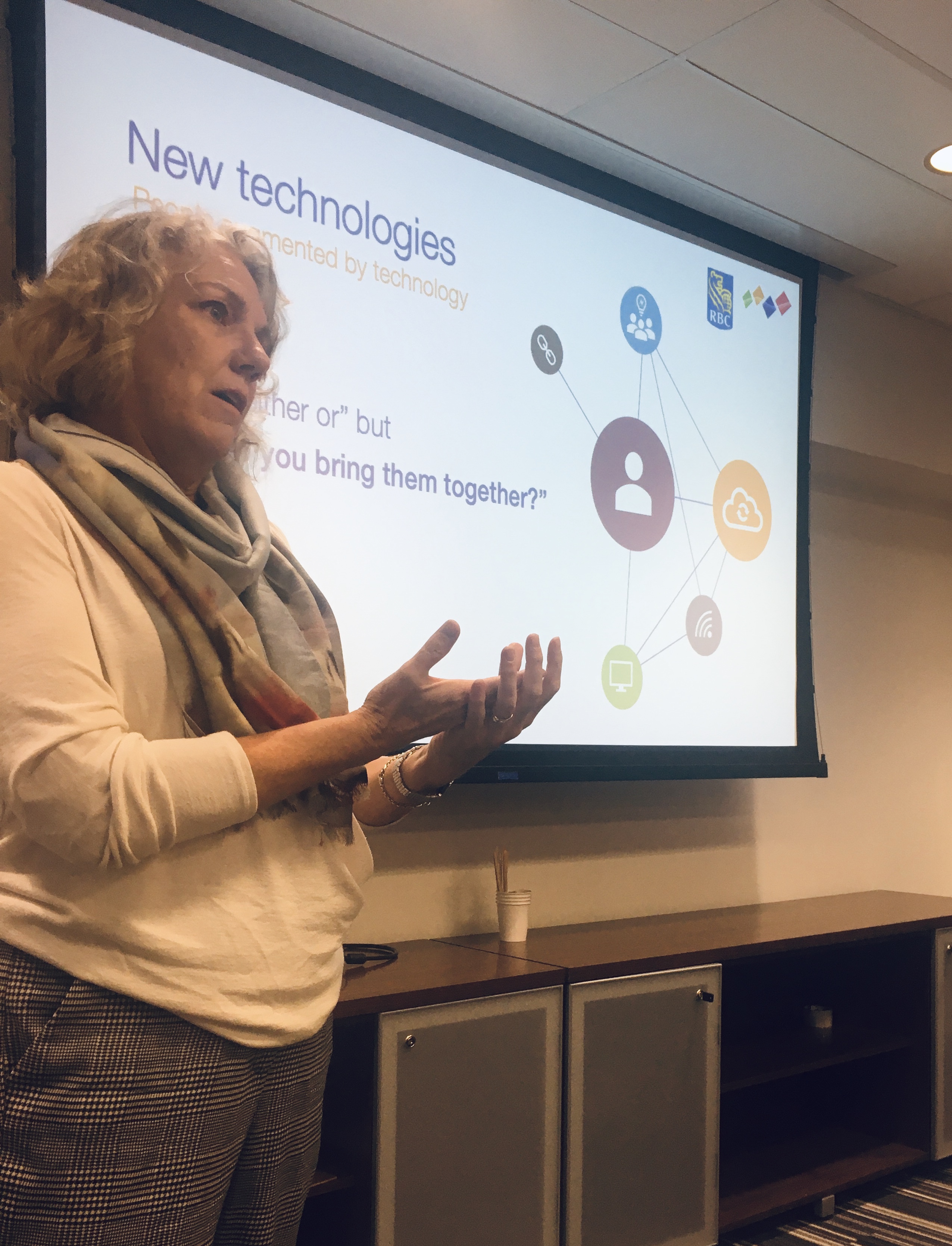
To address these systemic barriers, it is important to challenge the traditional perceptions of women in entrepreneurship. As the founder of a business-to-business professional services firm, Crawford feels disheartened when she hears comments that most women-owned enterprises are lifestyle businesses focusing on business-to-consumers and wellness services. “The idea that there are many women entrepreneurs starting manufacturing, technology, professional services or franchise businesses is not often something people are familiar with.”
These perceptions can have a negative impact on many women in business. “When seeking financing, or other support, they can have a farther way to go to prove that they are quite accomplished in building and running many types of highly successful companies with great returns,” Crawford adds.
Addressing the changing needs of women entrepreneurs
In her 2020 Fall Economic Statement, Chrystia Freeland, deputy prime minister and minister of finance, sent the message that Canada’s recovery strategy will be developed through a feminist lens. A leader in feminist international assistance and trade policies, Canada is also among the few countries that have launched a cross-government Women Entrepreneurship Strategy. The economic statement expands the Liberal government’s feminist agenda into domestic policies.
For Orser, “rebranding any policy as feminist also infers that recovery policies must be underscored by a commitment to women’s economic empowerment and gender equality.” She also believes that feminist policies designed to support entrepreneurs during recovery must focus on sustaining existing firms, and no longer prioritize increasing the number of women-owned small businesses.
What a feminist recovery plan would look like
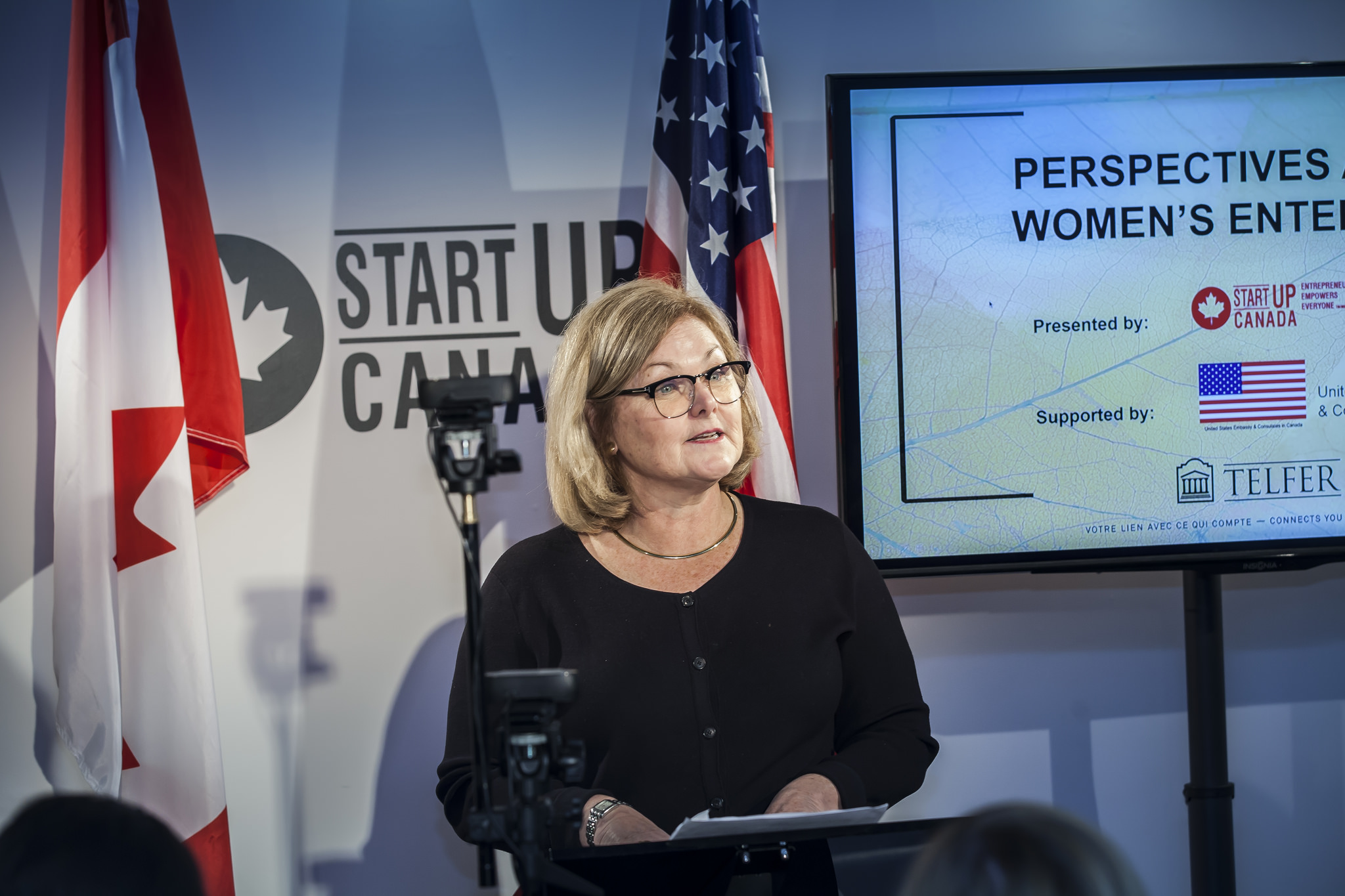
Orser also believes that Canada’s feminist recovery plan requires “broadening the view of entrepreneurship as economic activity to entrepreneurship as a means of social change.” This means “supporting all types of enterprises and not only high growth firms.”
Crawford agrees that the success metrics established for SMEs must be redefined. Many economic support programs designed for women entrepreneurs reflect a success model that does not represent most SMEs and, as a result, are not inclusive. “For example, a woman-owned business may be very successful with modest but steady growth. Such a firm may not qualify for some financing programs that focus on scale-up, high growth or international expansion,” she says.
Practical recommendations
To develop a robust, inclusive recovery plan, Professor Orser recommends these actions:
- Acknowledging gender and other power differentials within Canada’s entrepreneurial ecosystems, including within financial, educational and economic development organizations, for instance, recognizing the disproportionate percentage of male investors, small business instructors, role models and the masculine language used to describe entrepreneurs.
- Investing in Canada’s entrepreneurial ecosystem, including small business training and industry advisory services, and increasing access to federal contracts.
- Linking federal funding of small business, economic development and innovative organizations to the demonstrated client engagement of diverse entrepreneurs.
- Pivoting Canada’s Women Entrepreneurship Strategy from the goal of doubling the number of women-owned businesses by 2025 to measures that sustain and grow current women-owned SMEs.
- Establishing targets for federal contracts awarded to underrepresented entrepreneurs, going beyond set-asides for Indigenous and Black entrepreneurs.
- Reporting publicly on bid rates and contract amounts awarded to underrepresented entrepreneurs, including majority women-owned firms.
To close the gap in perception of who business leaders are, Margo Crawford recommends the following:
- Understanding the DNA of small businesses to see what type of support they each needs at different phases of maturity and growth.
- Defining the metrics of success and hence support for SMEs beyond traditional measures such as net new jobs created or exports.
- Recognizing that highly successful businesses may retain a solid employee base, have modest-but-steady profitable growth over many years and contribute significantly to Canada’s economy.
- Recognizing women’s contributions and validating success and leadership models that reflect the realities of SMEs. Both men and women can benefit from experiencing how women’s leadership styles can foster long term sustainable success.
- Challenging any negative biases concerning women in entrepreneurship.
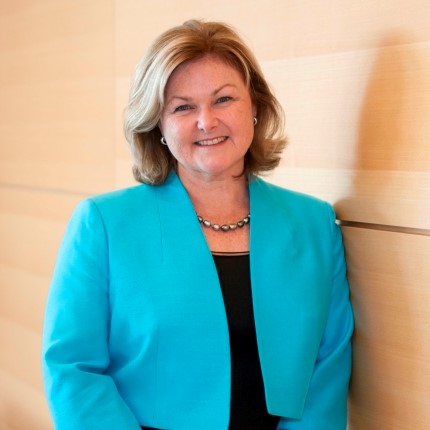
Barbara Orser is a Full Professor and the Deloitte Professor in the Management of Growth Enterprises at the Telfer School of Management. Her research, teaching and advocacy focus on entrepreneurship and women’s economic empowerment. Learn more about her work.

Margo Crawford is the founder, president, and CEO of Business Sherpa Group, which offers business management services with a client base of 500 SMEs across Canada and the United States.

Mental Health during COVID-19: Examining the Role of Peer Support Services
By Rania Nasrallah-Massaad
The COVID-19 pandemic will leave a lasting impact. Beyond the economic turmoil, both physical and mental health problems will persist for many. Since the start, we have been encouraged to focus on public health measures to prevent the spread of the virus. But the consequences of mask wearing, physical distancing, social isolation and fear of contracting the virus for mental health around the world are alarming.
Many believe we are facing a mental health crisis. That said, how has the pandemic affected mental health services? The World Health Organization notes an increased demand for mental health support, stating that “the COVID-19 pandemic has disrupted or halted critical mental health services in 93% of countries worldwide.” The WHO surveyed 130 countries, all reporting an urgent need for increased mental health funding. Its director-general urges world leaders to “move fast and decisively to invest more in life-saving mental health programmes — during the pandemic and beyond.”
The devastating impact of COVID-19 on access to mental health services is undeniable. Like all other services during the pandemic, peer support services have been disrupted. Peer support workers play a vital role in helping people dealing with mental health issues. They have lived through mental health challenges and use their personal experience to offer help, education and support to those struggling.
A major challenge during the pandemic has been the transition to virtual interaction, removing the in-person human element in an already delicate situation where connection and trust are key. However, some would argue that offering support services on a virtual platform makes them more accessible. A better understanding of the quality and effectiveness of virtual peer support services is thus needed to maintain service excellence during and beyond the pandemic.
What is this research about?
Professor Samia Chreim has received a Social Sciences and Humanities Research Council Partnership Engage Grant to study how the COVID-19 pandemic has influenced peer support services. In partnership with Psychiatric Survivors of Ottawa, an organization that provides peer support services, and her doctoral student Elmira Mirbahaeddin, Chreim will examine the experiences faced by peer support service providers, service users and peer support managers offering and using virtual services during the pandemic. She will also investigate the strategies they have used to deal with the challenges and opportunities they have faced.
Who is the partner organization?
Psychiatric Survivors of Ottawa is a not-for-profit organization offering peer support services at no cost to individuals with mental health or addiction issues. It also supports family members of people living with mental health challenges. It began in 1991 as a grassroots organization run by and for people who had used the mental health system, as a community for mutual support and advocacy. It has remained member run and has formalized its approach; it now provides peer support in Ottawa hospitals, works with community partners, and trains and pays users of the mental health system to provide recovery education to other service users.
Who will benefit from this research?
This research will help increase awareness of the role peer support workers play in fostering mental health. The knowledge gained will help inform managers of peer support services about the needs of workers and service users during a global crisis, including needs arising from the transition to a virtual delivery mode.
Individual, organizational and technological adaptations could occur, leading to improvements in virtual peer support services and allowing managers to develop strategies to ensure that support providers are themselves better supported. Finally, society could benefit from decision makers being able to consider which programs are useful and should be continued beyond the pandemic.
Peer support services could be tailored to the preferences of service users and workers, with virtual services as a sustainable option that may lead to more accessible peer support, a welcome outcome in a mental health crisis.
How does a community partnership benefit academic research and graduate student training?

As for what she hopes to gain from the project and working with a partner organization, she says, “My motivation is to demonstrate (peer support workers’) true potential during crises like the COVID-19 pandemic. With Psychiatric Survivors of Ottawa, we have identified research gaps. The partnership offers a great opportunity to conduct impactful research with societal implications. It is also a valuable learning experience for me.”

Samia Chreim is a Full Professor at the Telfer School of Management, where she holds the Ian Telfer Professorship in Organization Studies. Her research focuses on the dynamics of change at different levels, on intra-organizational and inter-organizational collaborations, and leadership. Learn more about her research.

Customer Incivility Can Hurt Employees: Here Is How to Manage it Positively and Assertively
By Lidiane Cunha
Dealing with uncivil customers is a frequent reality for many of those working in retail, restaurants, tourism, and other service industries. A new study shows that rising above customer incivility not only benefits customers: positively and assertively tackling customer unfriendliness can also make a major difference for service employees. Jane O’Reilly, a uOttawa expert on workplace wellbeing, and Régine Paquette, founder of Ottawa-based Victoire Boutique, discuss how customer incivility affects employees and provide practical suggestions to manage it meaningfully.
Challenging times for both customers and employees
As government officials grapple with the second wave of the COVID-19 pandemic, social distancing measures and many other restrictions have tested everyone’s resilience. Régine Paquette, a Telfer alumna and founder of Ottawa-based ethically and locally sourced shop Victoire Boutique, knows that the past 11 months have been challenging for customers. “Overall, they have been incredibly understanding and accommodating even though their favourite local businesses may have reduced hours of operation, implemented new protocols and methods of service delivery, or increased wait times,” says Régine.
But the kindness that many small- and medium-sized business owners and employees experienced may be wearing off. As a result of stricter protocols to curb the spread of COVID, customers are increasingly dealing with uncertainty, stress, and frustration. “Some instances of customer incivility seemed almost to correlate directly to news, either nationally or internationally, which was very worrisome and scary,” observes Régine. She is equally aware of the psychological impact of incivility on those working in the retail industry. “When you work with people, you might be on the receiving end of stress and anxiety.”
“Experiencing unkindness, rudeness, and other uncourteous behaviour can be distressing for service employees,” says Jane O’Reilly, associate professor at the University of Ottawa’s Telfer School of Management. However, researchers still know very little about how employees interpret and manage these negative encounters.
The dangers of negative reactions to customer incivility
To find ways to improve the working lives of millions of people employed in service industries, O’Reilly and Kirsten Robertson, a researcher from the University of the Fraser Valley, delved deeper into how service employees across several occupations deal with negative interactions with unfriendly customers. The researchers identified four different ways employees respond to customer incivility.
In the first group, employees respond to unfriendly customers by engaging in reciprocal, discourteous behaviour. The researchers explain that even though the employee may feel a sense of justice when reciprocating the customer’s rudeness, this response can be very harmful. “This strategy not only escalates the conflict with the customer, but also causes employees to feel guilt and regret,” says O’Reilly.
A second group of service employees attempts to pacify uncivil customers through inauthentic polite behaviours. The study suggests that service employees often engage in this submissive form of civility if they believe that this is the only option. This reaction often stems from the belief that the customer is always right. However, this strategy does not necessarily help the employee address the conflict. Even more concerning, such a response to a customer’s unfriendliness can also harm employee self-esteem or make them feel ashamed and helpless. Agreeing that this approach can be counterproductive, Régine and her colleagues at Victoire Boutique have chosen a more positive mantra, one that does not undermine the value of employees or their efforts to connect with customers. “We often say internally that it is our pleasure and challenge to serve.”
In the third group, employees provide extra good service and use a pinch of sarcasm to spite rude customers. Despite its subtlety, this form of incivility could also have negative effects on employee wellbeing and customer relationships. According to the study, employees who choose to “kill customers with kindness” may initially feel a sense of justice and relief, but they are still not tackling the problem.
Rising above customer rudeness
However, the three responses to rude customers are not the only options employees can employ to manage these difficult interactions. Some service employees may respond to unfriendliness with genuine kindness and respect, and proactively solve the issue brought up by a customer. Referred to as resolute civility, this fourth strategy “has a strong potential to positively impact both customers and employees,” says O’Reilly.
The most obvious benefit is that it allows employees to address the issue instead of ignoring the conflict or deflecting the customer’s incivility. For Régine, tackling these difficult encounters with respect is an invaluable experience in the retail industry. “Experiencing conflict resolution helps everyone become better, more empathetic salespeople.”
When managing customer incivility with genuine kindness, employees are more likely to reduce customer incivility and, in some cases, transform their behaviour into a positive approach. Régine’s first-hand experience illustrates how resolute civility can do just that. She stays calm during disagreements with customers because she knows that “most of the time, these situations can be de-escalated, and actually customer loyalty can be increased by how the situation is handled.”
Resolute civility also creates an empowering experience for employees. “Many service employees we interviewed felt great that they were able to stay calm and confident, or able to transform incivility into something positive, even if the conflict was not fully resolved,” says O’Reilly. In the end, “they also felt that they are doing the right thing,” she adds. Because she considers staff retention a top priority at her store, Régine strongly believes in the value of supporting and empowering service employees: “If employees are well-versed in shop policies and understand the reasoning behind them, we trust them to use their judgement in finding appropriate solutions to challenging situations.”
Practical recommendations: Go above and beyond incivility
A supportive work environment is crucial for employees to feel they can practice resolute civility when dealing with unfriendly customers. O’Reilly makes a few recommendations for supervisors seeking to encourage their employees to problem solve these difficult interactions in a meaningful way:
- Do not encourage frontline service employees to ignore or reciprocate negative behaviour
- Look for strategies that help employees avoid submissive and inauthentic reactions to rude customers
- Remind employees that they are often not the direct cause of customer incivility
- Discourage employees from taking customer unfriendliness as a personal threat
- See customer incivility as a challenge that can promote personal and professional growth
- Provide employees with resources and tools to solve problems and go above and beyond incivility
Régine shares a few additional insights for business owners and supervisors who work in a service industry:
- Emphasize that employees should respect the business policies while seeking solutions that could be satisfactory to both parties
- Tell employees that they can also bring conflicting situations to the attention of their supervisors instead of simply bearing the brunt of increased anger, and that if they need support, “you are always a phone call or a few steps away”
- Ensure that employees feel supported in situations of conflict with customers, and take their side if they are mistreated by customers
- Recognize employees for their efforts during challenging interpersonal situations and congratulate them on a job well done
Pandemic or no pandemic, both employees and customers should approach these conflicts with empathy. “You will very often find [empathy] coming back to you and your faith in your fellow humans [will be] restored,” says Régine.
Learn more about this research:
Robertson, K. and O’Reilly, J. 2020. Killing them with kindness? A study of service employees’ responses to uncivil customers. Journal of Organizational Behavior.
Learn about the Thriving Organizations and Societies Lab at Telfer, of which Jane O’Reilly is a member.

Jane O'Reilly is an Associate Professor and Telfer Fellow in Workplace Wellbeing at the Telfer School of Management. Her research examines informal workplace interactions and relationships. Learn more about her work.

Telfer alumna Régine Paquette is the co-founder of Victoire Boutique, an ethically and locally sourced shop based in Ottawa.
- Driving Industry-Wide Sustainability along the Supply Chain
- Telfer Forum - Crisis and Governance: The Role of the Board during Times of Disruption
- Research to Delve into “Toxic” Service Interactions between Customers and Service Providers
- A financing framework for better, faster, and affordable business decisions