Using Digital Technology for Positive Behaviour Change
By Rania Nasrallah-Massaad
More than a year into the pandemic, we still find it hard to remember to stay two metres apart and wear masks in public. Changing behaviours isn’t easy, and researchers and practitioners continue to look for new ways to help people sustain behavioural change.
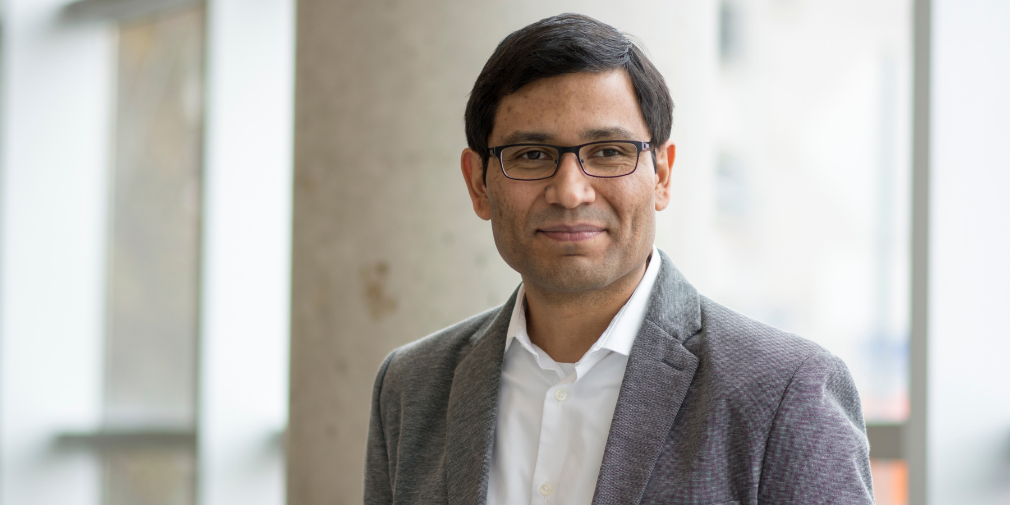
For Andreev, “behaviour change interventions targeting individuals are essential for human activities such as self-health management, maintaining social distancing and/or wearing a mask (as well as) climate-aware consumption and promotion of recycling and reuse.” However, “achieving sustainable behaviour change remains a challenge.”
Andreev’s project (Developing a new architectural framework for designing Digital Habit Formation Support Systems) is related to understanding and implementing digital transformation (DX) at different levels. For the researcher, “digital transformation isn’t about technology but about a radical and complete change in how individuals, teams and organizations use digital technologies to reshape and change the status quo with processes and outcomes, to create new possibilities and opportunities.”
Where current tech falls short
Technologies that support behaviour change have been around for decades, for example, those that promote healthy lifestyles like Wii Fit Plus, Noom or Fitbit. They’re meant to keep the user motivated to improve their health by increasing activity, tracking food and exercise, or social collaboration. Communications tools, web platforms and gamification environments all target behaviour change.
But despite their short-term success in engaging users, to date, these technologies have not succeeded in promoting long-term behaviour change.
One explanation is they don’t integrate habit formation principles into their design, such as cultural and behavioral traits or gender differences. Habits, learned behaviours that are repetitive and automatic, are a central component of sustained behaviour. They’re triggered by a stimulus (cue), leading to an action (behaviour change) that leads to a reward.
Designing with habit formation in mind
According to Andreev, “better understanding of how to create and integrate habit formation principles into the design of a decision support system is crucial for sustained behaviour change.”
His research will propose a framework for a habit formation support system that directly incorporates these principles.
Beyond benefiting digital health and digital transformation researchers and practitioners, as well as systems designers, this work will benefit all industries where effective implementation of new policies or practices are needed. Indeed, all of society will benefit from improved mobile or other technologies that can help achieve long-term behavioural change.
Professor Andreev's research is focused on modeling and exploring the performance of commercial and non-commercial organizations at the individual, team, and organizational level. Learn more about his work.
Open access: Removing the barriers to information sharing
By Rania Nasrallah-Massaad
Never was information sharing so relevant as at the start of the COVID-19 pandemic. In early 2020, before the World Health Organization declared a pandemic, scientists were already studying the daunting new virus. Thanks to open access (OA) publishing, a model that allows for free, easy access to research data, was widely available. This helped inform government decisions on border shutdowns and public health measures, while hastening vaccine development.
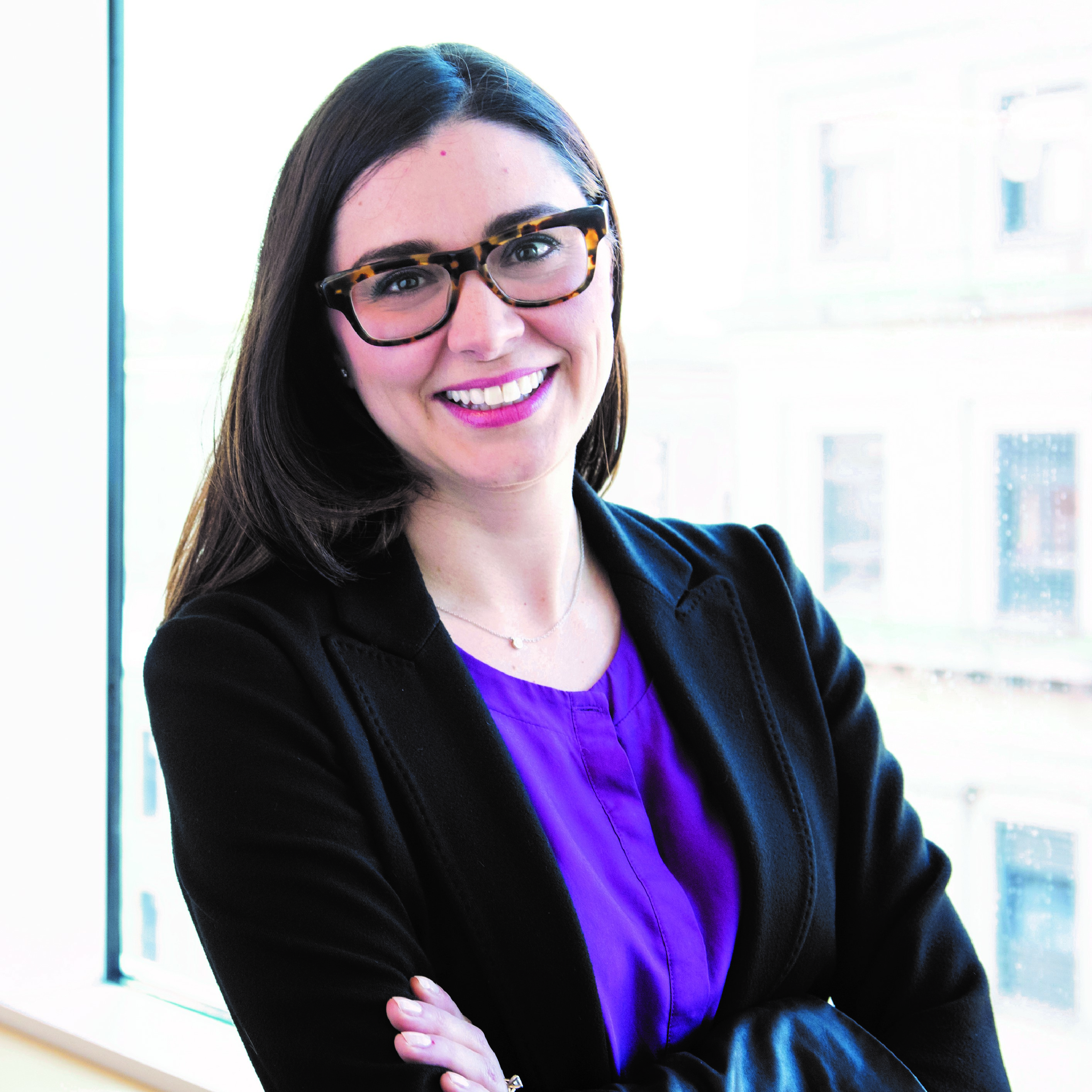
But what will happen to global open access post-pandemic? Professor Evelyn Rita Micelotta has been awarded a Social Sciences and Humanities Research Council Insight Grant to study trends in adopting OA in three scientific disciplines: biomedical sciences, physics and chemistry.
Challenging the information status quo
For Micelotta, “Open access is an excellent case of an extremely complex issue, where multiple interests are at stake and the status quo is deeply challenged. Our collaborative effort (with Professors Mike Lounsbury and Frank Wijen) will explain why progress has been slow and how to productively address the concerns of key stakeholders.”
During the pandemic, everyone has had free access to new information in a heartbeat. Record-breaking timelines for vaccine approval and responsible vaccination programs have been possible due to collective knowledge sharing.
The United Nations Educational, Scientific, and Cultural Organization (UNESCO) endorsed open access in 2017. This year, it’s adopting a recommendation on “open science,” “to bring citizens closer to science and … facilitate the production and dissemination of scientific knowledge around the world.”
Canada lagging behind
Despite these recommendations, Canadian institutions have not yet changed their knowledge production and dissemination practices. Better understanding the barriers to implementing open access in Canada can help determine what’s needed to achieve it.
Professor Micelotta’s project, “Open Access in higher education publishing: A theory of institutional accommodation,” will use a comparative approach to examine drivers of or barriers to open access in higher education publishing in Canada and the Netherlands. The latter has a clear open access mandate and best practice guidelines.
Implementing open access
Micelotta’s work can help show how a new practice like open access can be gradually implemented, rather than ignored or opposed. The work will also help inform future OA policy in Canadian stakeholder institutions like libraries and funding agencies.
And, of course, society at large will benefit from a change in knowledge production practices and structures that ensures widespread access to information.
Evelyn Micelotta is an Associate Professor in Management at Telfer School of Management, University of Ottawa. She received a PhD in Strategic Management and Organization from Alberta School of Business and a PhD in Management Engineering from Milan Polytechnic. Read more about her work.
Honesty is the Best Policy: Easing Job Interview Anxiety
During a job interview, candidates try to present themselves in the best light possible. Some seek to make a positive impression by emphasizing their credentials. However, others may exaggerate past accomplishments and fabricate experiences to convince the interviewer that they’re the best candidate. This second behaviour is known as deceptive impression management or interview faking.
A study by Deborah M. Powell (University of Guelph), Joshua S. Bourdage (University of Calgary) and Silvia Bonaccio (University of Ottawa) has uncovered new insights into who engages in interview faking and why. The study is the first to examine the link between interview faking and interview anxiety. It suggests that interview anxiety may explain why people with two specific personality traits are more likely to stretch the truth to impress employers during an interview.
High interview stakes and social anxiety
For many candidates, a job interview can trigger interview anxiety, a specific type of social anxiety. Interviews can be very uncomfortable for some, especially if they’re worried about being perceived negatively.
“Interviews contain all the elements that make social situations threatening, including being the focus of others’ attention and being judged by others,” says Bonaccio, the Ian Telfer Professor of Workplace Psychology at the Telfer School of Management.
In response, some candidates might engage in deceptive impression management to do well in the interview. Indeed, the team found that anxiety was positively related to the use of impression management tactics.
Understanding how to help job applicants manage interview anxiety and reduce deceptive impression management may be especially valuable during economically challenging times. In April of this year, 1.6 million Canadians were unemployed (an unemployment rate of 8.1%), according to themost recent Labour Force Survey. With economic uncertainty comes even more pressure to perform well in a job interview. “The higher stakes can make some candidates even more anxious,” says Powell.
Two decisive personality traits
To understand which job candidates are more likely to engage in deceptive impression management when anxious, the research team turned to personality traits. During a job interview, personality traits influence how concerned some job candidates might be about the image they wish to project. The team suggests that two traits are likely to be linked to interview anxiety, honesty-humility and extraversion:
Honesty-Humility
Honesty-Humility refers to how much a person promotes their own interests above those of others.
Candidates who score high on this personality trait are likely to be sincere. They’re unwilling to manipulate others to achieve a desired outcome (like getting a job). So, they don’t feel the need to impress the interviewer. They also believe that dishonesty can have a negative impact on their interview performance ratings.
“Those who are higher in Honesty-Humility experience less anxiety during interviews andare less likely to use deceptive management tactics,” says Bourdage.
In contrast, candidates who score low on this trait are more likely to worry about being negatively evaluated by an interviewer and the impact of this on their self-worth. They’re also motivated to seek social and material rewards, which raises the interview stakes.
“Candidates with lowerHonestly-Humility are likely tofeel particularly anxious in interview contexts and engage in faking tactics,” says Powell.
Extraversion
Extraversion refers to how talkative, assertive and confident in social situations like a job interview a person is.
Candidates who score high in extraversion are more comfortable interacting with the interviewer. They also value socially-oriented status. They may feel motivated to impress the interviewer, but they’re not worried about being able to make the desired impression. “More extraverted candidates tended to experience less anxiety in the interview,” says Bourdage.Conversely, individuals who are more introverted may experience heightened anxiety during interviews or other situations. As Bourdage says, they may “attempt to make up for this through interview faking.”
Interview faking is a self-protective mechanism
Bonaccio explains “candidates who worry they will not receive the desired evaluation from the interviewer may engage in interview faking,” She adds that this “seems to be a self-protective mechanism instead of something job candidates do comfortably.”
Moving beyond deception
This study can offer valuable insights to career advisers and coaches wishing to help job candidates manage their anxiety and, if needed, find genuine ways to impress interviewers.
“Acting deceptively is not advisable for candidates,” says Bonaccio. “Instead, there is a lot they can do so that their best selves can shine through (honestly).”
For Powell, “job candidates wishing to lower their anxiety can consider forming a positive image of themselves in a social situation.” She adds that positive imagery “can reduce feelings of anxiety.”
Interview preparation is another proven way to reduce interview anxiety. The Career Centre at the Telfer School of Management offers job interview resources and workshops to help Telfer students and graduates prepare.
Silvia Bonaccio is a full professor at the University of Ottawa’s Telfer School of Management where she holds the Ian Telfer Professorship in Workplace Psychology. Her research focuses on the facilitators of positive work experiences for employees living with disabilities, as well as the influence of anxiety and emotions in the employee assessment and selection process. Learn more about Silvia Bonaccio's work.
Deborah M. Powell is an associate professor at the University of Guelph. Her research looks at personnel selection, with a particular focus on employment interviews and other selection practices, such as personality testing. Learn more about Deborah M. Powell’s work.
Joshua S. Bourdage is an associate professor at the University of Calgary. His research focuses on personnel selection, technology in hiring, impression management behaviour, and personality. Learn more about Joshua S. Bourdage work.
Telfer Established Researcher Award 2021 – Lavagnon Ika
The Established Researcher Award recipient is a faculty member who has earned national or international recognition for the Telfer School of Management through outstanding and impactful research over the past five years. We are excited to present the 2021 Established Researcher Award to Professor Lavagnon Ika, a professor of project management at Telfer.
Since joining Telfer about 10 years ago, Professor Ika has made invaluable contributions to the Telfer School, including as director of the Telfer MSc in Management program from 2017 to 2020. He has had a tremendous impact on student research training, both as program director and as a researcher. He has supervised many PhD and MSc students, and has been involved in several MSc and PhD thesis committees all over the world, including in Australia, Botswana, France, India, South Africa, Serbia, and Trinidad and Tobago. In recognition of these activities, he also holds a joint affiliation with the uOttawa School of International Development and Global Studies. More recently, he launched the Major Projects Observatory, which unites researchers and students to address the challenges of conducting large-scale projects, in Canada and internationally, and to help bridge the gap between the theory and practice of project management.
Professor Ika has achieved great international recognition for his work. He has published over 40 peer-reviewed articles in prestigious international journals, such as World Development, Production Planning and Control, the Journal of African Business, Transportation Research Part A: Policy and Practice and International Journal of Project Management. Recently, he was also awarded a SSHRC Insight grant to support his research. Over the past five years, he has received various distinctive awards for his contributions to project management and to scholarly activities in the field, namely:
the Emerald Best Reviewer Award in 2018;
the International Project Management Association (IPMA)’s coveted Research Award in 2017;
the Emerald Outstanding Paper Award in Project Management in 2017; and
Telfer’s Innovative Researcher Award in 2017.
He is well respected by the academic community, as demonstrated by his roles on the editorial and academic boards of prominent journals and associations. For example, he is the associate editor of the International Journal of Project Management, a leading journal in the field. He is a member of the academic boards of the International Project Management Association and of the US-based Project Management Institute, both of which enjoy worldwide status. Moreover, he has been a visiting scholar at several institutions around the globe, including the Skema Business School in France, the Swinburne Business School in Australia, the Institute of Public Project and Cost Engineering of the Tianjin University of Technology in China, the African School of Economics in Benin, the CESAG Business School in Senegal, and the World Bank in Washington, DC.
Given his accomplishments, Professor Ika is poised to make a difference in society, both in Canada, and around the world. Among his most recent achievements is an article entitled, Vaccination de masse : la bataille ne sera pas facile” [Mass Vaccination: the Battle will not be Easy], which appeared in The Conversation and reached 28,000 reads in one week. In 2020, he was offered a fellowship by the World Bank to help them improve their project management practices. Unsurprisingly, his research expertise and knowledge also attract a great deal of media attention, including from the written press, Radio-Canada, and CTV News. The Telfer School is proud to call Lavagnon Ika one of our own and to offer him this well-deserved award in recognition of his many achievements as a global academic leader in project management. Congratulations Professor Ika!
Telfer Emerging Researcher Award 2021 — Antoine Sauré
The Telfer School of Management is pleased to announce that Professor Antoine Sauré is the recipient of the 2021 Emerging Researcher Award, for his tremendous research contributions and outstanding potential to make an impact on health care management research and practice. The award recognizes Telfer faculty members in the early stages of their careers on a path to research excellence.
Sauré joined Telfer in 2016 as part of the Business Analytics and Information Systems group and has rapidly established himself as an outstanding researcher. He has developed valuable collaborations with key stakeholders like BC Cancer, the Ottawa Hospital and other local tertiary care institutions. He has also developed many fruitful collaborations with other Telfer researchers.
Sauré’s expertise in advanced capacity planning and scheduling techniques addresses key challenges in health care delivery. Among his most recent projects is a collaboration with the Ottawa Hospital during the pandemic to ensure the adequate allocation of personal protective equipment, to maintain supplies and surgical procedure scheduling. Other projects include addressing resource allocation in disaster relief operations, managing ICU admissions and scheduling home dialysis visit.
Sauré has secured research funding from various agencies, including NSERC and the NRC. Since 2016, he has contributed to many peer-reviewed publications in top ranking journals like Transportation Research Part E, the European Journal of Operational Research and Decision Support Systems.
His research expertise is also benefiting student trainees at all levels, including postdoctoral fellows, doctoral students and undergraduate students in the uOttawa UROP program. Among them is Vusal Babashov, the first student to graduate from the Telfer PhD program in 2021.
In recognition of his exceptional contributions to research and student mentorship, Telfer is thrilled to congratulate Professor Sauré on receiving the 2021 Emerging Researcher Award, a well-deserved achievement!









.jpg)