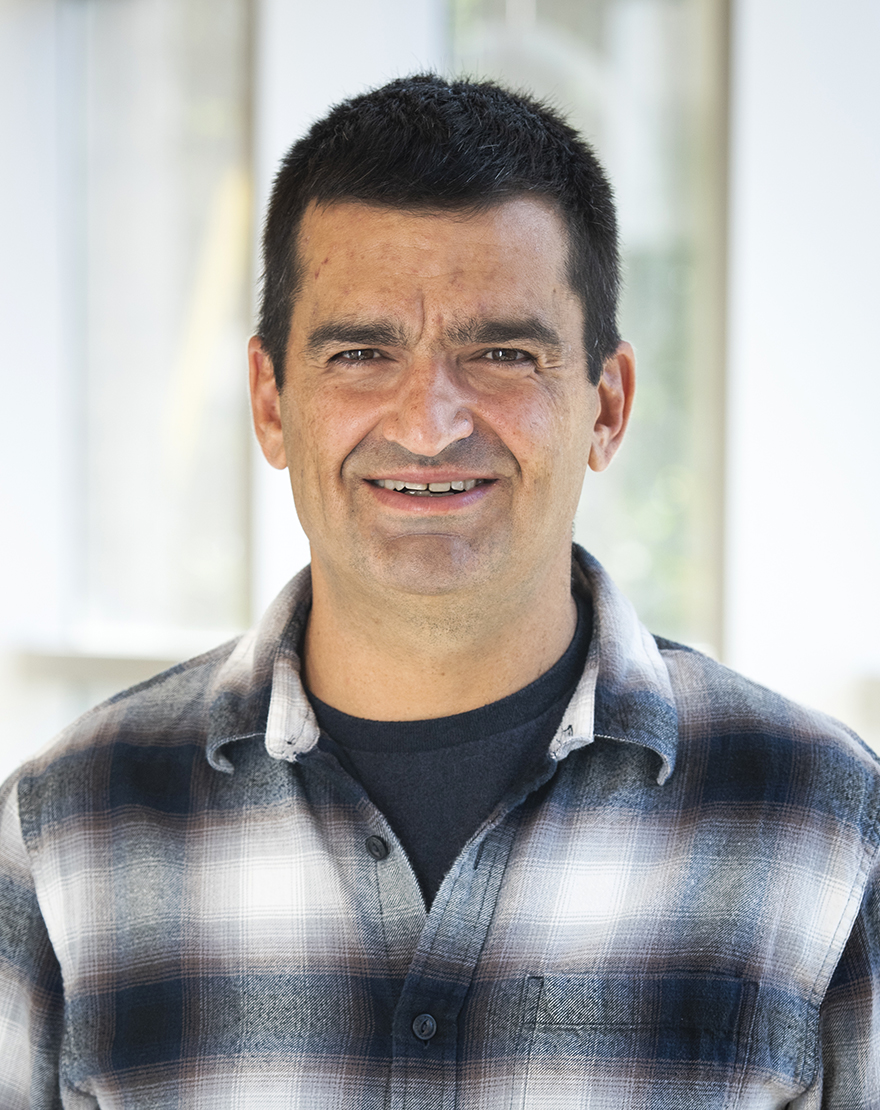
Marwa Soliman joined Telfer’s PhD in Management program in 2016 after completing her MSc in accounting at the University of Memphis. She is specializing in accounting under the supervision of Professor Walid Ben Amar. During her studies, she has received the Lilian and Swee Chua Goh Doctoral Scholarship and is among the first recipients of the Daniel Zéghal Doctoral Accounting Research Scholarship. We interviewed her to learn more about her research on narrative disclosures.
Why did you choose to study accounting?
I was not planning to be an accountant, but when I started my freshmen year, I loved the accounting courses and felt that I could excel in this field. I also had the great opportunity to teach accounting right after my college graduation, which made me understand and love accounting much more. Here I am doing my PhD in accounting.
What is your research about and how will it contribute to academic literature?
My research focuses on narrative disclosure. Understandably, the accounting literature heavily focuses on quantitative disclosure; however, narrative disclosure represents, on average, 80% of the annual report and it has significant economic consequences. My research aims to provide a better understanding of the managerial motives behind language choices in the firm’s narrative disclosure. My work has provided evidence that managers intentionally choose to complicate disclosure when their firm is exposed to political risk. I also find that managers who are committed to corporate social responsibility tend to provide more readable narrative disclosure. Currently, I am studying whether a CEO’s characteristics may affect narrative disclosure choices.
You have presented your research at the annual conferences of two accounting associations; what are the highlights of those presentations?
I recently presented my research at the annual meetings of the American (AAA) and the Canadian Academic (CAAA) Accounting Association. The study investigates the impact of political uncertainty on a firm’s narrative disclosure. My findings suggest that managers use narrative disclosure as an instrument to withhold negative information about potentially poor future performance. Managers’ narrative disclosure choices aim to balance between satisfying the outsiders’ increased demand for information while blurring the unfavorable expected news. Using conference call transcripts, I show that firms exposed to political uncertainty provide less readable disclosure, more ambiguous tone, and rely more on scripted responses to analysts.
How can your research impact Canadian businesses?
My work highlights the use of narrative disclosure as a managerial tool that could improve or impede informative disclosure to market participants. My research provides insights which the investing community, the firm’s board of directors, and standards-setters can use to better understand to what extent managers may use narrative disclosure as a misleading mechanism in a firm’s disclosure.
By Rania Nasrallah-Massaad
Executive Compensation and the Need for Disclosure - Meet New Professor Wenxia Ge
Wenxia Ge was hired last July as an associate professor in accounting at the Telfer School of Management. She received her PhD in accounting from McGill University. We interviewed her to learn more about her research interest in executive compensation policy.
Why did you choose to study accounting? Any personal motivation?
Accounting is one of the key functions of almost any business. Accounting numbers are not “hard” numbers. They are affected by professional judgments and estimates, so there is a risk of management bias. My working experience as an accountant and an internal auditor in the banking industry inspired my research interests in financial reporting quality, auditing, bank loan contracting and bank risk-taking.
How did your PhD studies inform your current research program?
In my PhD, I was exposed to new developments in both accounting and corporate finance research, as well as rigorous research methodology courses. I was also expected to propose research ideas for my term papers and PhD dissertation. This experience helped shape my independent research capability and enabled me to conduct interdisciplinary research.
Do you have any new research highlights to share?
The pay gap between the CEO and other senior executives can either serve as “tournament incentives” or reflect managerial power. Regulators are concerned about the enlarging pay gap.
How can your research influence business in Canada?
My JBFA study suggests that the executive pay gap is a risk factor that auditors should consider when deciding the audit scope and depth. Since auditors are an important participant in financial markets, their views on the executive pay gap have major implications for designing optimal compensation policies for top executives. Thus, our findings can provide insights for boards of directors and compensation committees. For regulators, our results highlight the need to consider implementing executive compensation disclosure requirements.
Does it Pay for Private Firms to be Socially Responsible?
The expectation that firms consider the impact of their decisions and activities on society and adopt corporate social responsibility (CSR) practices has gained traction over the last few years.
For firms, this can mean engaging in new ways of doing business. According to the 2018 Global Sustainable Investment Review, there has been a major increase in CSR investments globally, 68% since 2014. These investments are approaching $30 trillion.
Professor Harshit Rajaiya has received a Social Sciences and Humanities Research Council Insight Development Grant to study how investing in CSR initiatives affects the financial performance of private firms. This grant will allow him and his co-researchers to examine how engaging in CSR influences the chances of a firm receiving venture capitalist investments or becoming a publicly-listed company.
This research project, titled “How Do CSR-Related Activities Affect the Future Financial and Economic Performance of Private Firms?”also seeks to determine if there is a relationship between engaging in CSR activities and the valuation of firms that have gone public, as well as whether venture capitalists feel that firms that engage in CSR initiatives will be more successful.
Potential CSR benefits
There are, of course, reputational benefits for firms who engage in CSR practices. But as CSR can mean high costs, does it really pay, particularly, for private firms?
For years, researchers have examined the relationship between adoption of CSR practices and a firm’s financial performance. These studies have shown mixed results. While some have suggested that CSR creates shareholder value, others point to unnecessary costs.
Moreover, these studies have focused on publicly-listed firms. Little is known about how CSR affects the financial performance of privately owned firms. Are private firms who invest in CSR more attractive to venture capitalists and angel investors, and as a result, do they have a better chance to succeed?
You might expect that things would be different for these smaller, often less-known, companies, which face greater financial constraints. Indeed, the survival of privately owned firms is strongly linked to equity financing from venture capitalists or angel investors (accredited investors). As well, private firms, being smaller and less known than public companies, may be more vulnerable to reputational damage if they are perceived to be acting irresponsibly.
Helping firms make strategic decisions
Privately-owned firms make major contributions to employment, innovation, and sales in North America. For example, a study on corporate investment and stock market listing shows that, in 2010, private U.S. firms were responsible for 58.7% of total sales. But to operate and grow, they often need to secure funding from venture capitalists or angel investors.
Given the increasing public demand for firms to consider their social and environmental impact and the concerns of different stakeholders, knowing more about whether investing in CSR practices makes private firms more attractive for investors can be critical to the firms’ survival and success.
“It is possible that private firm managers learn from our research findings and consider stakeholders, as well as shareholders, as they make strategic decisions about investing in CSR,” says Rajaiya.
By Marie-Claude Allard
Harshit Rajaiya is an Assistant Professor of Finance at the Telfer School of Management, University of Ottawa. His research mainly focuses on entrepreneurial finance, venture capital financing and investment strategies, role of intellectual properties in external financing of private and public firms, FinTech, and the importance of online reviews on corporate financial policies of firms. Learn more about Rajaiya's research.
Research will Draw on Lessons from Canadian Major Projects
Canada and many other countries are in the early stages of a wave of major project investment triggered by the need to modernize infrastructure, the ever-progressing digital transformation of society and the urgency of the climate crisis. This makes it all the more important to improve the performance of major projects.
Recent projects such as the Phoenix pay system and the Ottawa LRT remind us of the cost, waste and pain of failure for project managers, contractors, owners and stakeholders.
Stephane Tywoniak, an associate professor at the Telfer School of Management, has received a Social Sciences and Humanities Research Council Insight Development grant to develop a series of pilot case studies of major projects in Canada through the lens of pragmatist theory. Applying this comprehensive theory, he will propose a process framework to analyze project behaviour.
Going beyond current, limiting theories
Tywoniak’s research study, Towards a major project behaviour theory, aims to go beyond the theories that currently dominate research on large-scale projects, which explain project failure and success through simple mechanisms.
According to Flyvjberg’s “planning fallacy” theory, projects fail because managers’ decisions are biased by optimism. According to Hirschman’s “hiding hand,” projects succeed despite being approved based on over-optimistic plans, because project managers find creative solutions. Both theories provide valuable insights, but neither offers a full understanding of the processes that influence project outcomes.
Professor Tywoniak has wanted to find a way out of this unsatisfactory situation. Rather than trying to attribute the failure or success of major projects to one factor or another, his research aims to uncover patterns of behaviour in projects and the factors that influence them.
Major projects are more than a technology upgrade — like when your work computer updates on Monday mornings to the latest software version — they’re a profound business transformation. The Phoenix project, for instance, was supposed to save millions through consolidating the payroll for 300,000 public servants in around 100 organizations in one integrated, centrally administered system. But to succeed, major projects must overcome multiple challenges and address the often conflicting expectations of diverse stakeholders.
Benefits for practitioners
Tywoniak is taking a more comprehensive approach to studying project management. Insights from his study could be of great value to leaders of major projects and provide reference-class comparisons to good practices. They could also influence public policy, particularly on starting and managing major projects. Recommendations could also help government and industry leaders make more informed decisions about project planning and management.
By Lidiane Cunha
Stephane Tywoniak is an associate professor of complex project management at the University of Ottawa’s Telfer School of Management. His main research interest is the strategic interactions between business and society in complex projects or programs and strategic decision making. Learn more about Tywoniak’s research.
Improving Business by Understanding Consumer Identity: Meet New Faculty Member Keri Kettle
After earning a PhD in marketing at the Alberta School of Business, Keri Kettle was hired last July as an associate professor at the Telfer School of Management. We interviewed him to learn more about his research interest in consumer identity and in what drives consumer behaviour.
Why did you choose to study marketing? Any personal motivation behind your research interests in this area?
I’ve always wondered what motivates people to make different choices, and marketing is simply a reflection of individual consumption choices. I gained a lot of insight into motivation and decision-making when I served in the Canadian Army, and my research interests, namely identity and motivation, are really driven by those experiences.
How did your PhD training inform your current research program?
My PhD training at the Alberta School of Business really showed me the many ways to examine an issue: this is reflected in my research, since I use many different methods, including field data, large-scale field experiments, and online experiments, to understand what drives consumption behaviour.
Do you have any new research highlights to share?
In a current study, we are examining what happens to your spending decisions when you get an alert or notification telling you that you have just had a large amount of spending (“unusual spending”) on your credit card. Surprisingly, our data shows that if a person’s spending is really out of the ordinary for them, they will actually spend more after getting an “unusual spending” alert!
How could your research influence businesses in Canada?
My research on consumer identity and behaviour should teach businesses how important it is to understand how their customers see themselves. More importantly, businesses need to foster consumer identities: can you get your customers to “be” your brand rather than just “do” your brand?