Using Social Enterprises to Address Community Hardship - Meet New Faculty Member Ana Maria Peredo
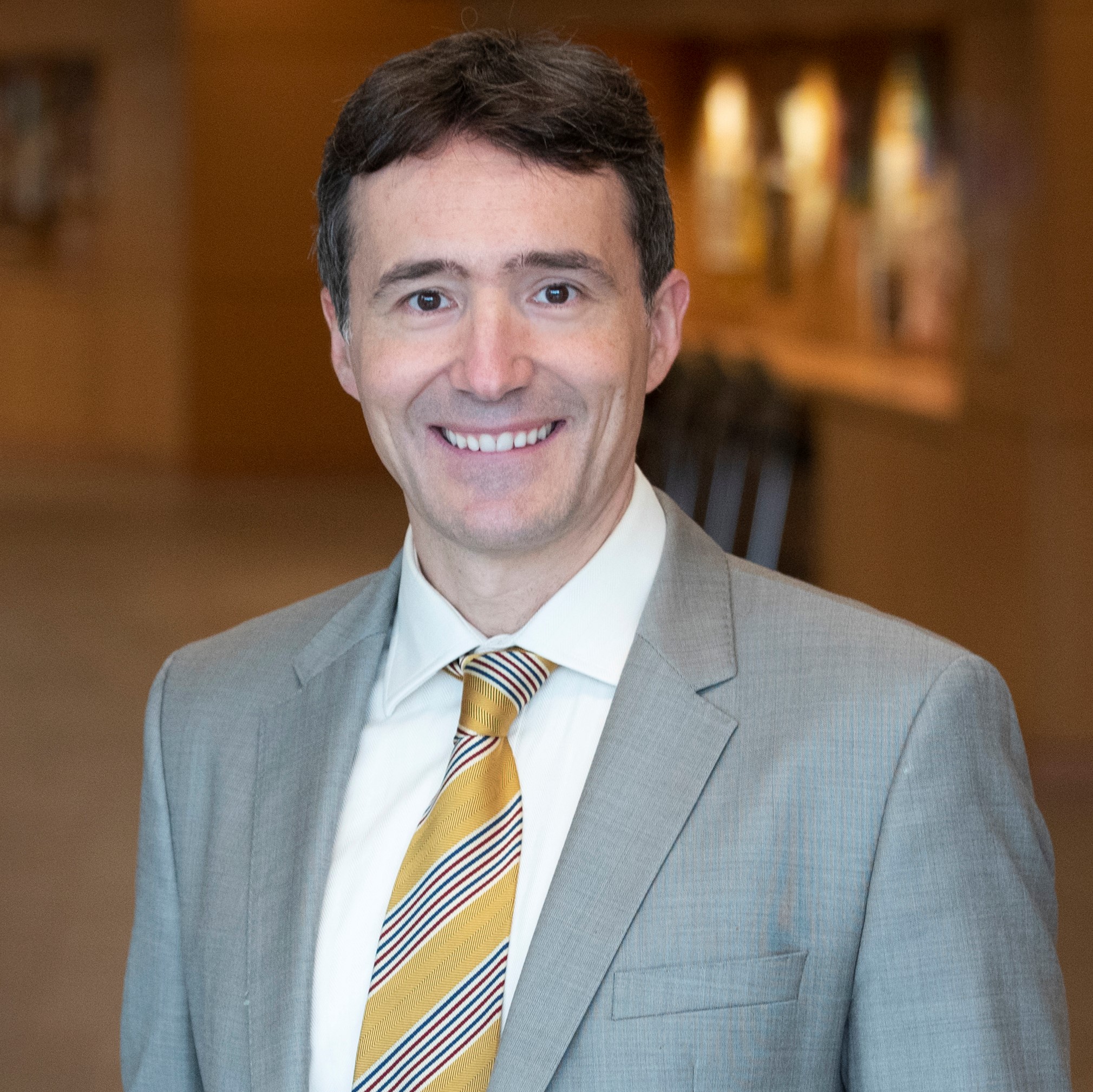
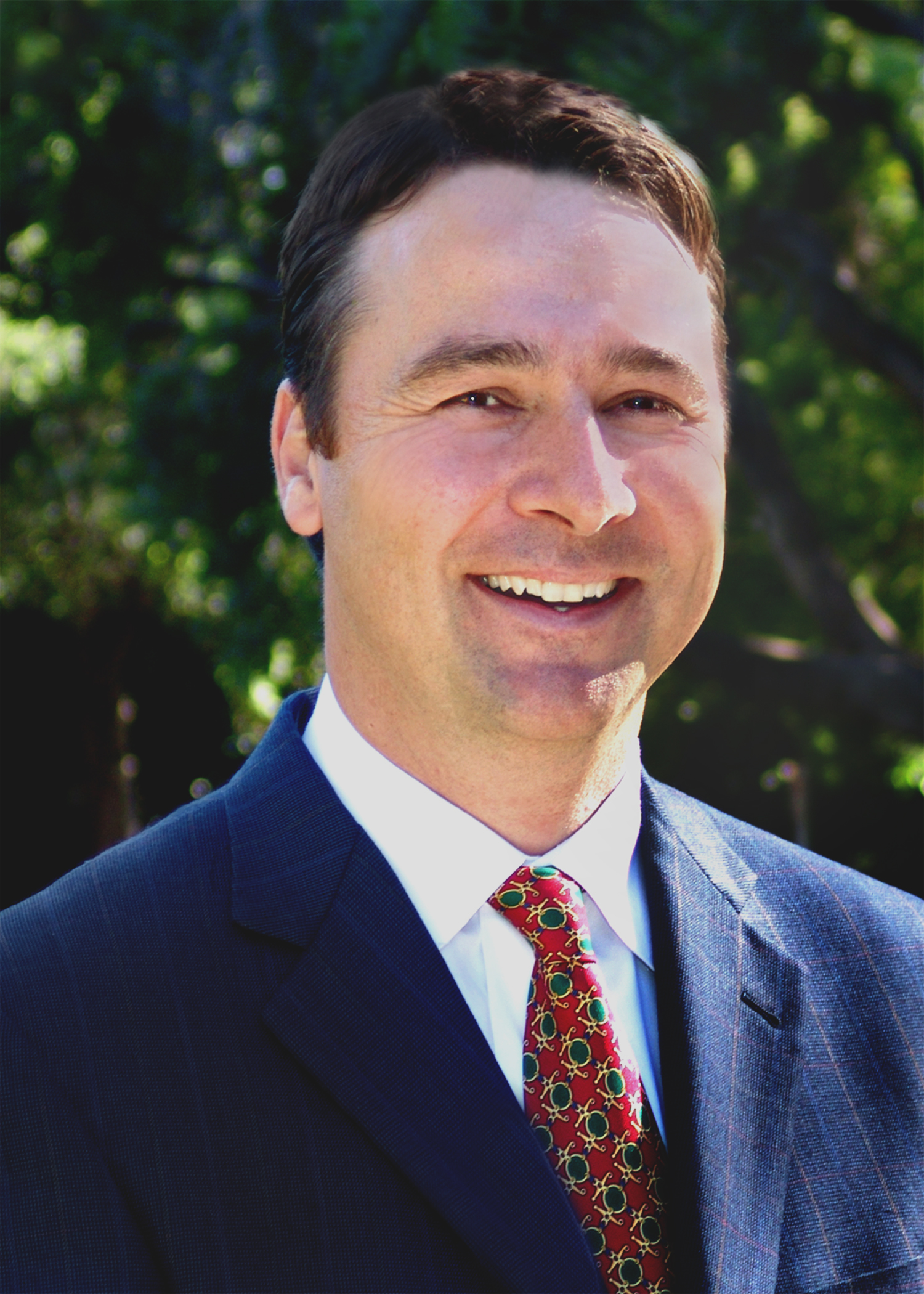
Ana Maria Peredo joined the Telfer School of Management in January as a full professor of social and inclusive entrepreneurship. She completed her PhD in entrepreneurship and sustainability with minor in social anthropology at the Haskayne School of Business of the University of Calgary. We interviewed her to learn more about her research interests in social entrepreneurship and community-based enterprises.
Why did you choose to study entrepreneurship? Any personal motivation behind your interests?
I was motivated powerfully by my experience working and studying in the Andes of my native Peru. I learned about the way Andean communities assembled their own resources to create enterprises that promote well-being in their communities. I came to see that this is an important kind of entrepreneurship. It expands beyond the narrow conception of individuals motivated by self-interest to see communities innovating together to pursue multiple goals, including vital social outcomes. I am still excited to see the way many communities use this approach, and the possibility of extending this to places where conflict and other circumstances have brought hardship.
How does your PhD training inform your current research program?
I was lucky that my PhD training allowed me to apply my various academic and professional experiences to approach problems with different perspectives. I started off in psychology, I worked as a journalist, and then my experience in the Andes led me to anthropology. I had to work hard, but I could use those experiences in my PhD program to develop the idea of “community-based enterprise,” which has had a big impact. My work on social enterprise and Indigenous entrepreneurship continues to bring those experiences together.
Do you have any new research highlights to share?
I am excited right now to see my research interests connecting with what people call “development.” I don’t like the word — it suggests people aren’t “developed” the way we think we are. But it does recognize that there is hardship that needs to be addressed, and that’s where I want to be. What I am keen about is the way that people’s existing resources can be put together to deal with what they recognize as hardship. I am working with a project in Rwanda that brings my ideas to bear on the post-conflict problems that exist there. I am also using these concepts to add to our thinking about Indigenous entrepreneurship.
How can your research influence business communities in Canada?
I love the word “communities” in the question! It’s communities where I want to have an impact. I like to see businesses embedded there. I can see some impact of my work, and I am excited about the possibilities of more. I did a project with one of my classes last year where we worked with seven communities in B.C. to explore the needs and resources to support social needs like housing and environmental challenges. The work I have done on co-operatives and common property is also a resource for communities wanting to improve their well-being. I also think the work I have been doing on Indigenous entrepreneurship can have a significant impact as we continue on the path of reconciliation, recognizing the resources that Indigenous people have in themselves and their communities to address the consequences of colonization.
Andrea Ghazzawi started a PhD in management at the Telfer School of Management in 2016. She received an MSc in health systems from Telfer in 2012 and worked as a part-time instructor at the School of Health and Community Studies at Algonquin College, prior to starting her PhD. Under the supervision of Dr. Craig Kuziemsky, Andrea has been looking at ways to inform health system transformation by drawing on social pediatrics, a tailored socially-driven approach to healthcare delivery for vulnerable children and their families.
Why did you choose to study healthcare systems? Any personal motivation behind your interest?
I chose to focus on health systems as my area of study as it has been an area of great interest to me since I was a child. Experiencing some of the system challenges first hand as we navigated the healthcare system as a family for my grandmother, I hoped to make a difference for others through my research, in particular, for vulnerable populations, including children, older adults and the socioeconomically disadvantaged.
What is your research about and what will it contribute to academic literature?
My doctoral research examines the multidimensional physical, social and collaborative space configurations at a social pediatric centre from the child’s perspective, and the extent to which the spaces are socially supportive. Space design and system theories are combined, a unique attribute of the study. This study provides an understanding of how children interact with space configurations and can inform how to optimize healthcare delivery, with the goals of mitigating barriers to care and ultimately maximizing care benefits.
Tell us about a recent highlight of your research.
Although not specifically related to my thesis, I am a co-author on a scoping review that explores neonatal hypoglycemia accepted for publication in BMJ Open. In particular, the review identified the nature of evidence supporting neonatal hypoglycemia diagnosis and treatment, and by extension, gaps in the literature, in order to inform policies and procedures for hypoglycemia screening and treatment for babies.
What impact could your research have on Canadian healthcare systems?
My doctoral research elucidates the importance of tailored, socially-driven approaches to healthcare delivery designed to mitigate social and structural barriers to care for vulnerable populations, supporting equitable and accessible patient-centred care. The results of the study can be used to inform health system transformation, particularly in primary care in Canada.
By Rania Nasrallah-Massaad
Understanding What Stalls or Supports Social Change - Meet New Faculty Member Madeline Toubiana
Madeline Toubiana joined the Telfer School of Management in January as an associate professor and the Desmarais Chair in Entrepreneurship. She completed her PhD at the Schulich School of Business and was previously the A. F. Collins Chair of Business at the University of Alberta. We interviewed her to learn more about her research interests in entrepreneurship and social change.
Why did you choose to study entrepreneurship? Any personal motivation behind your research interests?
My research at its core is about social change. More specifically, it is about better understanding what stalls and supports social change. After I had finished my business degree and was out working in the world, I started becoming frustrated with so many of the social problems we were facing, why there was so much resistance to change and the fact business seemed to be causing many of these problems. This motivated me to go back to school and think about ways in which business could be part of the solution, drivers of social change. This led me to discover the power of entrepreneurship, among other things.
How does your PhD training inform your current research program?
My dad used to joke that PhD stands for “piled higher and deeper”… And there is truth in that. My PhD training was about getting deep engagement with the theories that management scholars have been using to explain the social world and businesses’ role in it. My supervisor was a well-known institutional theorist, Christine Oliver. Her influence led to my more “macro” or sociological approach to studying social change. So, I look at people, but I look at how they are embedded in social systems — institutions — that shape the way they see and react to the world.
Do you have any new research highlights to share?
This month I had two great pieces published – one in Harvard Business Review on how we can manage and overcome change in our careers and another in Administrative Science Quarterly on how the dynamics of stigma can stall social change efforts. I have published a paper in Academy of Management Journal where my colleagues and I reveal the ways in which entrepreneurship can be an engine for positive social change, even in a very stigmatized context. In addition to continuing my work in examining the potential of entrepreneurship, I have a lot of new and exciting ongoing research projects that relate to my broad objective of studying social change. For example, I have work that looks at how fly fishing practices were transformed to protect freshwater fisheries and a very new project that looks at innovations in the death-care industry that are changing the way we grieve, die and are buried.
How can your research influence businesses in Canada?
My work reveals what can stall social change — for example, emotions or stigma — and outlines pathways to potentially overcome these issues. I also reveal ways to move forward towards change. I think that given the climate crisis, rising inequality and social unrest, we need change — but we have to be ready for it, both as organizations and as people. My research sheds light on both of these elements and thus has impact for businesses — and for society more generally.
By Rania Nasrallah-Massaad
Levelling the Playing Field for Marginalized Market Actors - Meet New Faculty Member Myriam Brouard
MyriamBrouard was hired last July as an assistant professor in marketing at the Telfer School of Management. She completed her PhD in marketing at HEC Montréal. We interviewed her to learn more about her research interests in consumer culture, technology adoption and discrimination in markets.
Why did you choose to study marketing? Any personal motivation behind your research interests?
Why do some people choose to buy a Mac over a PC? Why do people stand in line for hours to have the opportunity to buy a Supreme T-shirt? Why are people spending millions on CryptoPunks? These are the type of questions that drive me and the reason I chose to study consumer culture theory.
How does your PhD training inform your current research program?
During my PhD, I studied binge-watching. When I started the process, Netflix was still sending out DVDs and people were not talking about binge-watching at all. Throughout my study, I was lucky enough to witness the birth of a phenomenon that has completely changed the way in which people watch TV. Not only that, but it has also changed the whole industry. This made me realize that I was really interested in the intersection of technology and consumer culture.
Do you have any new research highlights to share?
I am currently working on several projects, many of which revolve around the use of technology and social justice. I am excited about work I am doing with BIPOC artists who have taken the plunge into the realm of non-fungible tokens (NFT art) and decentralized internet platforms (Web3). I am interested in seeing if decentralization will remove some of the traditional barriers that these artists face when trying to live from their art, including the biases of the gatekeepers of the art world — the galleries, the museums, the institutional players that often overlook art from BIPOC artists.
How can your research influence businesses in Canada?
Issues of social justice and market access are relevant to everyone. I hope that by doing this type of research I will play a small part in inspiring others to either learn more about these issues or start research projects that centre around BIPOC interests. I think that there is a disturbing dearth of work done in marketing on these communities. With more research, I truly believe will come better understanding and hopefully more opportunities for marginalized market actors.
By Rania Nasrallah-Massaad
New Research Identifies the Challenges of Investing in Commodities
Canada relies heavily on commodity markets, from wheat to lumber, from precious metals to energy. These markets attract investors seeking to diversify their portfolios and minimize the impact of inflation. But do the benefits of investing in commodity markets outweigh the risks?
In recent years, investors have been frustrated by distortions in prices between “spot” and “future” markets. A study published in Energy Economics co-authored by University of Ottawa professor Fabio Moneta identifies some of the challenges of investing in commodities. Moneta offers some practical insights below to help investors better understand the commodity markets and make decisions that contribute to a more resilient financial system and a more prosperous economy.
Avoiding using the wrong benchmark
“We decided to focus on oil futures markets to better understand the challenges of one of the most traded and perhaps one of most controversial commodities,” says Moneta, an associate professor at uOttawa’s Telfer School of Management.
To measure the performance of oil investments, investors often use the performance of “spot oil” as benchmark. Spot oil refers to assets traded based on contracts that reflect the current cash market price for oil. However, to directly invest in spot oil, an investor would have to buy physical oil and store it somewhere, at great cost. Tracking spot oil is thus not a practical approach.
Using spot oil as benchmark also creates challenges for investors who trade oil futures, which are contracts to buy or sell an asset at a predetermined price on a specified future date.
Because oil futures contracts don’t perfectly mimic spot oil returns, using spot oil as a benchmark to track oil futures causes a tracking error. “All exchange-traded products that invest in oil have this error,” explains Moneta.
“Contango”: Buying high and selling low
To better understand the source of this error, Moneta and University of San Francisco professor Ludwig B. Chincarini delved into the recent increase in capital allocated to oil investment and how this may have created distortions in the futures market.
The authors suggest that this increase in capital is mainly driven by commodity index investing, investing in products that track commodities, such as exchange-traded funds and other exchange-traded products that allow market players to invest in oil futures.
Moneta and Chincarini show that futures investing underperformed spot oil from 2006 to 2017, primarily because of an increase in “contango,” where the futures price is higher than the spot price. Many commodity-investment products like oil funds track near-term futures contracts and regularly convert, or “rebalance,” into further-dated contracts. But with contango, rebalancing into further dated contracts leads to a “buy high and sell low” strategy that hurts investors’ returns.
Two challenges: “Financialization” and “crowding”
The research team evaluated whether an increase in contango in oil futures markets is also heightened by the “financialization” of commodity markets, that is, an increase in financial capital investments allocated to the commodity markets, something Moneta has been studying in a Social Sciences and Humanities Research Council-funded project.
Now, Moneta and Chincarini argue that this financialization process may intensify “crowding,” when investors act in similar ways, and create distortions in the oil futures market. A large increase in commodity index investing creates an excessive demand in the futures markets.
While commodities like oil have become very popular among investors, these investments affect the price of oil futures. They also cause futures returns in oil to deviate from the returns of spot oil, creating a supply and demand imbalance.
“When there is a surge in demand without an increasing surge in the number of market players who wish to sell oil futures contracts (supply), prices are likely to increase. There needs to be an immediate pick up in supply or an increase in trading activity between the spot and futures markets,” explains Moneta.
Take, for example, the beginning of the pandemic. When public health measures led to a drop in demand, oil storage facilities across the globe were quickly filled. Investors strove to sell oil futures contracts and replace them with longer maturity contracts to keep their hand in oil, but, without storage space, many market players had no incentive to buy contracts. On April 20, 2020, the price of near-term oil futures collapsed to -$37.63.
Lessons for commodity market investors
Even though the researchers focused on oil futures, their findings can be extended to other commodity markets. Moneta shared some recommendations to help commodity investors make better investment decisions:
Investing in commodities may not as beneficial as some believe. These markets may offer opportunities for diversification but appear to be more exposed to the equity market.
Retail investors can get exposure to commodity markets by investing in exchange-traded products. But they should be aware of the issues associated with commodity futures investing.
Because futures markets provide important information used by market players like producers and corporations that trade commodities, market distortions can have critical economic consequences.
As for oil futures, investors and investment managers should be aware that spot oil may not be an appropriate benchmark. Additionally, the fees associated with these investment products reduce their net performance. Investment managers and investors should rely on spot oil plus storage costs or just a benchmark of oil futures.
The divergence in oil futures from the underlying spot oil observed from 2006 to 2017 teaches us that investors should monitor the contango and use it as an indicator whether to invest in oil futures.
Dr. Moneta is an associate professor at the Telfer School of Management, where he is also a Royal Bank of Canada fellow of finance. His research interests include investments, institutional investors, trading behaviour, mutual fund performance and empirical asset pricing. Learn about Moneta’s work.
Dr. Chincarini is a professor at the School of Management at the University of San Francisco. His research interests include investments, trading, crowding and empirical asset pricing. Learn more about Chincarini’s work.