Driving Industry-Wide Sustainability along the Supply Chain
By Lidiane Cunha
An increasing number of companies worldwide are committed to reducing their carbon footprint and creating a better society. However, research shows that companies promoting sustainability in-house is not enough. Rather, they must trigger sustainable actions along their supply chains. Indeed, a new study by Sara Hajmohammad, an assistant professor at the Telfer School of Management, offers insights into how companies can strategically make improvements at the industry level by shaping and transforming their suppliers’ environmental and social sustainable practices and behaviours.
Supplier sustainability risks
In 2010, one of the major international manufacturers of Apple products was alleged to be providing poor work conditions, leading to a tragic loss of life. It did not take long for the media to publicly scrutinize Apple itself. Moreover, according to surveys by the WWF and the Rainforest Action Network, respectively, Kellogg’s, Yoplait, Häagen-Dazs and other well-known food companies have failed to meet their commitments to phase out environmental damage caused by palm oil suppliers.
In the above situations, the companies were pressured to improve their suppliers’ sustainable practices. More recently, the WWF and the Rainforest Action Network have sought to pressure food companies that were not able to reach their goals to eliminate deforestation along their supply chains.
These cases of negative publicity show that no matter how environmentally and socially sustainable a company claims to be, issues along the supply chain may damage a company’s reputation and undermine internal efforts to increase its environmental and social impact. As Sara Hajmohammad, an assistant professor at the Telfer School of Management, says, “NGOs, activist groups, and other prominent stakeholders may use the media and social media platforms to hold companies accountable for any sustainability issues that can be traced to their suppliers, and even call for boycotts and demonstrations.”
To be truly sustainable and mitigate this risk, companies need to ensure that their suppliers also adhere to sustainable practices, whether this means safer working conditions or environmentally friendly policies.
The study
A new study co-authored by Hajmohammad suggests that the sum of strategic actions by companies to manage this risk can curtail suppliers’ poor social and environmental practices and, ultimately, improve the overall level of sustainability within an industry. However, the changes do not take effect immediately.
The study, titled “Mitigating sustainability risk in supplier populations: An agent-based simulation study,” provides invaluable insights to businesses, activist organizations and policy makers seeking to reduce the environmental and social impact of supply chains and their associated risks.
Hajmohammad and co-author Anton Shevchenko examined businesses’ exposure to risk related to unsustainable practices in the supply chain, and the strategies they undertake to manage such risk. They considered the company’s ability to influence suppliers and the resources they have at their disposal. They also collected empirical data and built a simulation to incorporate real decisions made by managers who purchased goods or services from suppliers across industries.
Results were published in the International Journal of Operations & Production Management. They suggest that businesses can engage in actions that improve their suppliers’ sustainability but that their mitigation strategies do not necessarily transform the industry in the short term. Quick changes are possible, but only when companies have leverage and resources. However, small and medium-sized businesses can still make a difference and reduce undesired risks by joining forces or selecting suppliers that avoid actions with a detrimental impact on the environment or society.
Key insights for the business community
When suppliers are involved in practices that damage the environment or society, change can occur when companies put pressure on a significant group of suppliers, instead of targeting suppliers individually. That said, the study indicates that only buyers with both resources and power to influence their suppliers can reduce or eliminate the risks associated with unsustainable practices at the industry level. Thus, smaller and less powerful or resourceful companies should join forces to act and pressure their suppliers to become more sustainable.
Key insights for activists and policy makers
By putting pressure on small- and medium-sized companies through boycotts, public demonstrations, and other strong measures, activists may not trigger change industry-wide. Under public pressure, these companies may simply switch to procurement from a few sustainability-driven suppliers rather than pushing the larger supply chains to change their practices. “Such an approach is not viable in the long run because of suppliers’ limited production capacity,” says Hajmohammad. “Companies that lack the internal resources and power to lobby their suppliers may need more time to transition to a more sustainable supply chain,” she adds.
Hajmohammad also reminds environmental and social activist groups that it is not enough to target a few reputable companies. Efforts are more successful when combined with governmental regulation and legislation covering all companies operating in specific industries. “We believe this approach may increase corporate awareness of the risk in engaging with suppliers responsible for unsustainable practices and, ultimately, lead to calls to action by all businesses in the sector.”
Read the full article
Hajmohammad, S. and Shevchenko, A. 2020. Mitigating sustainability risk in supplier populations: An agent-based simulation study. International Journal of Operations and Production Management.
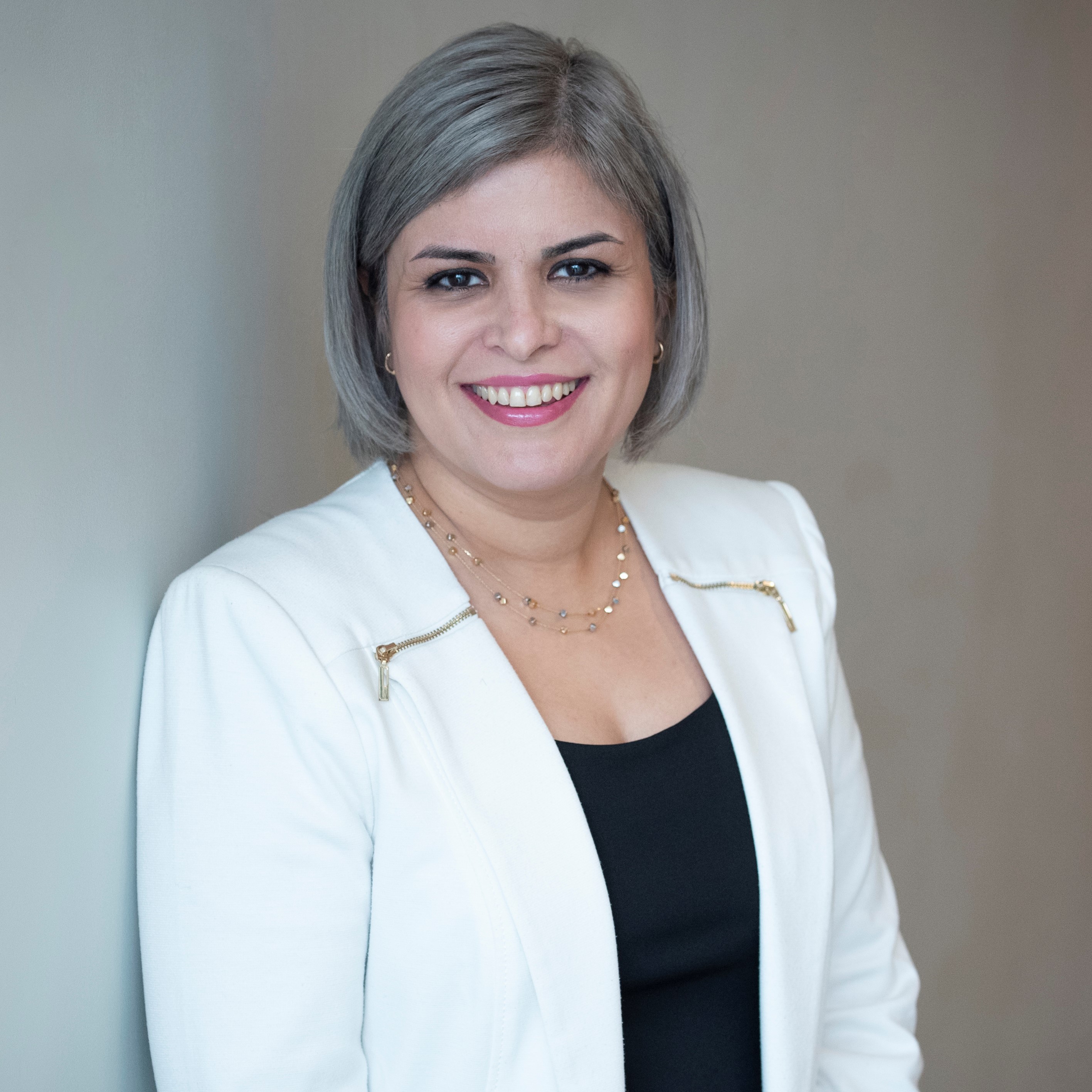
Dr. Sara Hajmohammad is an assistant professor of operations and project management at the Telfer School of Management, University of Ottawa. Her research focuses on sustainable operations and supply chain management. Learn more about her work.
Learn about the Globalization, Governance and Sustainability strategic interest group at Telfer, which includes Sara Hajmohammad.

Telfer Forum - Crisis and Governance: The Role of the Board during Times of Disruption
How does a crisis caused by COVID-19 affect corporate governance? This is not the first time that financial markets have shaken up the corporate world. In times of disruption, corporate leaders are forced to adjust so they can make more sustainable decisions in managing their firm’s corporate finance, preparing contingency plans, and disclosing information to other board members.
On December 9, 2020, a panel of researchers and industry experts discussed lessons learned from the recent global crisis. Ali Akyol (Telfer School of Management, uOttawa), Michelle Savoy (Laurentian Bank of Canada), and Tanya Gracie (Central 1) also proposed practical recommendations for corporate leaders interested in learning more about crisis management and their role during times of disruption and financial challenge.
You can now watch the event highlights to learn more about the topic:
Working through the COVID-19 Crisis: Managing in the New Normal
As part of our Telfer Forums series, the Telfer School of Management hosted a series of webinars on managing work and life in the new normal. These virtual events were designed to support our community in navigating the current COVID-19 crisis. Learn more about our Telfer Forums.

Research to Delve into “Toxic” Service Interactions between Customers and Service Providers
By Lidiane Cunha
A Telfer research project aims to provide new insight into toxic service interactions and service failure. Professor Ahmed Khalil Ben Ayed hopes to identify tools and frameworks to help managers and frontline service providers enhance service delivery and the customer experience.
Companies dedicate a significant amount of resources to delivering excellent customer service. Offering the best customer experience is seen as a marketing asset. However, many organizations fail to deliver a positive customer experience. Sometimes, the experience can even become toxic and lead to service failure. “Service encounter toxicity” is a term Ahmed Khalil Ben Ayed, an assistant professor at the Telfer School of Management, has coined to define particularly unpleasant interactions between customers and frontline service providers. It’s also the focus of his research.
Service experience as a social interaction
Many solutions to improve service quality are often based on a customer-centred approach: service needs to be improved to satisfy the customer. When analyzing service failure, researchers focus on the customer. We tend to forget that service delivery often involves interaction between two parties, customers and frontline service providers. Because of the interpersonal nature of this interaction, it can be complex.
Ben Ayed says, “To understand why some of these service interactions fail and why clients and service providers experience service encounter toxicity, we need to delve into the emotional, psychological and behavioural factors that are at play.”
The researcher believes that it’s important to examine these encounters from both a client and service provider point of view. We know a lot about how service failure affects customers, but how do such interactions affect service providers’ performance as well as their psychological and emotional wellbeing?
What will the research look at?
This novel study by Ben Ayed, “Service Encounter Toxicity: Gauging Service Failure from a Service Agent Perspective,” will tackle service failure from the perspective of service providers. Ben Ayed has been awarded a Telfer School of Management Research Grant (SMRG) to develop, test and validate an empirical measure of the toxicity of the interactions between consumers and service providers.
What will the research contribute?
This research aims to provide new tools to help managers evaluate and implement service policies, enhance service delivery, decrease service failure, and ultimately, improve the customer experience.
Ben Ayed’s work will shed light on the psychological, emotional and behavioural mechanisms underlying service failure: “Our study will identify the reasons and circumstances of inadequate performance on the part of service providers when faced with demanding service encounters,” he says.

A financing framework for better, faster, and affordable business decisions
By Rania Nasrallah-Massaad
Qianru Qi was recently hired as an assistant professor of finance at the Telfer School of Management at the University of Ottawa. She completed her PhD at Purdue University and then pursued a research career at Fudan, New York, and Duke universities. We interviewed her to learn more about her interests in finance and innovation research.
Why did you choose to conduct research?
While I was earning a master’s degree in Germany, I received a research assistantship from Fraunhofer-Gesellschaft, the largest German research institute of applied sciences. I worked on designing a visualization software that compares different diamond-cutting strategies virtually. The original software needed 14 hours to visualize a one-carat diamond. This was 15 years ago, and the computers were not very powerful. To address that issue, I developed a new algorithm that reduced the time to 10 minutes. I saw the real power of innovation and was driven by this excitement, constantly looking for innovative solutions that can dramatically change the status quo and address challenging issues in society.
Can you discuss a highlight from your work that you are particularly excited about?
As cancer treatment becomes more targeted and personalized, drug prices are becoming unaffordable. Some cancer drugs now cost up to a million dollars and as they become even more expensive, cancer patients will face a hard choice between “better treatment” and “better livelihood”. An alternative is to develop medical innovations that can prevent cancer. One good example is liquid biopsy, a blood sampling technique. Patients would only need to provide a blood sample to their physician once a year to permit early detection and removal of the cancer without severe consequences. One barrier to liquid biopsy research is that scientists need to track healthy people for many years; it is currently costing the US government $1.5 billion to establish a dataset. My collaborators and I have found a solution that reduces this cost by 99%.
What are you currently working on and how can it influence businesses in Canada?
Having developed a financing framework that significantly reduces research costs for liquid biopsies, my collaborators and I plan on implementing this financing framework to similar studies in Canada. My current research on fintech [financial IT] aims to make artificial intelligence more accessible. Specifically, we all know that big data analysis and artificial intelligence can help firms make better business decisions, but such services are not affordable for small business owners. The goal is to develop easy-to-use business and finance-specific artificial intelligence tools that will provide the resources necessary for entrepreneurs to fully understand the competitive landscape as they create small businesses, allow regulators to quickly identify issues to help prevent the next financial crisis, and enable researchers to develop and test theories to transform Canada’s business practices.

Recognizing Telfer Graduate Student Research Excellence from a Distance in 2020
By Rania Nasrallah-Massaad
Congratulations TelferNation! It is always a pleasure to recognize the excellent research achievements of our students. This year has been exceptionally challenging for all, and each of you are champions for persevering in your training and research despite the obstacles presented by the pandemic.
We would have loved to celebrate all your accomplishments by organizing a social event at Telfer, with lots of cake, laughter, and friendship. Though we are unable to celebrate your wonderful success in person this year, this does not diminish the recognition you all deserve.
Join me in congratulating the following 2020 winners who have secured various scholarships, received prestigious awards, and ranked among the top 3 presenters at the Telfer Graduate Research Student Thesis Competition.
SCHOLARSHIP SUCCESS
External funding opportunities are limited and highly competitive. The following MSc and PhD students were awarded prestigious provincial and federal scholarships:
- Frederick Banting and Charles Best Canada Graduate Master’s Scholarship - CIHR
- Mara Mihailescu
- Joseph-Armand Bombardier Canada Graduate Doctoral Scholarship - SSHRC
- Alison Coates
- Ontario Graduate Scholarships
- Andrew Scarffe
- Nina Nesdoly
- Léa Dugal
- Amirhosein Moosavi
- Anna Fedotova
- Queen Elizabeth II
- Esra Ben Ismail
TELFER RESEARCH AWARDS
Each year the Telfer School offers two Research Awards to students who demonstrate continued commitment to their research and the success of the school. Learn more about their achievements .
- Alexander Chung received the 2019-2020 PhD Engagement Award.
- Hong Qiu, won the first prize of the John Duncan and Deb Cross Award for her article entitled “Managing Family-Related Conflicts in Family Businesses: A Review and Research Agenda” published in Family Business Review.
- Alison Coates won the second prize of the John Duncan and Deb Cross Award for her article “Sustaining Rural Access to Emergency Care through Collaborative Emergency Centres in Nova Scotia” published in Health Reform Observer.
STUDENT THESIS COMPETITION
On Friday October 23, 2020 fourteen students participated in a virtual Graduate Research Programs Thesis Competition and impressed us with a morning of captivating presentations. The competition was fierce, but four students ranked among the top 3 presenters and received cash prizes.
Nadia Landry - 1st prize, 3000$
Nina Nesdoly - 2nd prize, 2000$
Esra Ben Ismail and Marwa Solimon - tied for 3rd prize, 500$ each