Bijan Raahemi’s Analytics Study Receives Major Grant
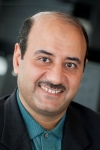 Bijan Raahemi will use a new grant from NSERC to explore innovative algorithms and the application of data mining techniques to Internet traffic with the goal of recognizing and responding quickly to network attacks. Raahemi, an associate professor in management information systems and the founder of the Knowledge Discovery and Data Mining (KDD) Laboratory, will receive $105,000 over five years for this project, which is titled “Feature Engineering Using Bio-Inspired Methods For Internet Data Analytics.”
Accurate classification of Internet traffic is important from the point of view of both network security and network resources allocation. With the growth of Internet traffic, traditional identification methods for Internet data analytics face serious challenges when newer and/or malicious applications use randomly selected ports to communicate, making them increasingly difficulty to identify. As a result, there has been an increasing focus of late on the analysis of Internet traffic based on statistical behaviours using machine learning, evolutionary methods and data mining techniques.
The effectiveness of the proposed algorithms will be explored in two important applications: intrusion detection systems and anomaly detection for network security, and protocol identification of the Internet traffic for resource allocation and quality of service assurance
A Geographer Rewrites the Rules of Innovation
David Doloreux examines the conditions for implementing regional innovation strategies.
 Innovation is partly a story of geography; it just might not be the one that researchers and policymakers have focused on to date.
The latest studies from David Doloreux call into question the widely-held view that different locations enable different levels of access to information sources, R&D, collaborators, and markets that enable innovation.
“In our study of knowledge-intensive business services in the province of Quebec, we found that innovation varied both across continuous space and across discrete territories, and these variations could not be explained by differences in firms’ capacity to access information, knowledge and collaboration partners,” says Doloreux, Research Chair in Canadian Francophonie - Innovation, Entrepreneurship and Regional Development at the Telfer School of Management.
Intriguingly, in many cases firms were more innovative in remote areas than in cities, reflecting the fact that some firms seek out remote locations for strategic reasons, and the different nature of firms and markets in remote areas. Doloreux suggests that some innovation factors may vary continuously across space, such as reduction in the propensity of the firms to specialize in a particular niche, and higher internalization of innovation processes as one moves away from large urban areas.
Given the results, it would be worthwhile to examine whether the observed patterns of innovation “might be explained by unmeasured institutional, organizational or cultural factors – factors that are not merely local but also have wider spatial structures.”
It is not the first time Doloreux has lifted a geographer’s lens up to problem of innovation disparities, revealing unexpected findings. A prolific researcher, he has examined the assumptions linking entrepreneurship, creativity and innovation with the idea of region for more than a decade. Since coming to the University of Ottawa in 2007, he has also been busy developing the Telfer School’s capacity to carry out research in those areas, and participating in various research networks in northern European countries such as Sweden (postdoctoral work at the University of Lund), Germany (Visiting Professor at University of Kiel) and France (research collaboration involving the University of Toulouse).
The Agence Universitaire de la Francophonie recently recognized Doloreux’s contributions by awarding him the 2010-2011 prix de la Francophonie pour jeunes chercheurs in the field of Humanities and Social Sciences, a prestigious award given every two years to recognize a researcher “who has made a significant international contribution, particularly within the Francophonie.”
“Whether I am developing empirical findings or advancing theory, fundamentally my work is about developing a more systematic view of the different processes related to innovation, and linking that to the level of the region,” says Doloreux, whose training as a geographer includes a BA in Geography from UQAM, a Master’s in Geography at the Université de Montréal and a PhD in Urban Studies at the University of Waterloo.
Among his other recent contributions are key findings which throw open the question of what makes an effective regional innovation system. Using a major grant from the Social Sciences and Humanities Research Council, Doloreux and his co-investigators recently examined conditions for the development of industrial clusters and the ways in which they are integrated into the regional economy. The team concluded that the development of industry clusters constitutes “a long-term process, which depends on a careful development of arrangements between key actors that are anchored in the region.”
Doloreux and his colleagues demonstrated that clusters – defined as regional arrangements of businesses, government actors, public authorities and intermediary organizations – are based on actors and processes operating at different scales, from the local to the global.
The findings contribute to a more complex picture of the mechanisms thought to contribute best to innovation. As Doloreux and the Université du Québec’s Richard Shearmur conclude in an article in the Journal of Economic Geography: “Once one begins to seriously address the geography of innovation, one discovers how little one really knows and how much has simply been assumed.”
Professor Doug Angus Tapped to Provide Expertise on Delivery of Francophone Healthcare in Ontario
 Professor Doug Angus is helping to examine the most effective ways of applying an integrated health services model to linguistic minorities as part of research being undertaken on behalf of the French Language Health Services Network of Eastern Ontario.
Under a new mandate established in 2010, the Network will advise the regional health authorities, the Champlain Local Health Integration Network (LHIN) and the South East LHIN, on all health issues affecting the Francophone community in the region. Among the actions identified in its 2011-2012 work plan, the network will produce a literature review and a summary of healthcare best practices and lessons learned that can be used to optimize the integrated services model for linguistic minorities.
The winning application for this consulting assignment came from Benoît Hubert, Executive Vice-President of PGF Consultants Inc., Professor Angus and Suzanne Tremblay, Principal of Sultrem Inc. Their research will allow the Network to make evidence-based recommendations to the LHINs on how best to adapt healthcare integration models to the needs of the minority Francophone populations.
Doug Angus is a specialist in health economics and health policy who has been principal investigator and/or co investigator on research projects funded by the Canadian Institutes for Health Research (CIHR) and the Social Sciences and Humanities Research Council (SSHRC), most recently on a study comparing support services for seniors in the Champlain LHIN in Ontario and Marseilles, France.
Margaret Dalziel in an Expert Panel on Innovation
 Margaret Dalziel is serving on the Council of Canadian Academies’ Expert Panel on the Socio-economic Impact of Innovation Investments. It will examine best practices for policy-makers to evaluate and measure the impact of their investments in innovation in terms of socio-economic effects such as output, employment, tax, creation of new ventures, development of entrepreneurship and social impacts. For more information, please visit the Council of Canadian Academies' website [This link is no longer available].
Dan Lane in an Core Group of Experts on Canada Ocean Science
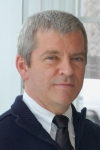 Dan Lane is a member of the Council of Canadian Academies Core Group of Experts on Priority Research Questions for Canadian Ocean Science, focusing on the environmental, economic and social opportunities, and societal challenges, in relation to Canada’s oceans. Twenty Canadian oceans experts will be involved in the first phase of this assessment by determining the priority research questions for Canadian Ocean Science. For more information, please visit the Council of Canadian Academies' website [This link is no longer available].