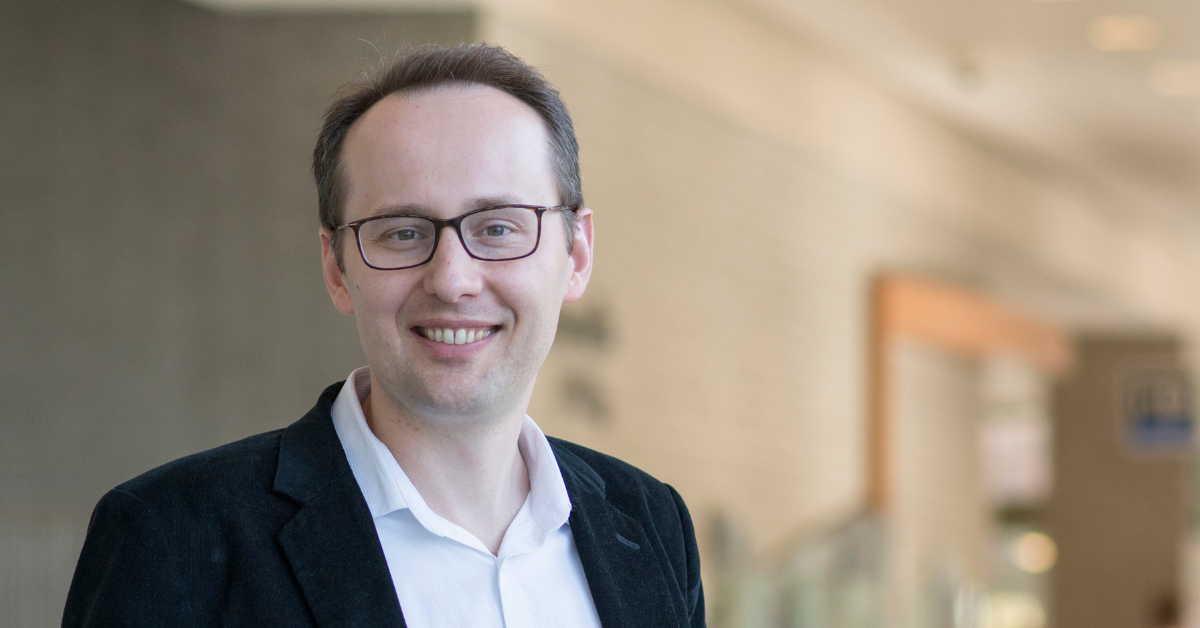
Telfer Established Researcher Award 2022 – Peter Jaskiewicz
The Established Researcher Award honours a faculty member who has earned national or international recognition for the Telfer School of Management through outstanding and impactful research over the past five years. This year, this award is presented to Professor Peter Jaskiewicz: as a leader in the study of family businesses, he has brought global recognition to Telfer.
Since joining Telfer in 2017, Professor Jaskiewicz has been awarded the University Research Chair (URC) in Enduring Entrepreneurship and has made vital contributions through his impressive publications, his committee participation and appointments, and his work in training and mentoring several students. He has also developed popular courses, including Family Entrepreneurship, Direct Readings on Family Conflicts, Contexts of Entrepreneurship, Advising Family Business and The Entrepreneurial Society. Since 2017, he has published 11 articles and 6 editorials in top journals, including 4 papers in the FT 50 journals list. He helped found the Family Enterprise Legacy Institute (FELI) and was awarded a lifetime fellowship by the Family Firm Institute (FFI). Professor Jaskiewicz has won many other awards as well, including a publication award from the International Family Enterprise Research Academy (IFERA) for their top 10 most impactful global research papers.
In addition to publishing his research in top journals (such as Family Business Review, Journal of Management, Strategic Management Journal and Entrepreneurship Theory and Practice), Professor Jaskiewicz recently authored a book entitled Enabling Next Generation Legacies. This book has become internationally influential: it is now a main source of education for top family business schools and the Family Business Network (FBN). He has also participated as a speaker at 27 different national and international events, including at the Sorbonne Business School in France, a paper development workshop for the Academy of Management Review in Italy, and the 4th European Family Business Summit in Amsterdam, where he was a keynote speaker.
The Telfer School is honoured to have Peter Jaskiewicz as part of our team. His contributions and achievements are sure to inspire the school’s future academics and researchers. Congratulations Professor Jaskiewicz!
By Kelsey Oldland
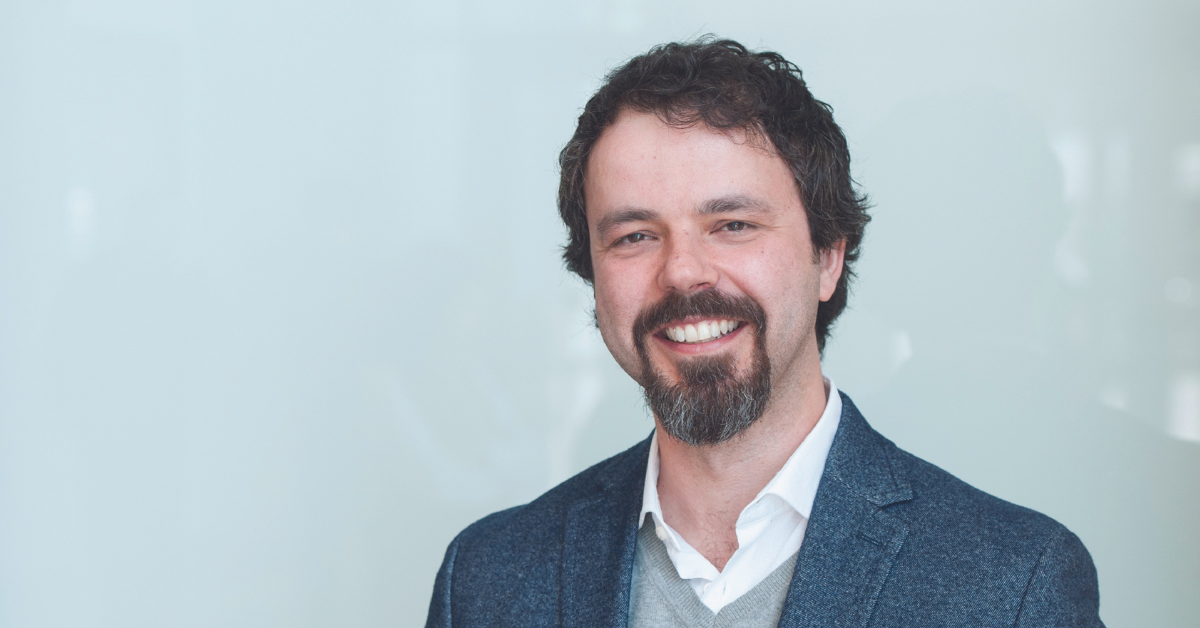
Telfer Emerging Researcher Award 2022 — José Carlos Marques
The Telfer School of Management is pleased to announce that Professor José Carlos Marques is the recipient of the 2022 Emerging Research Award for his significant contributions to the study of transnational business governance and sustainability in the Canadian context. The award recognizes Telfer professors in the early stages of their careers on a path to research excellence.
Marques joined Telfer in 2016 and has since contributed significantly to the school, achieving success through his research funding and high-impact publications. He has secured funding from several sources, including a SSHRC Insight Development Grant as a principal investigator, a SSHRC Insight Grant as a co-investigator and a Mitacs Accelerate Grant for one of his PhD students.
Throughout this time, Marques has published in prestigious FT50 journals such as Organization Studies, the Journal of Business Ethics and MIT Sloan Management. In addition to his network of collaborators, both locally and abroad, and research impact on the Telfer community, he also supervises PhD students in the Digital Transformation and Innovation program at uOttawa.
Marques’s efforts have not gone unnoticed, as evidenced by his numerous research awards, such as the Best Dissertation Award from the Academy of Management (Social Issues in Management division), the Governor General’s Gold Medal from McGill University and the K.B. Jenckes Prize from McGill’s Desautels Faculty of Management.
Since receiving his PhD in 2016, he has produced a large body of research held in high regard by the academic community. Previous projects have focused on corporate responsibility in the mining industry, moral and sustainability issues concerning Indigenous peoples’ economic dependence on the fur industry and potential governance benefits of blockchain technologies.
In recognition of his exceptional contributions to research and student mentorship, Telfer is thrilled to congratulate Professor Marques on receiving the 2022 Emerging Researcher Award, a well-deserved achievement!
By Kelsey Oldland

Improving society’s trust in science
In March 2020, scientists stepped up to minimize the spread and devastation of COVID-19 by guiding public health measures and government responses. But the scientific community has struggled with the global spread of misinformation throughout the pandemic, which has contributed to mistrust in science. It’s just one example of a growing disconnect between science and society.
Telfer professor Sandra Schillo has received a Social Sciences and Humanities Research Council Partnership Development Grant for a research project titled “Beyond endless frontiers: Rethinking the social contract for science and innovation.” Working with the Institute on Governance and other university partners, she’ll re-examine Canada’s post-war scientific social contract and propose a new science and innovation policy framework.
A strained social contract
Since World War II, this implicit social contract has called on scientists to produce knowledge using public funds. In turn, society has benefitted considerably. For example, through health research, Canadians live longer now than 75 years ago.
However, society now demands more transparency and accountability from science and expects opportunities to participate in it. More than ever, the social contract is showing strain, with calls for science to be more inclusive and diverse, and Canada grappling with meaningful reconciliation with Indigenous people.
Science and engineering remain vital to seizing opportunities and addressing challenges, but our approaches to the governance of science and innovation, research funding and performance, and the way new knowledge and innovations are put to use must evolve in a “post-truth” / “post-trust” Canadian context.
Finding solutions
Using a multidisciplinary and multisectoral approach, Schillo and her team will explore the deficiencies of the post-war contract and identify solutions for today’s science, technology and innovation-driven society.
The research will focus on six themes:
- Mission-directed research
- Inclusive innovation
- Interdisciplinary, Indigenous and other ways of knowing
- Science communications, outreach and public engagement
- Skills and knowledge
- Trust, integrity, and science ethics
For Schillo, “This is an exciting opportunity to collaborate with leading Canadian and international researchers and policy developers to find opportunities for a path forward. I am grateful for the leadership by the Institute on Governance in assembling this amazing team.”
A new science-society relationship
A renewed science-society relationship will ensure the greatest possible compatibility between the new knowledge that scientists create and the public’s capacity to mobilize it for society’s long-term benefit.
For Jeff Kinder of the Institute on Governance, Telfer’s partner on the project, “Science needs to innovate not just for society, but with society. We look forward to working very closely with Dr. Schillo and the other project partners to co-develop elements of a new science policy, including new forms of co-governance.”
The project will stress going beyond publication in scientific journals. It will look at connections with policy makers, decision makers, managers, industry leaders and the public, and other knowledge systems, to co-create knowledge with practical relevance for a broad range of stakeholders.
This more inclusive approach will support a strong relationship between science and society based on trust, to meet Canada’s future needs. As Schillo says, “(I) look forward to engaging with stakeholders across Canada.”
By Rania Nasrallah-Massaad
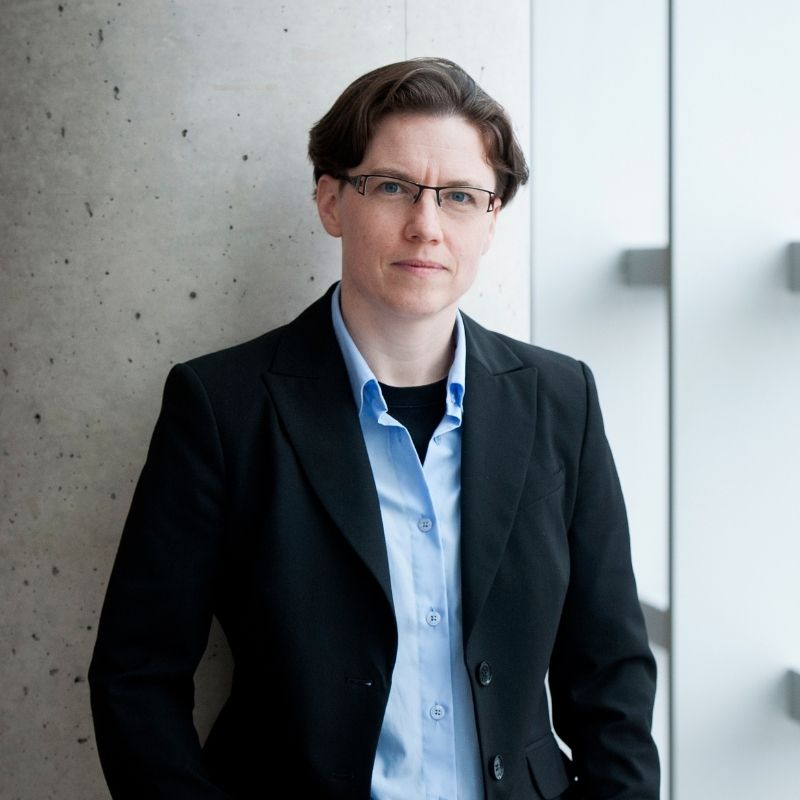
Sandra Schillo focuses her research on improved methodologies relating to the measurement of innovation, entrepreneurship and their impact. Dr. Schillo has research and professional experience in the areas of science and technology, research and innovation management and entrepreneurship. Her professional work experience includes work completed for Industry Canada and many science based departments and agencies of the Canadian federal government.

Integrating new members from underrepresented groups in your team: The key to success
In an era of inclusion of those historically underrepresented in organizations, it is increasingly important to ensure that new members can function at their best and fully contribute to their teams. Currently, though, there are few tools to help businesses and organizations properly integrate new people in work teams.
Understanding the socialization process for new team members
Professor François Durand and his research team have received a Social Sciences and Humanities Research Council Insight Grant to better understand the psychosocial and organizational processes involved in integrating new people in work teams. This multi-theory, multi-method project, based on a co-creation model involving health-care institution patients as partners, will take a fresh look at processes through which new people are socialized in work teams, to establish new theoretical foundations. The research team will focus particularly on integration of volunteer patient partners within the continuous improvement committee of Ottawa’s Montfort Hospital, which is made up of care providers and administrators.
Project title: Socialisation des nouveaux venus atypiques dans les équipes de projets d’innovation
When we asked Durand why this project was important, he said that “collaboration within health-care teams is meant to provide the best care to patients. By ensuring that all team members are fully integrated, you increase the team’s potential for collaboration and patients’ health improves.”
Improving workplace integration and quality of life
In addition to allowing for major theoretical and empirical progress in theories of socialization, this work may help influence practices of HR staff responsible for new team hires and further newcomers’ well-being at work. Knowledge generated by this research could fuel the development of diagnostic tools and instruments to improve conditions for integrating new hires and enabling them to fully participate in a successful team. Over the longer term, theories and tools stemming from Durand’s work could potentially improve new employees’ and volunteers’ quality of life in health-care and other organizations.
By Marie-Eve Girard
François Durand is Professor of Organisational Behaviour and Human Resource Management at University of Ottawa's Telfer School of Management. He is Montfort Research Chair in Organization of Health Services. He received his PhD in psychology from Université de Montréal in 2002. His research focuses on projects, teamwork, and collaboration in various organizational environments, including health care organizations in Canada and Africa. Learn more about François Durand’s research.

Examining anti-racism content in Indigenous health education
Professor Agnes Grudniewicz, and two Telfer MHA students, Maddie Venables and Amanda Larocque, received a School of Management Indigenous Research Support Grant to develop an anti-racism assessment tool for medical education curricula. While there have been efforts to integrate Indigenous knowledge into medical education and to reduce racism in health care, these efforts have not been systematically evaluated. This study will support the development of an assessment tool to advance the dismantling of anti-Indigenous racism in health care.
The team is working closely with Indigenous communities in all phases of the research. They will use a mixed methods approach that includes a scoping review, survey, and interviews. Surveys will be sent to all 17 Canadian medical schools to identify current practices with respect to Indigenous health teachings and to the delivery of anti-racism curricula. One-on-one interviews with medical faculty will dig deeper into the concepts discovered in the survey.
What will the research contribute?
Part of the motivation for this project stems from historical injustices committed against Indigenous peoples, which continue in many forms to this day. The team will be partnering with the Gesgapegiag Health and Community Services (GHCS) organization, which provides health promotion, prevention, education, as well as clinical and community services, to its members. This tool will be used to support the Chief and Council of Gesgapegiag, who are mandated to support anti-oppressive practices. It will also help ensure that the education curriculum given to future medical students reflects the community-based values of Indigenous peoples.
By Kelsey Oldland

Agnes Grudniewicz received her Ph.D. in Health Services Research from the Institute of Health Policy, Management & Evaluation at the University of Toronto. She holds a Scientist appointment at the Institut du savoir Montfort and is an affiliate investigator at the Bruyère Research Institute. Dr. Grudniewicz's research is focused on primary and community care and aims to improve health care systems and services for patients with complex health and social needs. Read more about her work.
- Do I Deserve the Business and/or Wealth I Will Inherit? – Excerpt from Enabling Next Generation Legacies
- We have always had a fair deal of conflicts in the family, should I do anything about it? – Excerpt from Enabling Next Generation Legacies
- PhD Spotlight – Peyman Varshoei
- PhD Spotlight – Mary Valdes