
Withdrawal of Earnings Guidance: The Influence of Connected Firms and Directors
Although withdrawal of earnings guidance (providing information to stock market investors and others regarding a firm’s expected results) has been studied in general, the influence of board connections and director characteristics on the spread of earnings guidance withdrawals hasn’t.
Telfer professor Ali Akyol has now received a School of Management Research Grant to study withdrawal of this guidance at the beginning of the COVID-19 pandemic. He’ll use the pandemic to examine mimicking behaviour in the corporate environment and understand how a societal shock can spread between companies through board connections.
Akyol will try to understand how information flows between networks and which factors help — or hinder — that flow. He will assess which types of board connections (e.g., from larger to smaller firms and vice versa) influence guidance withdrawals and whether only specific types of connections do so.
The research will also focus on the characteristics of influential board members and whether specific characteristics (e.g., directors with long vs. short tenure) are more strongly associated with guidance withdrawals within firms.
Research impact
This research could contribute important information to the literature about information flow, particularly among firms with board connections, and the factors affecting it. This could help to better predict information flow, which in turn could help investors predict firms’ actions and inform their own decisions.
By Phoenix Hudson
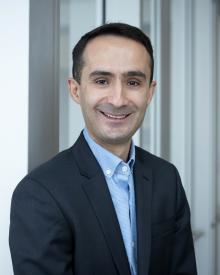
Professor Akyol's research mainly focuses on the effect of governance related regulations, the board of directors, firm disclosure and financial misconduct on shareholder value. His recent work examines the composition of the boards of directors and uses new and novel data that enhances our understanding of how board members interact with each other. Learn more about Ali Akyol’s research.

Digitization: How does it affect connections between employees?
Research on digitization has been contradictory, either saying that it can undermine worker solidarity by weakening in-person connections or claiming that digital tools can offer new ways to connect people.
That’s why Telfer professor Yao Yao has received a SSHRC Knowledge Synthesis Grant to study the impact of digitization on worker collectives (formal and informal groups where workers connect, bond and form collective voices). Her project will consolidate and synthesize current research through a systematic literature review.
Yao will examine the ways in which technologies influence employees’ relationships with each other, the role of digital communities in their relationships and the ways technologies can be used to promote connections. She’ll look at the conditions under which digitalization can promote or undermine these connections.
Yao will also examine how unions are using digital tools to maintain their impact, as well as how digital workers (e.g., those working on online platforms) connect with each other and organize collectives.
Research impact
Yao hopes to generate an agenda to guide future research on this topic. Her research could also have an impact on policies and decision-making at different levels, helping workers, HR professionals and policymakers to use digitization to promote worker collectives and more equitable workplaces.
By Phoenix Hudson

Dr. Yao earned a PhD in Industrial Relations and Human Resources from the University of Toronto and holds an M.Sc. from the London School of Economics and Political Science. Her research seeks to understand changing workplaces as technological and institutional environments evolve. Read more about her work.

How voice assistants influence your purchasing choices
Consumers are increasingly using voice assistants (VAs) in their daily routines, especially to make purchasing decisions. However, despite their increasing presence in our lives, their influence on consumer purchasing has been largely overlooked in research.
Now, Professor Argiro Kliamenakis has received a School of Management Research Grant to study the influence of voice assistants on consumer decision-making.
Kliamenakis will explore which situations make consumers more likely to follow VA recommendations. Her research will also focus on how the social nature of a VA can influence consumer decisions. She’ll study how VAs influence the shopping experience, including the roles of VA characteristics and social norms.
What will the research contribute?
Not only could this research help companies develop product recommendation algorithms, but it could also have positive implications for society. For example, it could help make charities’ ads more effective, for the betterment of society. It could also add to the literature on the consumer behaviour.
By Phoenix Hudson

PhD Spotlight – Elmira Mirbahaeddin
Elmira Mirbahaeddin joined the PhD in Management program at Telfer in 2017, after completing her master’s in executive management (urban affairs) and bachelor’s in health-care management in Iran. She also holds project management professional certification. She is working under the supervision of Professor Samia Chreim, specializing in health systems.
We interviewed Elmira to learn more about her research interests in mental health care and the role of peer support workers (PSWs). A PSW — not to be confused with a personal support worker — is someone who has a lived experience of an issue (e.g., homelessness, addiction or mental health) and provides help and recovery-oriented services to others experiencing the same issue.
Why did you choose to study health systems at Telfer?
I started my doctoral studies in the health systems specialization to build on my previous academic background and professional experiences in health workforce policy. I aimed to incept meaningful research after my immigration to Canada that would make a difference for the better. I have applied theories of management, particularly the ones from OB/HR, to enrich my exploration in mental health care. It was fascinating to me to have the opportunity to draw on the expertise at Telfer and explore intersecting research questions between health systems and OB/HR. Sounds ambitious, but it was a strong driving force for me.
What is your research about and what will it contribute to academic literature?
Following the pandemic, my research focused on the transition from in-person to virtual peer support during COVID-19 and its impact on providers and users of peer support. It involved a partnership with a not-for-profit organization for data collection and conducting research that mattered to the community. The project examined the changes that occurred to the work role of PSWs and managers, the strategies that they used to adapt to the sudden change and the challenges and benefits of this change.
You recently published an article in Administration and Policy in Mental Health and Mental Health Services. What are the highlights from that study?
In early 2022, I published my first thesis paper with my supervisor Dr. Samia Chreim. It is an original paper about factors influencing peer support implementation in mental health systems. These factors were presented in a multilevel model including system (socio-cultural, regulatory and political, economic and financial factors), organization (organizational culture, leadership, change management approaches and human resource management policies) and individual level (pertaining to relationships between PSWs and team members) factors. I presented the preliminary results of this research at the Canadian Association for Health Services and Policy conference, 2021.
What impact could your research have on Canadian mental health care?
My first article contributed to research, policy and practice domains concerning the important topic of integrating PSWs in mental health teams, organizations and systems as a way to improve access to mental health and social services. The next chapters of my thesis will provide important social outcomes in terms of sustaining helpful peer support programs and understanding the resilience of vulnerable people in crises.
By Rania Nasrallah-Massaad

“Crowding”: A Risk Beyond Inflation and Interest Rates
The COVID-19 pandemic and the war ravaging Ukraine have transformed the world’s economy in ways no one could anticipate. Investors and companies are facing significant shocks due to raising inflation and increased interest rates.
While such events put pressure on investment portfolios and affect overall market performance, an ongoing phenomenon, “crowding” — when an increasing number of investors hold the same securities at the same time — could lead to heightened market disruptions. Given a negative shock, investors holding, for example, inflation-exposed stocks may all sell at the same time, leading to large price adjustments.
A growing concern
Professor Fabio Moneta and his research team (which includes Professor Ludwig Chincarini from the University of San Francisco) have received a Social Sciences and Humanities Research Council Insight Grant to study crowding. Crowding is a growing concern among institutional investors. Moneta and his team seek to better understand its role, determinants and impact on the performance of institutional investors such pension funds, banks, mutual funds, hedge funds and insurance companies. Drawing on existing data on holdings of institutional investors from multiple sources, they will use time-series analysis and other approaches to test their hypotheses.
Project title: “Crowding, Institutional Investors Trading, and Anomalies”
For Moneta, “It is of crucial importance for institutional investors to identify when trading becomes crowded, especially during times of market stress. Practitioners are introducing new tools to measure the degree of crowding, but there is a need to understand its determinants and interactions with liquidity and crash risks, as well as its impact on market efficiency.”
Learning to predict the risks
This research will not only fill in a gap in empirical and methodological knowledge related to crowding, but will also help regulators and investors better monitor and predict the risks associated with crowding. Understanding the trading behaviours of institutional investors and the impact of crowding on their performance will provide evidence to influence policies, regulations and investors’ professional practices.
By Marie-Eve Girard
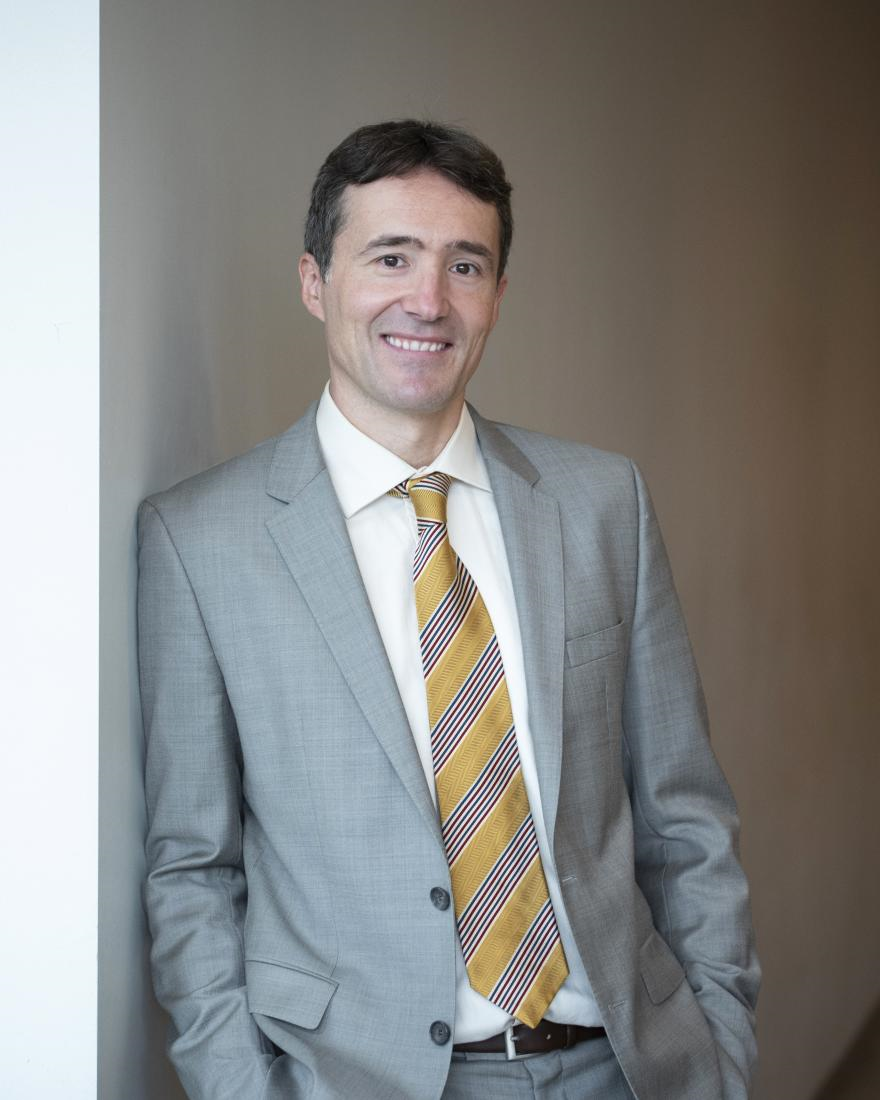
Professor Fabio Moneta studies investments, institutional investors, trading behaviour, mutual fund performance and empirical asset pricing. He has expertise in time-series methods and working with the investment management industry. Learn more about Fabio Moneta’s research.