Sharon O’Sullivan Delves Into the Problem of ‘Repatriate’ Turnover
 Global firms continue to struggle with how best to acquire and retain global talent, and the repatriation process is right up there on the list of challenges. While some evidence points to an improving record on this front, many studies highlight that botched repatriation continues to lead to higher-than-average turnover – and the loss of valuable global expertise. “Nearly 25 per cent of repats who come back leave the organization within a year because the repatriation wasn’t handled well,” reports Sharon O'Sullivan of the Telfer School of Management. Sometimes employees’ international and knowledge skills aren’t properly utilized, so what they thought would be a promotion track starts to feel like a career rut. Reverse culture shock and family stresses can factor into the mix, too. But there is also an underlying problem that doesn’t receive nearly enough attention, O’Sullivan says: head office managers and human resource professional may lack the tools and knowledge to provide the kind of supports that can help shape the repatriation outcome. As she argues in a new paper, “The empowering potential of social media for key stakeholders in the repatriation process,” the persistence of the turnover problem suggests the need for a fresh approach to this issue.
“Academic HR specialists have tended to view the activities of each of the main actors in the repatriation process in isolation,” O’Sullivan argues, writing in the Journal of Global Mobility, “but repatriation should be prompting researchers to think about connection.” The role of power dynamics and interpersonal relationships in the process is too often missed. The literature hints at a power imbalance between the employees and the firm higher ups, but hasn’t addressed it head-on. “It presumes that the employee is a free agent in the process, and that their proactivity will help them acquire needed repatriation supports,” O’Sullivan says. “By ignoring power dynamics, the research overlooks the fact that HR representatives and managers also lack power in the process. They can’t take advantage of the employees’ new knowledge and thereby prevent turnover because they lack the tools, resources, and knowledge to do so.”
On a practical level, social media offers the potential to empower these actors, O’Sullivan argues. It can help expatriates’ recognize the need to proactively manage different aspects of their own (impending) repatriation. By strengthening access to “key HR and managerial decision-making arenas, it can give repatriates a voice where the official channels may have obstructed that voice.” Through social media, employees can also enter peer-to-peer repatriate networks for mentoring resources. Finally, managers and HR professionals can learn from social media to more effectively direct firm resources toward repatriation supports. “Networks of managers who have supervised international assignees can be of great benefit to managers who don’t have international experience.”
While providing a wider lens on the problem of repatriate turnover, O’Sullivan is careful to point out that, for the individual employee, leaving the firm isn’t necessarily an unhappy result. Turnover can be a positive outcome for the employee, leading him or her to a fulfilling career in another organization. “For the organization, on the other hand, turnover of top global talent equals loss,” she says. “It is not simply the cost of having moved them, and the logistical costs associated with it, it’s the whole intangible cost of lost intellectual capital, the networks these people have created, the understanding they have about the challenges overseas. As for repats returning as managers, they understand how to manage people abroad because they’ve been there. Managers who lack such global insights are less equipped to effectively manage their international assignees in a way that capitalizes on opportunities abroad.” Clearly, social media deserves more attention as a valuable, innovative tool for the retention of global talent.
The research is published in the Journal of Global Mobility: The Home of Expatriate Management Research.

Professor Walid Ben Amar Appointed Executive Director of the CGA-Canada Accounting and Governance Research Centre
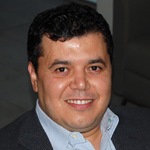 Walid Ben Amar has been appointed Executive Director of the CGA Accounting and Governance Research Centre. An Associate Professor of accounting at the Telfer School of Management, Professor Ben Amar will lead a dynamic team of scholars dedicated to producing leading-edge research in accounting and related fields.
Through the generous financial support of CGA-Canada, which was recently extended for 3 years, the Centre makes highly relevant research contributions that shape the accounting profession and corporate governance practices in Canada. It has developed into a true community of professional learning and academic leadership through publication of studies in top peer-reviewed academic journals that further enhance the Telfer School’s research profile; through research symposia and a distinguished speakers’ series that explores emerging issues in accounting and governance, and through the development of productive new academic partnerships.
Professor Ben Amar succeeds Daniel Zéghal, Ph.D. (uLaval), C.G.A., F.C.G.A., who for more than two decades established the excellent reputation of the CGA-AGRC and helped put the Telfer School of Management at the forefront of accounting research in Canada. Daniel recognized and seized the opportunity that presented itself to the School in the early 1990’s to establish a new research centre focused on the accounting field. He put the Telfer School early on the path of excellence in this important and rapidly growing discipline, contributing a wealth of creativity and a tireless dedication to make that vision a concrete reality. During his tenure, he also became a sought-after expert on a great number of subjects related to the production, communication and use of accounting and financial information.
Guiding CGA-AGRC into a new era, professor Ben Amar will focus his energies on developing a dynamic international research program and on fostering and supporting research-based graduate programs in accounting and governance. The research projects supported by the Centre make influential contributions in terms of: a better definition of the role of accounting; an enhanced understanding of accounting issues and challenges, solutions to problems facing the profession and the discipline; and the expansion and clarification of the theoretical, conceptual and practical foundations of accounting.
Walid Ben Amar’s research interests include corporate governance, ownership structures, mergers and acquisitions and corporate disclosure strategies. A certified general accountant (CGA), professor Ben Amar holds a Master's degree in accounting from Université du Québec à Montréal and a Ph.D. in business administration from HEC Montréal. He teaches financial accounting courses at the undergraduate and MBA levels.

François Chiocchio Delves Into Performance and Collaboration on Project Teams
 If a single word could describe François Chiocchio’s research, it would be “teams”; if a second word were needed, it would be “projects.” Increasingly, these two terms – projects and teams – “describe strategic tools to manage unpredictability, complexity, and turbulence in organizations,” says Chiocchio, an associate professor of organizational behaviour and human resources management at the Telfer School of Management since 2013. But the research hasn’t kept pace with the emergence of these tools for organizations seeking increased responsiveness, he explains. “The result has been a lack of empirical insight into what drives project team performance.”
Chiocchio’s studies look at the effects of trust, conflict, and collaboration on performance, and broadly, how to measure the effectiveness of teams. Among his many publications, he is the lead editor of The Psychology and Management of Project Teams that will be published this year by Oxford University Press. Professor Chiocchio currently manages numerous research projects involving colleagues and graduate students, many of which focus on healthcare and interprofessional environments. He and his co-researchers are studying health teams in Ontario and Quebec, in particular, but his interest in this area also recently took him to Africa (Burkina Faso), where he launched a study on leadership, collaboration, and performance of healthcare teams in the country’s local health centers. Closer to home M. Chiocchio was named, at the end of 2013, Affiliated Researcher at the Institut de Recherche de l'Hôpital Montfort, where he will study “interdisciplinary collaboration in health teams and the management of service improvement projects.”
Chiocchio’s research, published in peer-reviewed journals, has received major funding from the Fonds québécois de la recherche sur la société et la culture (FQRSC), the Project Management Institute's Research program, and the Social Sciences and Humanities Research Council of Canada (SSHRC). Among his many contributions to the field, he has explored project approaches to teaching, and as a professor of organizational psychology at Université de Montréal before coming to University of Ottawa, he received the prestigious Ministry of Education Prize from the province of Quebec. The award recognized his work in designing a collaborative web platform to help student teams communicate and manage their projects.
“As the use of projects and project teams continues to increase in organizations, managers must understand the factors that contribute to effective project team performance,” Chiocchio explains. “Looking at teams at the level of the project is fertile ground for research and innovation in how people work and interact to produce what they do.”

Catherine Elliott Awarded Women and Work Incubator Grant
 Professor Catherine Elliott will research Entrepreneurial Leadership Attributes: Developing a Gender-Neutral Vocabulary using a “Women in Work Incubator Grant” from the Centre for Research and Education on Women and Work at the Eric Sprott School of Business, Carleton University.
Professor Elliott researches and teaches in the areas of human resources management and organizational behaviour. Her numerous publications include the article “Entrepreneurial Feminists: Perspectives About Opportunity Recognition and Governance,” published in 2013 in the Journal of Business Ethics. Professor Elliott also recently examined the challenges and best practices of mentoring for diversity in the Canadian workplace using a grant from SSHRC with professor Joanne Leck.

University of Ottawa Recognizes Rising Star in Health Informatics Research, Craig Kuziemsky
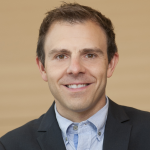 Craig Kuziemsky of the Telfer School of Management has been named the University of Ottawa’s Young Researcher of the Year in the Arts Humanities and Social Sciences. Professor Kuziemsky has developed innovative solutions for understanding how healthcare teams work and how to design information and communication tools to support them.
The Young Researcher of the Year Award is given annually to recognize exceptional contributions to research and student mentorship at the University of Ottawa.
“Craig Kuziemsky has made remarkable contributions to both his academic field and the Telfer School of Management and he will be an outstanding ambassador for the University of Ottawa as a Young Researcher of the Year,” said Dean François Julien. “Since joining the School in 2007, the quality of professor Kuziemsky’s scholarship and leadership has positioned the University of Ottawa at the forefront of health informatics research.”
While studies and commissions continue to advocate for increased collaborative care delivery, a considerable challenge is that healthcare systems are not designed to support collaboration. Professor Kuziemsky was among the first researchers to study engineering of collaborative healthcare processes as well as the development of metrics to evaluate collaboration. His innovative interdisciplinary studies using concepts such as complexity theory provide deeper insight into the nature of collaborative interactions in different healthcare settings.
Professor Kuziemsky has published more than 40 peer-reviewed publications and conference proceedings in his field. He has been principal investigator, co-investigator or collaborator on over $3.1 million of peer-reviewed grants and awards from funding agencies. He has forged collaborations with scholars at several Canadian universities and with top international research centres in the United States, Norway, Denmark, Australia, Poland and the United Kingdom.
He plays a leading role in involving local hospitals and healthcare organizations in the research and teaching done at the University of Ottawa. His interdisciplinary approach and emphasis on active practitioner involvement have led to unique ties with the School of Electrical Engineering and Computing Sciences and with the faculties of Health Sciences, Social Sciences and Medicine. This has opened new avenues for research and graduate supervision at the university.
Craig Kuziemsky is also director of the Master of Science in Health Systems Program at the Telfer School. Professor Kuziemsky acts as a supervisor, mentor and a role model for numerous graduate students who are benefiting from his ability to transfer the results of cutting edge research in the classroom.
- Professor Cheryl McWatters Named First Non- U.K.-Based Editor at Leading Accounting History Journal
- François-Éric Racicot Joins the Advisory Board of a Prestigious Finance Journal
- Professor Chiocchio has been appointed Affiliated Researcher at the Institut de Recherche de l'Hôpital Montfort
- Research by Telfer Professors on Use of Social Media in Survey Research Presented at Information Systems Conference