Connecting Technology and Entrepreneurship to Innovate and Develop our Local Economy
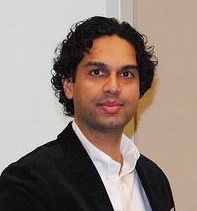
Meet Our New Faculty: Wadid Lamine
Wadid Lamine was hired last year as an Associate Professor of Entrepreneurship at the Telfer School of Management at University of Ottawa. Professor Lamine holds a PhD in Management from the University Jean-Moulin, Lyon 3 in France. In 2011, he received an award from l’Académie de l’Entrepreneuriat et de l’Innovation for his doctoral dissertation about nascent entrepreneurs’ networking dynamics. We interviewed Professor Lamine to learn more about his interest in conducting research in the areas of technology entrepreneurship, entrepreneurial networks, and business incubator and accelerators.
What’s your main research interest?
In my research, I am primarily interested in the key role that technology entrepreneurship plays in the development of the local economy. More precisely, I address how technology business incubators stimulate entrepreneurial ecosystems at the regional level:
Incubators are deeply involved in providing services to bridge entrepreneurs with the business community, investors, universities, research labs, business angels, among others.
They facilitate knowledge uptake by engaging policy-makers and the industry.
Any personal motivation behind your choice to conduct research in this area?
Although gazelles and big tech-firms such as Google, Amazon, Facebook, and Apple have been in the media spotlight for their success stories, we tend to forget that entrepreneurship is rooted in the local business community. Technology-based firms interact with regional entrepreneurial ecosystems, including universities, labs, local companies, science parks and technology business incubators. I chose to conduct my research in this area because I believe entrepreneurial ecosystems developed at the local level can create jobs and wealth.
My co-authors and I looked at how existing business model frameworks in France are used in technology entrepreneurship education. Based on the insights gained from our study, we suggest that education programs in technology entrepreneurship designed for engineers need to integrate business concepts, creativity, and prototyping.
Our study offers technology entrepreneurship educators a variety of pedagogical tools that can help engineers bridge the gap between their tech skills and lack of business knowledge.
How can your research impact the business communities in Canada?
My research has invaluable practical implications. As a researcher and educator, as I hope my insights will:
show the impact of technology business incubators on the local economy;
help engineers develop viable and scalable business models and find long-term solutions to address important societal and environmental issues that we face today; and
contribute to developing entrepreneurship programs that meet the specific needs of students who have technological background.
The new Entrepreneurship HUB clearly shows that the University of Ottawa is a step ahead in bridging the gap between business and technological innovation. I am happy to be part of such an interdisciplinary and dynamic institution that values entrepreneurship research and practice as a dialogue with science, technology, engineering and mathematics.
Telfer Forum: How Organizations Use Data for Social Good
2.5 quintillion bytes of data are created each day at our current pace, but that pace is only accelerating with the growth of the Internet of Things, a giant network connecting consumers to a variety of devices, from smartphones to home appliances. The access to this enormous amount of data in this ever-connected reality has a major impact on public and private organizations.
News headlines decrying nefarious uses of data have pushed legislators to draft consumer-oriented policies to address privacy, consent and security concerns. However, with few exceptions, we hear little about how data can be used for social good. This session will explore how good data practices can be used to innovate and develop new products and services that will positively impact the daily lives of Canadians.
Marketing and data experts will be addressing some of these opportunities and challenges in our Telfer Forum, “How organizations use data for social good” on April 9, 2019 at the Telfer School of Management at the University of Ottawa.
Moderators Leila Hamzaoui (Telfer School, University of Ottawa) and Steve Guest (ProdWerx Solutions Inc) and panelists Michael Mulvey (Telfer School, University of Ottawa), Umar Ruhi (Telfer School, University of Ottawa), Darrell Bridge (City of Ottawa), and Chris Johnson (Privacy Analytics) will engage the audience with their insights from research and practice perspectives to tackle the following questions:
How are organizations using data for social good?
What benefits do organizations realize by embracing good data practices? And, how do they do it?
How can organizations adopt policies in ways that align with public interests?
This free event will be a great opportunity for professionals in the public and private sectors to learn more about the impact of collecting large amounts of data on consumers and society at large. Light hors d’oeuvres will be served.
Location: Telfer School of Management, University of Ottawa, room DMS4101, 55 Laurier Avenue East, Ottawa.
Time: 5:30 p.m. to 7:30 p.m.
Three New Research Projects Will Address Relevant issues in Management and Health Systems
Three faculty members have been each awarded a Telfer School of Management Research grant (SMRG) for projects that will address important issues in the areas of international management and health systems. Read on the learn more about the relevance, goals, and future applications of their specific research projects.
Guanxi, Knowledge Transfer, and Sino-Africa Join Ventures
In a new project entitled “Guanxi as a facilitating tool for knowledge transfer in China-Africa joint ventures”, Assistant Professor Abdoulkadre Ado will examine the role of powerful social networks “or Guanxi” in facilitating knowledge transfer from Chinese organizations to businesses in Africa. He believes knowledge transfer could establish long-lasting fruitful partnerships between China and Africa and enhance joint ventures’ success.
The Sino-African business momentum
Trade relationships between China and Africa are unprecedented and have a major impact on African economies. As an example, the Chinese government offers many opportunities for Africans to gain knowledge and skills through scholarships and vocational training in China. Immersed in a new business culture, Africans quickly learn about guanxi. These powerful social networks establish a form of moral obligation between individuals and instil a commitment to mutuality and trust.
Upon their return to their home countries, African trainees who form these networks in China can become invaluable assets for African organizations. They become instrumental in transferring this new knowledge in the organizations and building new partnerships with Chinese businesses.
What’s this project about?
Professor Ado has been awarded a new SMRG to further understand the value and impact of guanxi. Very few studies have directly examined the role of the guanxi asset on the formation of joint ventures between African and Chinese partners and the knowledge transfer that results from these partnerships. Ado’s research will focus on three major African countries involved in China-Africa joint ventures: Ethiopia, Kenya, and Tanzania.
How can EPIC implementation affect medical residents’ training and patient satisfaction with care?
In a project entitled “A pre-post evaluation of Epic implementation impacts on Medical Training and Patient Satisfaction,” Associate Professor Mirou Jaana will explore the impacts of EPIC, a health information system that will be implemented at several health care organizations in the Ottawa region. This system will create electronic medical records for patients that are shared across a digital network of health care providers.
Why EPIC impacts evaluation?
Electronic medical records (EMRs) offer major opportunities to improve timely access to medical information and operations in health care organizations (e.g., improving workflow of patients, reducing test duplications etc.). Six health care organizations in Eastern Ontario are currently implementing a comprehensive health information system from EPIC, which will allow them to have timely access to EMRs and share patient information across different sites and health care providers.
Despite the promise for improving medical decisions and patient care, the implementation of EMRs may face challenges that can compromise the expected benefits of these systems, particularly at the physicians and patients’ levels. To this date, little is known about how EMRs affect the training of medical residents, and the overall patient experience and satisfaction, in light of the increased amount of information available and the intense technology use during the care process.
What’s this project about?
A rigorous evaluation of EMRs such as the EPIC system can support health care organizations in identifying risks and challenges at early stages and developing effective mitigations strategies to address them. Understanding the importance and need for such an evaluation, Professor Jaana will examine the impacts of EPIC on medical residents’ training and activities, as well as patients’ overall satisfaction and experience with the care they receive at one of the hospitals implementing this system in Ottawa, the University of Ottawa Heart Institute ( UOHI). The researcher will survey medical residents and patients visiting the UOHI prior to and after the deployment of EPIC. Her goal is to evaluate how the new system will affect medical training and patient satisfaction.
IMPROVING THE DESIGN OF HEALTH SERVICE PLATFORMS THROUGH BETTER ARCHITECTURAL MODELS
Assistant Professor Lysanne Lessard and her collaborator, Associate Professor Mark de Reuver (Delft University of Technology), will undertake a case study to better understand how the architecture of health service platforms can be organized and ultimately help health providers improve the effectiveness of these platforms.
Developing Specific Architectures for Health Service Platforms
Health service platforms (HSPs) are digital platforms used to facilitate new ways of delivering healthcare to improve care effectiveness and efficiency. They are becoming increasingly popular in the health care system as these platforms can offer low cost, high clinical value, and varied applications. While these platforms have been used to improve health services like remote patient care and monitoring, HSPs need to be adjusted and tailored to the diverse specifications of the services they support. HSPs similarly need to be designed in line with the intentions of health professionals and patients who use these platforms.
The architecture of a platform refers to the way in which the platform’s components are organized. Technologically, platforms allow to easily change their components (e.g. applications), and the technology used by these components. However, traditional architectural models for digital platforms were created with commercial goals in mind. Decisions about what to change to achieve a given objective are based on the desire to attract third-party developers that will create innovative apps, make them available through the platform, and in turn attract more users to the platform.
“While HSPs rely on the same technologies, their purpose is not the same. Health providers seek to improve health outcomes for platform users, not to increase their revenue through increasing the number of patient users. Thus, any decision regarding how to change the platform should be based on its impacts on desired health outcomes,” says Professor Lessard.
What’s this project about?
Health providers who wish to integrate HSPs within their organizations lack the tools that could help them identify what should be part of their HSP structure and how it should be organized so it reflects their perspective and meets their desired health outcomes. A study led by Professor Lessard is a first step towards creating such tools. The project will focus on a case study of an HSP that supports remote patient care and disease prevention.
Who will benefit from your research insights?
"The knowledge gained from joint ventures with Chinese partners could be invaluable in improving African business capabilities and safeguarding Africa’s economic success. The outstanding economic growth rate in Africa is also appealing to potential international partners. Thus, a better understanding of how Africans gain knowledge from Chinese organizations can also help other foreign partners improve their business negotiations in Africa."
“I’m hoping that the insights gained from this research will fuel a broader-scope evaluation of the EPIC system in multiple health care organizations over time in Ottawa and across the country. This is equally beneficial for the research and practice community given the wealth of data and information that will be available at our hands in these real environments undergoing major changes in the ‘blueprint’ of their care delivery. There is a lot to learn from the experience of each health care organization undertaking this digital transformation, and knowledge sharing is essential to avoid reinventing the wheel with each new project.”
“I plan to share the insights gained from this project and their implications to the organizations involved in the case study. These results could support these organizations in better identifying and addressing the architectural requirements for HSPs and better integrate them into the always evolving health care system.”
An academic journey to understand economic inequality and other grand challenges
Meet Our New Faculty: Suhaib Riaz
Suhaib Riaz has been recently hired as an Associate Professor at the Telfer School of Management at University of Ottawa. He brings to the University of Ottawa about 10 years of teaching and research experience. We interviewed Professor Riaz to learn more about his research on grand challenges of current and future global significance, such as economic inequality. More specifically, he examines how organizational and management practices are implicated in such grand challenges.
Why grand-challenges?
Grand challenges are large-scale phenomena that can have a profound impact on everyone’s lives. Let’s look at an important recent example: the global financial crisis in 2008 led to the collapse of the housing market, unemployment spikes, and many other social and economic problems. In this case, the grand challenge was a dysfunctional financial system, much of which was taken for granted. But how did that happen?
My research uncovered some of the problems in the system. First, I looked at how the success of major organizations in the financial industry led to unquestioned acceptance and taken-for-grantedness of regulations, norms, and culture around them. Building on this, I examined how certain top professionals strategically used language to claim expertise and remain authority figures in the industry, thus stalling any serious efforts to change the system.
What led you to studying other grand challenges?
When I was still studying the causes and consequences of the crisis, the Occupy Wall Street movement was beginning to make the headlines. In an attempt to better understand their motivations, I talked to Occupy protestors at Copley Square in Boston and realized that some of their concerns and my research overlapped. It was a natural progression for me to dig deeper into economic inequality as a key feature of the socioeconomic system, something that hadn’t been addressed by other management scholars at the time.
Are these grand challenges interconnected?
Yes, they are. A simple way to see the connections is by looking at how unsustainable debt, which was a key practice implicated in the financial crisis, was used to mask underlying economic inequality. As long as people could consume, it didn’t seem to matter how left-out of the system they were in terms of income and wealth. But in the post-crisis years, the anxieties of inequality, economic insecurity, and lack of socioeconomic mobility have opened up an opportunity for exploitation by populists for political polarization.
Who benefits from your research on grand challenges?
This is everyone’s business. I am committed to taking these ideas to policy makers and industry professionals. I refer to these interrelated grand challenges – dysfunctional financial system, inequality, and political polarization – as the “One Crisis” that won’t go away. I will continue to discover new angles in my quest to understand these grand challenges and how to address them.
Impact Investing: A New Form of Investment in the Finance Industry
Impact investing
A research team from the Telfer School of Management will explore impact investing by private foundations.
In Canada, 5,556 charitable private foundations control $39.6 billion in assets. However, the majority of their assets become endowments, and are merely invested for financial returns. Only a small portion of these assets goes to philanthropic missions each year. To generate social or environmental returns as well as financial returns, a new form of investing has emerged in the finance industry: impact investing.
Valuing both social impact and financial return, impact investing is a win-win situation. Particularly in Canada, where less than four percent of endowments controlled by foundations are committed to charitable activities, impact investing can be a promising alternative. Indeed, it could enable a larger number of private foundations to achieve their commitments to their charitable missions.
What’s this project about?
Although impact investing seems to be rapidly expanding, Professor Qiu Chen explains that several important questions about this form of investment remain unanswered:
“Does the expertise of board directors affect foundations’ decisions to pursue impact investing? Do impact investments yield standard financial returns as traditional investments do? Are there other economic consequences of impact investing beyond financial returns?”
These are some of the questions that Professor Chen and two other researchers from the Telfer School of Management, Professors Shujun Ding and TieMei Li, will address to better understand how private foundations make investments and why they choose impact investing. For their new project entitled “Impact Investing by Private Foundations,” the team has received an Insight Development grant by the Social Sciences and Humanities Council (SSHRC).
Who gains?
By looking at the decision-making process involving impact investing, the researchers hope that their insights will support government policymakers in developing policies that can effectively foster more impact investing.
“Governments currently have limited funding for social and/or environmental projects. Hence, if private foundations played a more active role in making socially responsible investments, they could have a significant impact on society,” explains Professor Chen.
The team will also identify what motivates foundations to engage in impact investing. As such, their findings can help asset managers in their efforts to design appealing products that suit the investment needs of private foundations.






.png?x=254&y=0&x2=1021&y2=511)