Professor McWatters is named to the editorial board of an FT50 journal
Cheryl S. McWatters has been named to the editorial board of Accounting, Organizations & Society (AOS), a major international journal. AOS, which publishes scholarship on the behavioural, organizational and social aspects of accounting, ranks 3rd on the Financial Times' list of 50 top journals.
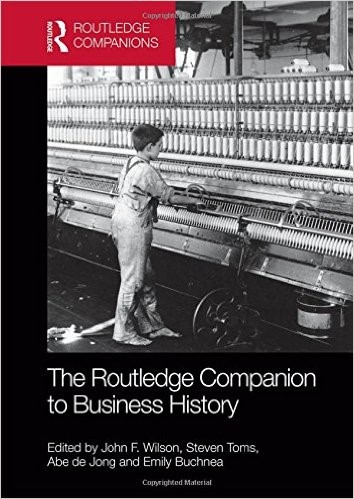
Professor McWatters, a Full Professor at the Telfer School who holds the Father Edgar Thivierge Chair in Business History at the Telfer School of Management (cross appointment with the Department of History at the Faculty of Arts), has also made an important contribution to the scholarship on globalization. Her chapter with Pierre Gervais, Université Sorbonne Nouvelle - Paris 3 appears in the new Routledge Companion to Business History, an authoritative, international source on business history, compiled by leading scholars in the field.

Professor Michalowski presents on health innovation with Ontario’s chief health innovation strategist
Ottawa stands poised to develop into an important player in healthcare innovation. And it can get closer to the goal by connecting the region’s clinical innovators to business acumen, and thereby drive better patient care.
That message was a key theme highlighted by Wojtek Michalowski, Vice-Dean of Research and professor of health informatics at the Telfer School of Management, in his presentation at the “I3” – Industry, Issues and Insights – lunchtime event at the Château Laurier on February 7.
Organized by the Ottawa Chamber of Commerce and the Ottawa Business Journal with support from the Telfer School, the event featured a keynote presentation by Ontario chief health innovation strategist William Charnetski, who spoke about efforts by his office to champion the province as a leading centre for new and innovative health technology.
Professor Michalowski took the podium first, and commented that with its large talent pool in healthcare, abundant resources and strong high-tech ecosystem, Ottawa has strong potential to become a national leader in healthcare innovation, provided that other elements are also in place.
One of those elements, he said, is the need for an intrapraneurial mindset. “Innovation in healthcare is like a start-up that is being developed inside the organization or the system. Thus, people who lead it must have knowledge about intrapreneurship, or how to be an entrepreneur on the inside. This means knowing what are the forces that will drive innovation, what are the forces that will kill it, what kind of skills does it require, what are the best practices and processes to follow.”
Another important element, Michalowski said, is greater coordination among healthcare practitioners and health systems researchers. He gave as an example the Telfer Health Transformation Exchange (THTEX), a meeting point for dialogue and learning for healthcare innovators and management and engineering faculties.
“I really believe that Ottawa is in a unique position, with the right size in terms of human capital and scope and a really innovative and talented workforce. There is a lot of enthusiasm on the part of multiple players to innovate, but there is not always coordination, and our hope with the THTEX is to contribute to that coordination.”
An interview with Michalowski following the event was live streamed on the Chamber of Commerce’s Facebook page. You can watch the interview here: https://www.facebook.com/ottawachamberofcommerce/

Ivy Bourgeault wins APUO Award for Excellence in Research
Professor Ivy Lynn Bourgeault of the Telfer School of Management, holder of the CIHR Chair in Gender, Work and Health Human Resources, has won the 2016-2017 Award for Excellence in Research from the Association of Professors of the University of Ottawa (APUO).
Policy-relevant and impactful research
Her research fosters a better understanding of the sociology of health professions. Her work has a particular focus on the impact of gender on work and the types of tasks assigned to different health professionals. Related to this, she also examines the need to modernize healthcare “scopes of practice” to support new models of care.
She studies the mobility of healthcare workers and the issue of regional workforce planning. Her studies in this area provide insight into the migration of health professionals to and from different countries, including Canada.
She also established a strong reputation for her research on women's health services. Her studies have delved into the healthcare provided to women in rural and remote locations; regional differences in maternity care systems; and the role of midwifery in the provision of primary maternity care.
Professor Bourgeault is an internationally recognized leader and champion in these areas and particularly in health human resources. Her innovative studies put Canada at the forefront of this relatively new field that has developed rapidly in response to critical health workforce challenges.
Leadership in health policy research
Professor Bourgeault has had considerable success working at the research – policy – practice interface. She has been a consultant to various provincial Ministries of Health, Health Canada, the Pan American Health Organization and the World Health Organization. She also brings exemplary leadership to influential communities of practice such as the Ontario Health Human Resource Research Network and the Pan Canadian Health Human Resources Network.
Professor Bourgeault is a sought-after mentor and educator. She has supervised a large number of graduate and postdoctoral students and also mentored a number of younger colleagues, demonstrating a strong commitment to creating the next generation of academic health policy and health systems leaders.

A new Ian Telfer professorship will focus on the study of healthcare organizations
Samia Chreim has been named the Ian Telfer Professor in Health Organization Studies. Her research provides new insights into the dynamics of organizational change, integration across organizations, and collaboration among professionals. Professor Chreim recently sat down to discuss the evolution of healthcare organizations and noted that transformation will increasingly require coalitions of professionals, with complementary skills and resources.
What sets healthcare organizations apart from other types of organizations?
SC: The healthcare system is currently under a lot of pressure to perform better. Healthcare professionals are frequently asked to adjust or modify the way they work in order to provide better care to patients. But healthcare professionals need to meet different professional goals; they have different roles, cultures and interests. Conflicts are inevitable.
Suppose a health authority grants one group responsibility for a particular procedure, and it was previously the sole responsibility of another group. Any side that perceives a loss of autonomy or authority is likely to strongly resist the change.
But other kinds of changes may encounter opposition simply because they disrupt the normal and accepted way of performing a given task. Take the example of incident reporting for patient safety. If the primary care unit in a hospital has implemented an effective incident reporting system, the hospital might wish to have another unit, for example the mental-health team, adopt that system. However, differences in the culture and professional practices may be incompatible with the new reporting system and prevent its adoption by the mental-health team.
What can managers do to ensure that the required change can be implemented?
SC: One of my studies concerned a collaboration across healthcare organizations in a primary care context. The study showed that to be successful in implementing the change, managers needed to build a winning coalition of professionals and staff who have complementary skills and resources. But to build such a coalition, time needs to be invested in finding common ground across professionals and staff, in putting together trust between professionals and staff involved, and in building the credibility of the change process.
Therefore, there needs to be somebody whose job is to manage the change process. That approach is ultimately going to bring more success than asking busy healthcare practitioners to take on additional change-management tasks. When you don’t have a person that owns and manages the change process, you are likely to see a dilution of change focus and a loss of momentum.
What type of management style or approach should be encouraged, given the need for professionals and staff to coalesce around significant change?
SC: The research provides evidence about the benefits of having a small number of individuals (e.g., managers, professionals) with complementary competencies and resources in bringing important organizational changes to fruition. But this approach might create a lack of clarity. There might be ambiguity about who is responsible for what, which can lead to duplication of efforts or to one or more tasks falling through the cracks. I have also studied situations in which intractable conflicts developed among the members of a management group, and the teams working under them deteriorated as a result.
The risks of these scenarios are at the heart of a big debate about how leadership should be organized. In particular, when and how to share or distribute leadership. Shared leadership happens at different levels, for example, within teams, organizations, and inter-organizational collaborations. Change-management processes, such as the need for integration between healthcare teams, sometimes point to the need for shared leadership. On the other hand, for the reasons I mentioned, shared leadership isn’t necessarily a panacea. Without doubt, understanding when and how leadership can be shared, and what type of collective leadership is appropriate in different change-management settings, will continue to be a hot topic for any healthcare organization for the foreseeable future.

3-Minute Thesis competition
3-Minute Thesis and Ma thèse en 180 secondes competitions give to graduate students the opportunity to take on a big challenge: present in a compelling way their thesis topic and its significance in just three minutes. 3MT and MT180 are the perfect occasions for them to improve their communication skills while offering a unique environment to present their research in the public space.
For more information on the competitions, please visit the Website: http://www.uottawa.ca/graduate-studies/students/3MT-competition-2017#participate
Information sessions for University of Ottawa students: February
Hagen Hall (HGN) room 105
Sessions in English
February 14 10:00 am to 11:30 am
February 15 10:00 am to 11:30 am
February 16 1:00 to 2:30 pm
Sessions in French
February 15 1:00 to 2:30 pm
February 16 10:00 am to 11:30 am
Roger Guindon (RGN) room 2021
Bilingual session (in English and in French)
February 14 2:30 to 4:00 pm
Competition at the University of Ottawa: March 22, 2017
3MT --- Ontario provincial competition hosted by the University of Waterloo (Waterloo): April 12, 2017
Mt180 --- Competition organized by l’Association francophone pour le savoir (Montréal): May 4, 2017