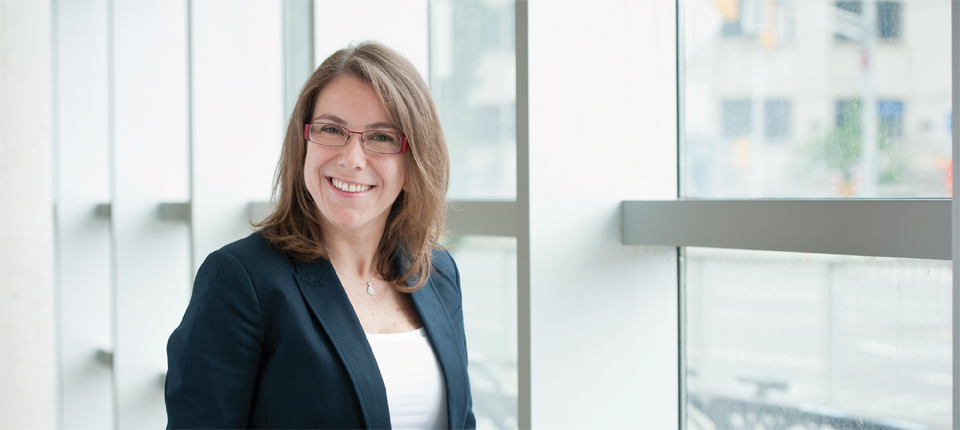
Researcher looks into e-health and telehomecare applications among elderly patients
A first-of-its-kind Canada-wide survey of seniors’ health technology-related behavior
Project title
IT Innovation and the Elderly: Technology Acceptance and Use in the Community
Researcher
Mirou Jaana, Telfer School
Grant supporting this research
SSHRC Insight
Period
2017-2020
Professor Mirou Jaana has launched a new study, funded by the Social Sciences and Humanities Research Council (SSHRC), which will provide national data on seniors’ attitudes and behaviors towards health information technology solutions.
Telemonitoring (aka telehomecare) technologies have been around for decades, but little is known empirically about the factors that lead to the acceptance and use of these solutions by seniors. Professor Mirou Jaana says having a better understanding of these factors would assist healthcare providers and policy-makers to develop guidelines that support the integration and optimal use of these solutions for the greatest benefit of patients.
In the first part of her study, she and her colleagues are conducting a Canada-wide survey of seniors that assesses their technology-related attitudes and behaviors. The survey will consider a variety of general e-health applications, as well as specific home-based technologies, that have gained increased attention in recent years, such as smart watches. In the second part of the study, professor Jaana and her team will investigate the factors that affect the acceptance and use of telemonitoring technologies by seniors.
While the features and convenience of these technologies continue to evolve, their basic telemonitoring functions actually haven’t changed all that much, says professor Jaana. “Their essential purpose is to connect a healthcare provider or case manager to a patient who lives in the community (e.g., at home or in a retirement home), and requires close attention and monitoring.” As an example, a patient being monitored for a heart failure condition may use telemonitoring to transmit information such as a change in her or his weight. The nurse could potentially consult with the patient’s physician, and adjust his/her medications accordingly. This early detection of deterioration in a patient’s condition presents important benefits by preventing risky complications and avoiding unnecessary time-consuming hospital visits. This is especially relevant in the case of elderly patients.
Professor Jaana’s new study, focusing on technology acceptance factors, will build on the findings of her previous research which revealed that telemonitoring had significant positive impacts on senior patients’ self-care skills and it benefited them in relation to their chronic disease management. “By focusing on acceptance factors related to these technologies, our research is uncovering potential barriers/facilitators that may enable more effective use of telemonitoring among senior patients with unstable conditions.’’ Identifying in their health status, which they often would not notice on their own, supports timely intervention before complications arise requiring a hospital visit.
“The field of telemonitoring is maturing, but what’s still missing is the empirical insight into how these technologies should be incorporated as part of care guidelines,” professor Jaana contends. “With the continuously growing population of elderly living in the community, it is our responsibility to understand their needs, and leverage existing tools and technologies, like telehomecare applications, to support them in the community.”
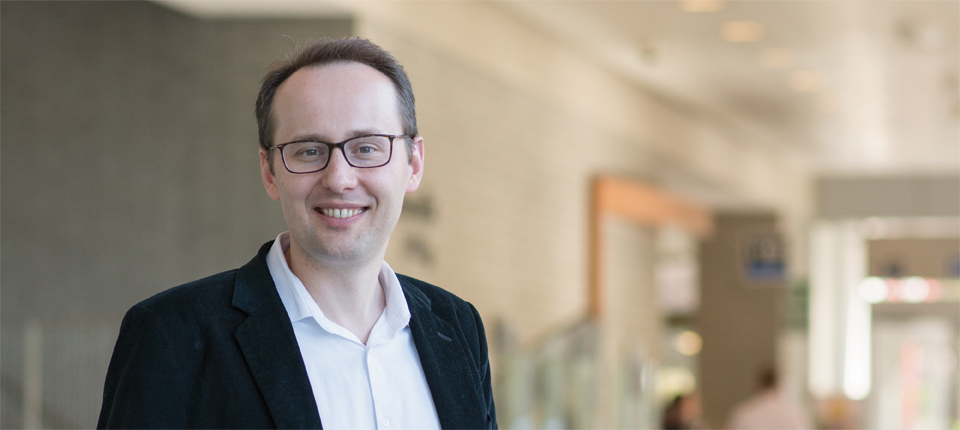
Peter Jaskiewicz is named to the editorial board of a top journal
Peter Jaskiewicz, full professor at the Telfer School, is named Associate Editor of the Family Business Review. He is the only Associate Editor on the board from Canada. Leading publication in the field of family enterprise, this international journal aims to advance knowledge of the family business systems. Published since 1988, it is devoted explore exclusively the dynamics of family-controlled enterprise, including a diversity of firm size ranging from very large to relatively small.
Professor Jaskiewicz conducts research on entrepreneurship and family business. He has recently been appointed a University Research Chair in Enduring Entrepreneurship where he will develop empirical models on how family businesses thrive (or decline) over a generation. His research has been published in top management journals such as Journal of Management Studies, Journal of Business Venturing, Entrepreneurship Theory, Practice Journal of Small Business Management, and Journal of Business Research.

Review of the 24th International Conference on Multiple Criteria Decision Making
The 24th edition of the International Conference on Multiple Criteria Decision Making (MCDM 2017) was held at the Telfer School of Management, University of Ottawa from July 10-14, 2017. The MCDM conference is organized every two years by the International Society on Multiple Criteria Decision Making. The Society represents a very productive research community in the field of MCDM. It has about 2000 members from over a hundred countries around the world:
It has been over ten years now that the last MCDM international conference was held in Canada, in Whistler in 2004. This year, the conference gathered 207 participants of researchers and practitioners from 27 countries including over 60 students:
http://sites.telfer.uottawa.ca/mcdm2017/
The conference had a topical theme this year: Creating a Sustainable Society. The call for papers was designed to encourage contributions that highlight the latest application of MCDM tools to sustainable management challenges.
The scientific program included over 170 talks and 10 poster presentations. They were divided among roughly 20 invited and 20 contributed sessions, along with one poster session. Four parallel sessions were needed to accommodate all the contributions.
Four plenary talks were delivered by Dr. Blair Feltmate of the Intact Centre on Climate Adaptation at the University of Waterloo, Dr. Jyrki Wallenius from the Aalto University School of Business, Dr. Tuure Tuunanen from the University of Jyväskylä, and Dr. Jack Kitts, President and Chief Executive Office of the Ottawa Hospital.
A Closer Look at Family Firms Entrepreneurship
Under what conditions do family business have more (or less) entrepreneurial fire over time?
A considerable body of work has developed to examine entrepreneurial motivation, or why a person might decide to start a business. But how much of that considers how individuals retain their entrepreneurial spirit, evolving while staying competitive over time? The answer is: surprisingly little.
Filling that research gap will be the work of Peter Jaskiewicz, Professor at the Telfer School of Management, who has just been awarded a University Research Chair in Enduring Entrepreneurship. He will use the chair to develop empirical models on how family businesses thrive (or decline) over a generation. He will also develop policy recommendations that will help family firms with their entrepreneurial spirit and thereby revitalise their products and services, improving their chances to survive and thrive in a competitive marketplace over time.
“Evidence suggests that the entrepreneurial spirit and competitiveness of most family firms dissipates within 25 years, which threatens their continued viability in a competitive, rapidly-changing, and global marketplace,” says professor Jaskiewicz. “The main goal of my research-chair program is therefore to identify the mechanisms that foster or prevent repeated acts of entrepreneurship among family and then to develop that into a conceptual model.”
Professor Jaskiewicz said the need to better understand why firms persist over time comes up again and again as an “unanswered question”. “And even on the rare occasion when a study has followed up on the question, we don’t really get at the heart of transgenerational entrepreneurship,” he adds. “You need a bigger research lens, you need to draw from fields like management, sociology and family science at the level of transgenerational entrepreneurship, where you are beyond the simple notion of enterprise. You need to track more complex influences over time, and look at the way business leaders respond to those shifting conditions. Organizational outcomes of entrepreneurial legacies are highly varied, and they depend on decisions that were made using both a commercial logic as well as a family logic.”
With his new Chair, professor Jaskiewicz will deepen his contributions to both entrepreneurship theory and practice, and to contemporary debates about the right way to encourage entrepreneurship in society. Here again, the focus often comes around to family influences. “When we look to how a person’s background has prepared them to be an entrepreneur, overwhelmingly, we still focus on what school they went to, what degree they completed, their work experiences, etc. All well and good, but we’ve really neglected the first 25 years of the person’s life, which actually give us a lot of insights about the potential of that person to become the next Steve Jobs or the next Bill Gates.”
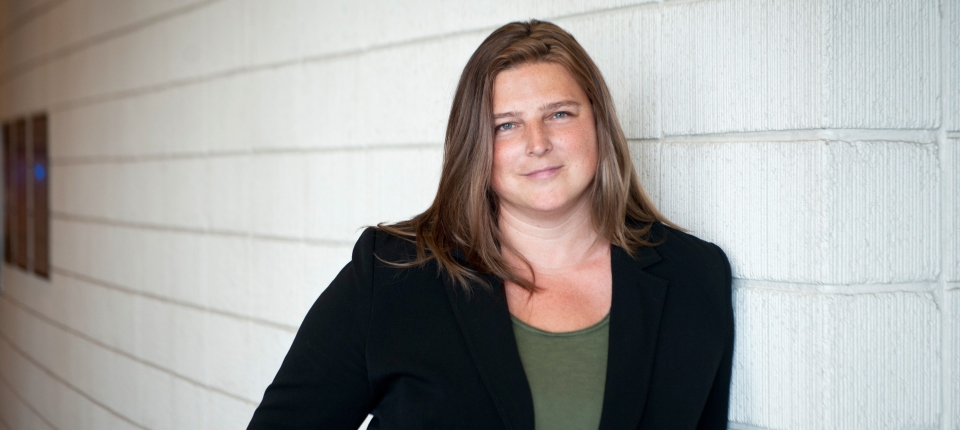
Climate change inaction: Why aren’t companies doing more?
Professor Daina Mazutis’ recent paper Sleepwalking Into Catastrophe: Cognitive Biases and Corporate Climate Change Inertia, published in the California Management Review touched on a hot topic: climate change.
Climate change and its impact on the future of the planet is a subject everyone is aware of, but where does business stand on it? Despite plentiful evidence that documents the severe financial impact of climate change on business, it appears that only 29% of companies consider climate change to be a “quite or very urgent” issue. How can we explain this perception – the corporate inaction that comes out of it?
The issue behind climate change inaction is a lot more complicated than it seems, Professor Mazutis contends. The study argues that cognitive biases sneak into the decision-making process and they are one of the reasons for businesses lack of action on climate change related issues. A cognitive bias occurs when someone’s perception of the reality is mistaken by one’s belief, against rationality or logic. They interfere directly in decision-making processes, preventing managers from making crucial strategic decisions with environmental consequences.
Professor Mazutis argues that climate change is a moral issue and yet managers fail to see it as such. This explains why there is a distance between the problems and the solutions. Decision-making processes in management are made strategically, but cognitive biases are obstructing from a strategic and from a most beneficial output for the future of the climate. This information needs to be communicated to the senior management of businesses, important stakeholders, and change experts.
As for solutions, Professor Mazutis has many. The article provides thirty different mitigating strategies to help tackle stubborn cognitive biases. For example, she argues that some cognitive biases occur when a problem is hard to understand or believe, especially if you haven’t lived or seen it. To resolve this issue, she suggests bringing stakeholders to places where climate change affects lives and people directly. A second solution would be to change stakeholders’ way of thinking. For example, with questions like: “If we wanted to do something about climate change, what could we do?” Changing should with could through thought experiments can stimulate different thought patterns and improve the overall decision-making process.
Although cognitive biases are present everywhere, acknowledging them is insufficient. Businesses have to go beyond that by planning for mitigating strategies. To do so, the help of change experts within businesses is crucial. Some are already making smart environmental decisions. Hopefully, more will follow a similar path.
More about the study:
Mazutis, D., Eckardt, A. (2017). Sleepwalking into Catastrophe: Cognitive Biases and Corporate Climate Change Inertia. California Management Review, article first published online May 25, 2017, http://journals.sagepub.com/doi/10.1177/0008125617707974