Empowering Women Leaders in Healthcare: From Research to Practice
Telfer School of Management Professor Ivy Bourgeault is the CIHR Research Chair in Gender, Work and Health Human Resources. Her research produces knowledge about gender equality in the healthcare industry, helping key policymakers develop strategies and create more opportunities to advance women in management positions in the sector.
Addressing how gender influences the health care sector is particularly important in an industry in which, according to a Statistic Canada report, women represent approximately 80% of the workforce. Even though most healthcare workers are women, very few of them make it to top health management positions.
Understanding the need to increase women’s participation in decision-making and leadership positions in healthcare, health sciences, and indigenous health, Professor Bourgeault is collaborating with a number of partner organizations in her project Empowering Women Leaders in Health.
“The project’s ultimate goal is to build a strong and supportive community of established and emerging women leaders, helping them transform the health care system through their unique leadership skills, experiences, and contributions,” explains Professor Bourgeault.
One way of doing so is by giving women in the healthcare sector the opportunity to participate in community outreach initiatives. For example, the project will host three “learning labs” for women leaders over the next 18 months.
As a unique initiative, the learning labs will invite established and emerging leaders to share their experiences and skills and to talk about effective ways of implementing positive changes in their organizations. The first learning lab will take place in Ottawa in June 2018.
If you would like to learn more about how Empowering Women Leaders in Health supports female leadership in healthcare, health sciences, and indigenous health, click here.
Rethinking Freight Transportation in Cities: A Smart Solution for An Old Problem
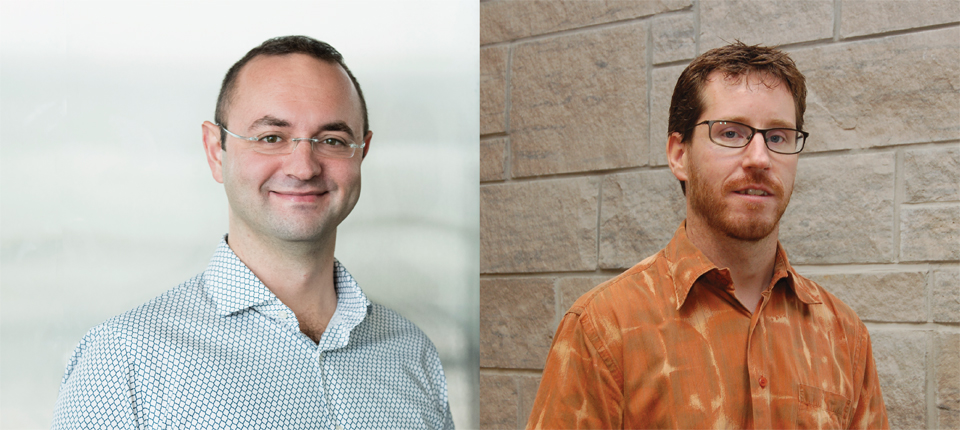
Combining a passion for applied mathematics and a motivation to improve the public transportation sector, new Telfer School of Management faculty, Professor Onur Ozturk, has developed a model to support Freight on Transit (FOT) using urban railways.
Professor Ozturk and his research collaborator, Telfer School Professor Jonathan Patrick, have published their findings in the prestigious European Journal of Operational Research.
FOT is an operational system that uses an existing public transit infrastructure to move goods within a city. A sustainable and clean way of transporting freight, the use of FOT on urban railways is in fact a rising trend in Europe. For instance, Paris has successfully implemented a system that allows the subway line to be shared between passenger trains and freight trains.
As FOT can reduce the number of heavy trucks that move goods in the city, the system has the potential to reduce pollution, traffic congestion, and even accidents. Considering the busy traffic of heavy trucks circulating everyday in the Ottawa downtown area, the development of a similar system for the future O’Train could make the Capital cleaner and safer.
We interviewed Professor Ozturk to find more about how their research model can help solve these old problems.
Why develop a model of freight on transit for urban railway?
Ultimately, we wanted to improve quality of city life by creating a model that can help companies and policymakers reduce green house effects, traffic congestion, and the risk of serious accidents on the roads.
Freight on Transit is a system with the potential to reduce some of these undesirable challenges because it can reduce the number of trucks driving through the city.
When did you first develop a model to transport freight on public railway?
During my appointment at Université Paris-Est Marne-la-Vallée, I was involved with a research institute that developed projects with industry collaborator with the purpose of creating more energy-efficient cities. One of these collaborators, Public Transport Paris, was looking for strategies to use the existing transit infrastructure to move goods within the city. I contributed to the project by developing a model to support their FOT system.
Could it be developed in Canada?
Many Canadian cities already have an infrastructure of railways that could be used to transport freight. We believe that there is no reason why FOT couldn’t be implemented using our urban railway systems such as, for example, the light rail transit that will be opening for service this year in Ottawa.
Who gains?
The French National Railways has been applying FOT for the last ten years. It’s estimated that the number of trucks in Paris has decreased by 10,000 per year, eliminating 280 tons in CO2 and 19 tons in Nitrogen oxide per year.
Reducing the number of heavy trucks circulating in the city not only makes our cities cleaner. It allows us to make a safer and more efficient public transport system that benefits drivers, public transport companies and private freight companies. Everyone gains!
Are there challenges?
Using the same tracks for both freight and commuter traffic requires careful planning for two reasons:
1) Time constraint: If traffic on the train line has to be stopped to load goods, this is likely to cause a delay in the passenger train schedule. If the schedule of the next trains isn’t updated quickly enough, then passengers will have to wait longer and longer for the next train.
2) Safety: Supermarkets don’t usually allow their employees to organize products on shelves between 6 am and 9 pm, for their clients’ safety. Similarly, if passengers are waiting for the train on a platform then the same platform can’t be used for loading freight.
How can your research overcome these problems?
Operations research can help develop an efficient model for freight on urban railway because our mathematical tools can update the schedule without creating further delays for passengers.
If the timetables of passenger trains suddenly change, the approach we have developed can update itself quickly enough—in 2-3 minutes maximum.
Ozturk, Onur and Jonathan Patrick. (2018), “An optimization model for freight transport using urban rail transit,” European Journal of Operations Research. 267 (3), 1110-1121.

Increasing Corporate Support in the Fight against an “Invisible” Cause
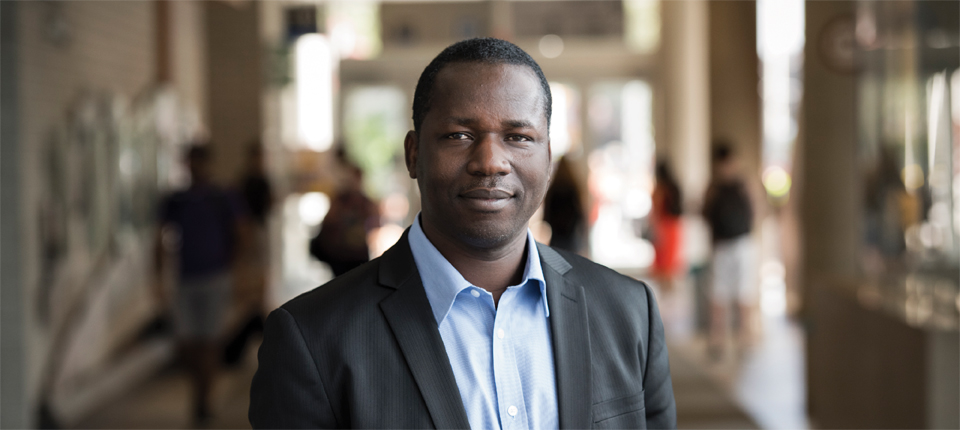
Originally from Ivory Coast, a country that still faces poverty and many other social problems, Telfer School of Management Professor Saouré Kouamé wants to make people and businesses aware of how pressing it is to tackle the issue of poverty.
During his PhD, while studying how organizations like Oxfam and United Ways make decisions, he learned a lot from people who developed poverty reduction campaigns. “I realized that attracting corporate support was a big challenge for these organizations,” he explains.
These organizations often have to make an extra effort to convince businesses that they too should play a part in reducing poverty. Thus, it is not a coincidence that Professor Kouamé’s purpose in his current research supported by the Telfer School is to raise awareness in the corporate world: “I wanted to give more visibility to poverty reduction causes.”
The Challenges of Poverty Reduction Campaigns
Even a relatively wealthy city like Ottawa is not immune to poverty. According to the Ottawa Community Foundation’s Ottawa Insight, the income gap between the top earning 10% and the remaining 90% has significantly widened, increasing by almost 185 % for the past 35 years. To provide another even more telling statistic: 12% of Ottawa citizens live in low income and struggle to make ends meet. **
While there has been an increasing need for assisting socially disadvantaged communities in Canada, fundraising campaigns targeting poverty are unfortunately not popular, receiving little corporate support and becoming what Telfer School of Management Professor Saouré Kouamé refers to as “orphan causes.”
Research has shown that corporations prefer to engage in philanthropic initiatives that are more likely to be emotionally appealing to the media and customers, such as for example, campaigns that provide assistance to schools, hospitals, and to those affected by a natural disaster. Involving in these more “visible” causes is believed to boost a company’s reputation, which, in turn translates into more business profits.
But why aren’t corporations equally interested in tackling poverty? “Poverty is everywhere and, because we see it all the time, we are desensitized. As a result, poverty becomes invisible,” explains Professor Kouamé.
Sadly, over time we tend not to respond to poverty with the same intense emotions we usually feel after hearing the news about an earthquake that has tragically taken hundreds of lives. A campaign to build a new shelter or help low-income families may thus not have the expected results.
Supporting Philanthropic Organizations
Although Professor Kouamé’s study is still at the early stages of development, it will be impactful in many ways. For one, it will offer an insight into the fundraising reality faced by philanthropic organizations and workers who try to secure corporate support for the least attractive of the social causes.
Professor Kouamé advises philanthropic organizations to be strategic. To increase corporate participation in campaigns that aim at reducing poverty, they need to realize that “corporate social responsibility has become a tool for competition, and if the cause is not likely to increase corporate visibility, business leaders will probably not support your campaign.”
Spurring Positive Change at the Corporate Level
Professor Kouamé’s research is also about raising awareness at the corporate level, showing that companies have the potential to play a much more meaningful role in this fight:
“When everyone cares and works on strategies that could reduce poverty, then we are not simply making our city a better place for our citizens—it also becomes more attractive to businesses. Everyone benefits,” says Professor Kouamé.
**12% of Ottawa residents earn bellow the Low-Income Measure After Tax (LMA-AT), the median after-tax income of households attributed to the individual level.

Corporate Social Responsibility: When Being Good Actually Makes You Look Bad
A buzzword in the business scene, corporate social responsibility (CSR) has become a strategic priority for many businesses large and small, and it is often considered a win-win situation. By committing to a cause, such as helping local charities or reducing their carbon footprints, business leaders may impress their clients and the media. What a Telfer School of Management led team of researchers has found is that a company’s decision to engage in CSR initiatives also matters (a lot!) to employees.
In a recent publication in the highly reputable Journal of Business Ethics, Telfer School Professor Magda Donia and her co-authors, Telfer School Professor Silvia Bonaccio, Carleton University Professor Carol-Ann Tetrault Sirsly, and California State University Professor Sigalit Ronen, show that it is not enough for a company to get involved in a good cause. What really matters to employees is why their employer is doing so.
The researchers found that employees respond positively only when they perceive their company’s CSR initiatives as genuine. Knowing that their company is truly involved in a cause, they will more strongly identify with their employer. “Everybody prefers to be in a place where they feel that it sincerely cares about important causes,” says Donia, “and when they do, they tend to experience a number of positive feelings about their workplace and their work, such as pride and trust in their organization, and satisfaction and meaning in their work.” As a result, employees are likely to be more committed, perform better, and stay longer than those who work for a company that engages in social practices simply because it is trendy and likely to increase profits.
A key practical take-away of this research is that, when business leaders decide to help a local charity with the goal of making their company look good, their employees cannot be fooled. This happens because “people are often capable of discerning what people’s true motives are, and it is likely that employees, who have day-to-day interactions with their company, are making accurate attributions of their employers’ true intentions,” explains Professor Donia. “When sensing that their employers’ actions are not consistent with the message behind an advertising campaign,” adds Professor Bonaccio, “then employees start asking ‘Why is that?’.” Employees’ negative perceptions of their company as opportunistic can backfire.
“Everybody prefers to be in a place where they feel that it
sincerely cares about important causes, and when they do,
they tend to experience a number of positive feelings
about their workplace and their work."
Professor Donia and co-authors’ advice is to remember that employees are watching. “What organizations need to realize,” adds Professor Bonaccio, “is that they have internal stakeholders who are looking at organizational practices and saying ‘Wait a minute! Why is the organization engaging in this?’.” The bottom line is that simply creating the image of good citizenship will not lead to positive employee outcomes in the long term. If you wish to attract, motivate, and retain the best employees, you need to give them the feeling that your CSR initiatives are intended to make a real difference. At the end of the day, it is about “doing the right thing for the right reason,” says Professor Donia.

The Role of University: Engaging and Connecting Researchers and Entrepreneurs
On Wednesday, November 8th, 2017, Telfer School of Management hosted an event called The Role of University in Entrepreneurship, a group of researchers and successful entrepreneurs discussed how universities could support new and existing entrepreneurs.
Panelists
Moderated by Louis Barriault, the event’s discussion panel included Steven Daze, Dom Herrick Entrepreneur in Residence at the Telfer School of Management; Peter Jaskiewicz, University Research Chair in Endowed Entrepreneurship, Telfer School of Management; Samantha Fulton, CEO of Profunda Analytics; and Sue Abu-Hakima, CEO of Amika Mobile Corporation.
Discussion
Although the panelists looked at entrepreneurship through different angles, they all shared a similar view: building a network is essential when starting or growing a business. Their emphasis on the importance of networking in the business world actually confirms the purpose of this event. Universities can encourage and support entrepreneurship by bringing together incubators and experienced entrepreneurs.
Two other topics dominated the discussion: the specific challenges faced by young entrepreneurs and women entrepreneurs.
Young entrepreneurs: Young business graduates are motivated and eager to create innovative business ideas. Believing that they have what it takes to launch a new venture, young entrepreneurs however tend to forget how competitive the business world can be, explained Samantha Fulton. Overconfidence can be dangerous. Her advice to young entrepreneurs? Find a mentor: accepting that your have to reach out to someone more experienced is not a sign weakness, but an opportunity to learn.
Women Entrepreneurs: While entrepreneurship generally comes with a host of challenges, female entrepreneurs have to go the extra mile to succeed. A trailblazing entrepreneur who had to overcome many obstacles in an industry dominated by men, Sue Abu-Hakima reminded us that even today women still face resistance, especially from investors, who are more likely to fund start-ups developed by male entrepreneurs.
Connecting People and Removing Challenges
Telfer Management School did not simply connect entrepreneurial and academic minds. By offering a safe space where entrepreneurs could find support, share innovative business ideas, and expand their social network, the event also helped remove some of the obstacles entrepreneurs face in the business world.
- Money, suspicion, and fraud: When client-bank relationship becomes a complicated affair
- Professor Peter Jaskiewicz: How to Raise an Entrepreneur
- MSc student Jennifer Ho receives a Joseph-Armand Bombardier Canada Graduate Scholarship
- Boushra El Haj Hassan, Joseph-Armand Bombardier Canada Graduate Scholarship recipient