
When professionals don’t agree: Accountants, actuaries and economists’ views on public pension liabilities
Changes in pension plan accounting
Accountants and actuaries often make valuation decisions that affect multi-billion dollar planning and spending of public assets such as pension plan liabilities. However, the value of those liabilities affects pension payments that will be made far into the future. So how do these professionals help governments of all levels define what the value of pension plan liabilities is today?
Both accountants and actuaries have long relied on their professional judgment to select an interest rate that will be used to calculate that value.
However, experts outside of the accounting profession have challenged these traditional approaches. For example, some financial economist believe that the value of pension liabilities should be rather calculated based on information that can be found in the capital markets, which they consider to be more objective than one’s professional judgment.
Influencing policymakers
In an article recently published in the prestigious journal Accounting, Organization, and Society, Professor Darlene Himick at Telfer School of Management (University of Ottawa) and Marion Bivot (Université Laval) studied the shift from traditional accounting practices to the market-based approach to measure the value of pension plan liabilities in the United States.
Himick and Bivot suggest that in the debate over judgment versus objectivity, it is not about who is getting the accounting right, but rather about who is telling policymakers the most compelling story. The authors tracked all the stages in which a group of financial economists gradually redefined how pension plan liabilities were evaluated and reported in the United States from 1989 to 2012.
During this time period, a small group of financial economists convinced the U.S. Governmental Accounting Standards Board to combine finance tools (the use of market rates) and traditional accounting practices (the use of judgement) as a way of calculating the value of pension plan liabilities.
Public implications
“During this period, this group managed to trigger seemingly minor but actually significant changes in government accounting practices. As part of doing so, they forcefully challenged decades of actuarial practice, calling it outdated” explains Professor Himick.
More importantly, what appears like a technical debate between professionals actually reshaped policies that have the potential to impact the valuation of government pension liabilities. Such changes may have much wider implications for government spending.
As Professor Himick and her co-author explain, the difference in the discount rates chosen through the two different approaches could be as minimal as a fraction of a percentage point. However, that small difference can still lead to a difference of hundreds of millions of dollars in the value of pension assets and liabilities.
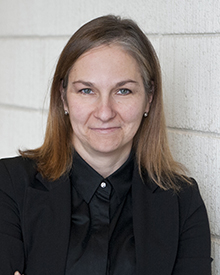
“How we account for pension debt is not just a dry accounting issue. When the city of Detroit declared bankruptcy, its public pension debt was front and centre. Understanding how professionals work out their differences is particularly important in times when governments are forced to tighten their belts and consider compromises when evaluating pension plans and other liabilities that contribute to the public debt,” adds Professor Himick.
Himick D., Brivot, M. (2018). Carriers of ideas in accounting standard-setting and financialization: The role of epistemic communities. Accounting, Organizations and Society, 66: 29-44.

Bitcoin and beyond: What the future holds for blockchain technologies
Cryptocurrencies such as Bitcoin, Ethereum, and Stellar allow users to make digital transactions directly, peer to peer, without an intermediary to manage the exchange of funds. While Bitcoin has been in the headlines for many years, little was known about blockchain, the underlying technology that powers these digital currencies.
Blockchain has recently become a buzzword in the business and finance world. As blockchain is believed to improve the security of funds and data exchanged between users, major companies are adopting the technology for various reasons: from reducing the cost of transactions to tacking online data privacy challenges. Beyond the finance world, blockchain-based technologies are allowing law firms and lawyers to offer innovative services that can support businesses and their clients.
Using blockchain technologies however requires that finance, business, and law professionals are constantly learning and adapting.
The Telfer School of Management presents the next Telfer Forum Bitcoin and beyond: What the Future Holds for Blockchain Technologies to be held on October 9th at 5:00 pm. In this moderated panel, industry and academic experts will discuss how blockchain technologies will continue impacting businesses.
Panelists Samir Saadi (Telfer School of Management, University of Ottawa), Florian Martin-Bariteau (Faculty of Law & Centre for Law Technology and Society, University of Ottawa), Othalia Doe-Bruce (BlockchainHub), and Scott Hendry (Bank of Canada) will address the following questions:
- What does the future hold for blockchain technologies in the financial sector?
- How do they impact corporate governance transparency?
- What are the legal and ethical implications of blockchain technologies?
- What are the benefits of using these technologies for business organizations? Are there challenges?
This free event will be a great learning and networking opportunity for everyone, from cryptocurrency fans to innovative businesses interested in blockchain technologies.
Light hors d’oeuvres will be served.
Location: Telfer School of Management, 55 Laurier Avenue East, room 4101.
Date: Tuesday, October 9, 2018
Time: 5:00 to 7:00 p.m.
For event details and to RSVP, please click.

2018 Canadian Health Workforce Conference
The Canadian Health and Human Resources Network will be hosting the 2018 Canadian Health Workforce Conference (CHWC) from October 4th to 6th. CHWC brings together policy makers, academics, researchers, practitioners and students from across the country with responsibility for and interest in issues related to health workforce.
The goal of the conference is to showcase the latest research, cutting-edge technology, and innovation in health workforce policy, planning, and management across the country. The conference will also provide academics and practitioners with an opportunity to engage in knowledge exchange and meaningful discussion on a range of health workforce issues.
The theme of the third edition of CHWC is Ensuring a Fit-For-Purpose Health Workforce to aligns with the Global Strategy on Human Resources for Health: Workforce 2030, which calls for ministries of health and partners to identify “medium and long-term health workforce priorities for increasing reliance of health systems.”

Keynote Speaker: The Honourable Ginette C. Petipas Taylor (Canada's Minister of Health)
Date: October 4th-6th, 2018
Location: Palais des Congrès, Gatineau, Québec
Come and take part in vibrant discussions showcasing cutting-edge research and innovation!

Smart Transit: How Big Data and Analytics Can Improve Public Transit Services
Public transport is a cost-efficient choice for many daily users who need to commute to work or school. Only in the city of Ottawa, over 870,000 people used public transit at least once in 2016 according to an OC Transpo report.
However, public transit is not always a reliable mode of transportation. A recent OC Transpo schedule adherence report shows that the rapid, frequent, and local routes were on schedule between 25% and 89% of the time during peak hours from January to June last year. This fluctuation may be the result of road accidents, poor weather conditions, or any unpredictable situations that can suddenly affect passengers’ demand and the frequency of buses serving a given route.
These changes can inevitably affect the bus service any time. The lack of a scheduling system that quickly adjusts to the changing demands and frequency of public transit can be frustrating especially for those who regularly depend on it to return home after a long, tiring day.
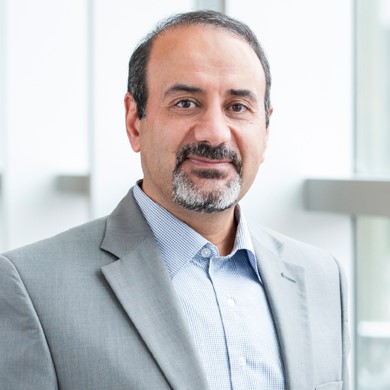
We interviewed Professor Raahemi and his student to find out more about this research project.
How can your research help public transit companies like OC Transpo overcome these scheduling problems?
Professor Raahemi: Our team wanted to learn more about bus ridership patterns to address the unexpected changes that affect the bus schedules. For that purpose, we are working with SMATS Traffic Solutions. The sensors they have built can gather data on the number of passengers embarking and leaving the bus in the duration of the trip by anonymously detecting the signal of their mobile phones. The challenge is that we are talking about a significant amount of data dynamically changing and mixed with lots of noises, but we are able to address these challenges by using advanced data mining methods.
Shahrzad: The patterns that we are building will be used to more accurately update the bus scheduling system even if something unexpected happens. For example, let’s suppose a road accident creates substantial delays in a bus route during peak hours. The next incoming bus to serve passengers on that route will be behind schedule and will not have enough capacity to take all waiting passengers. Our research on ridership patterns should help public transit companies decide if, how many, and where additional buses are still needed on a particular bus route allowing them to dynamically adjust the bus service in order to meet changing demands.
Who gains?
Professor Raahemi: All of us gain. Public transit companies gain because, if they improve their scheduling, they will be able to allocate their resources more efficiently and improve customer experience and satisfaction. By doing so, these companies will also increase ridership and ultimately their bottom line.
Shahrzad: More importantly, public transit users gain. These smart solutions can really make a difference in the lives of those who rely on public transit on a daily basis. As a student, I am very happy to be involved with SMATS Traffic Solutions team in the development of a technology with potential to help public transit companies address the bus schedule problems and provide better services to passengers.
How does this collaboration between university and the industry support young researchers?
Shahrzad: Using research to address a practical problem has given me the opportunity to gain invaluable learning and professional experiences. I believe that working on a collaborative and industry-backed project will give me an advantage after I graduate and start looking for employment opportunities.
What are the next stages of the project?
Shahrzad: Our project is still under development, but I am currently testing our algorithms and solutions using synthetic data. Once tested in the field, these algorithms will have the potential to help public transit companies to better meet their changing demand patterns.

Embracing Complexity in Health: Leadership and Policy Making in a Complicated System
Health care is often described as a “complex system”, but what does that really mean? A simple system has few parts, a straightforward process, and a predictable output. A complex system, on the other hand, has numerous sub-systems full of diverse elements that interact, self-organize, and adapt. Indeed, the health care system is continuously moving and adapting at all levels: from provincial health planning to physicians providing patient services.
Researchers are turning to complexity thinking to understand health systems. Instead of simplifying health system challenges, experts turn to complexity theory to understand how and why individuals, organizations, and systems behave in certain ways.
But what about beyond research?
Implementing change and reducing costs in health organizations may not be as straightforward as health managers and policymakers think. So, how can we implement new initiatives effectively in such an unpredictable system? Can complexity thinking help us achieve real transformation?
To address some of these questions, the Telfer School of Management will be hosting Embracing Complexity in Health: Leadership and Policy Making in a Complicated System on September 11th at 5:00 pm. This Telfer Forum will bring together health leaders and academics to discuss the value of using complexity thinking in policy- and decision-making in the health sector.
Panelists Agnes Grudniewicz (Assistant Professor, Telfer School of Management, University of Ottawa), Robert Geyer (Professor, Lancaster University), Jenna Evans (Staff Scientist, Planning and Regional Programs, Cancer Care Ontario) and Akos Hoffer (CEO, The Perley and Rideau Veterans’ Health Centre), as well as moderator Lysanne Lessard (Assistant Professor, Telfer School, University of Ottawa), will set the stage for a discussion on change in the context of our complex health systems.
This Telfer Forum will be a great learning and networking opportunity for professionals in health services, management, and policy. Light hors d’oeuvres will be served.
Location: Telfer School of Management, Ottawa, room DMS12102, 55 Laurier Avenue East
Time: 5:00 to 7:00 pm