How Telfer students are learning sustainability in the community
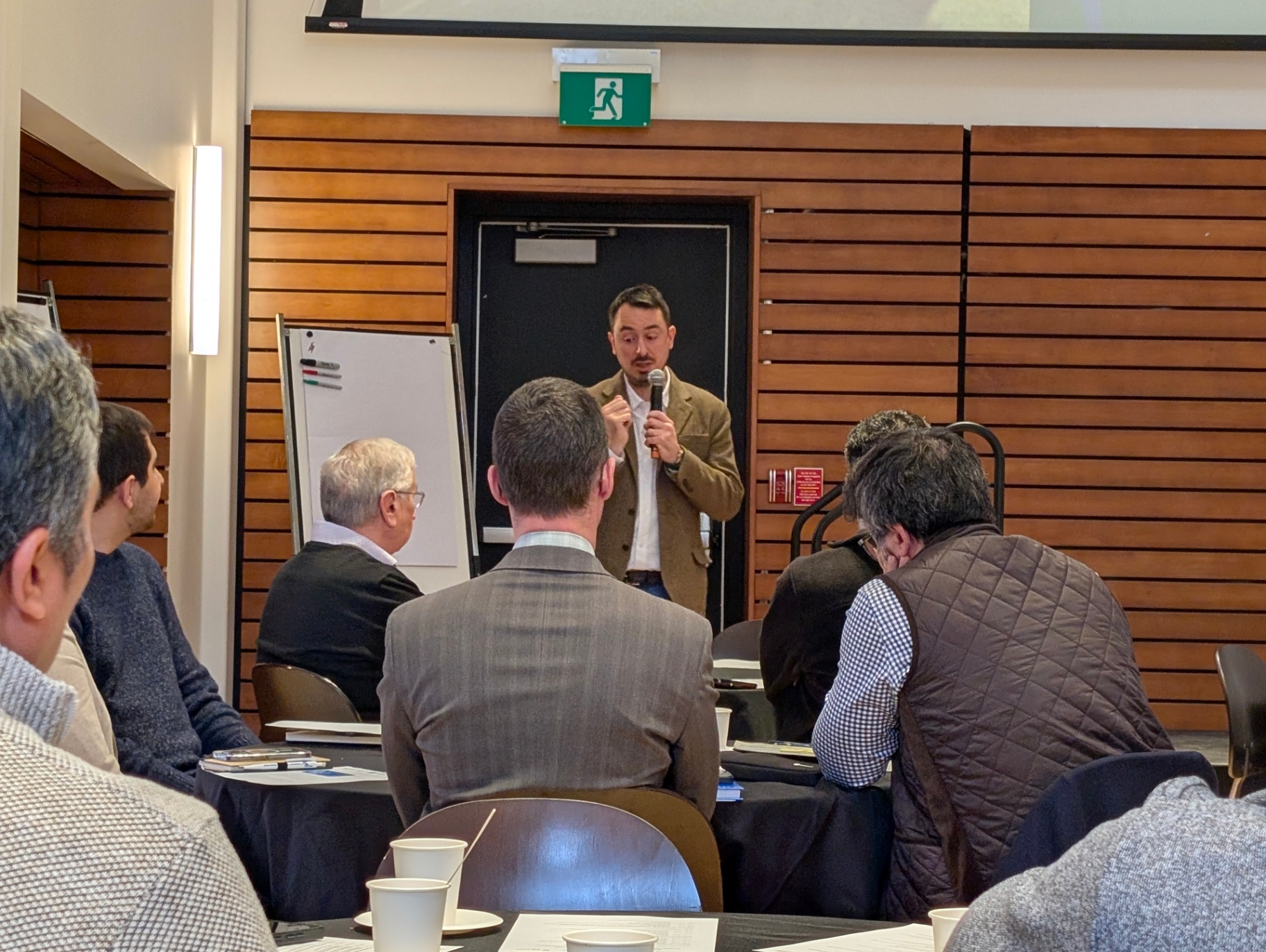
On a December morning at the CRX, this was not just another end-of-term presentation.
What unfolded felt quieter, more serious, the kind of moment where learning stops being theoretical and starts carrying weight. Students stood not to defend grades, but to explain decisions. Not to summarize readings, but to account for people, places, and trade-offs.
This was the final presentation of ADM4717, a course built around experiential learning and community engagement. And for many in the room, it marked a shift from learning about sustainability to learning within it.
From coursework to community
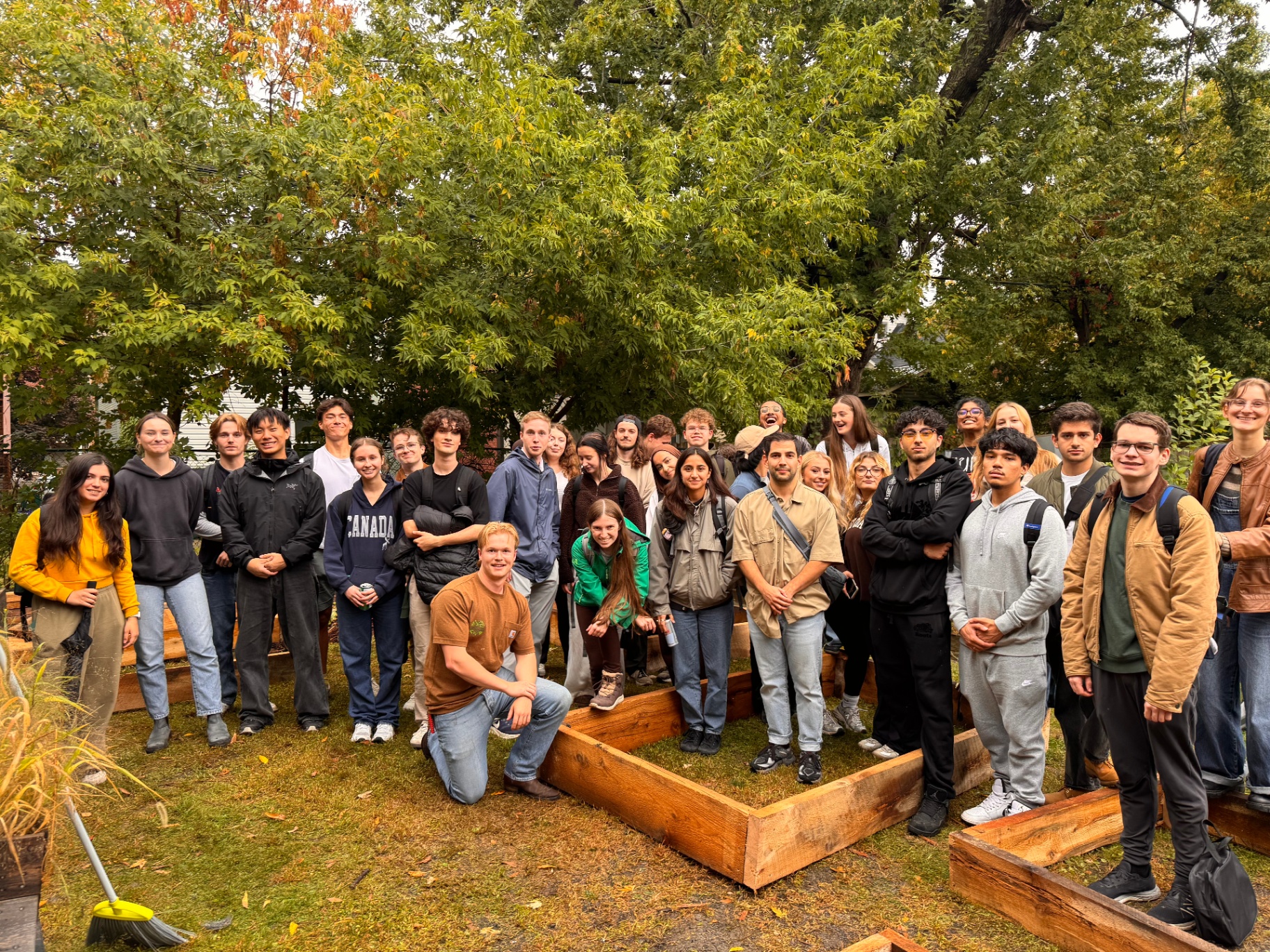
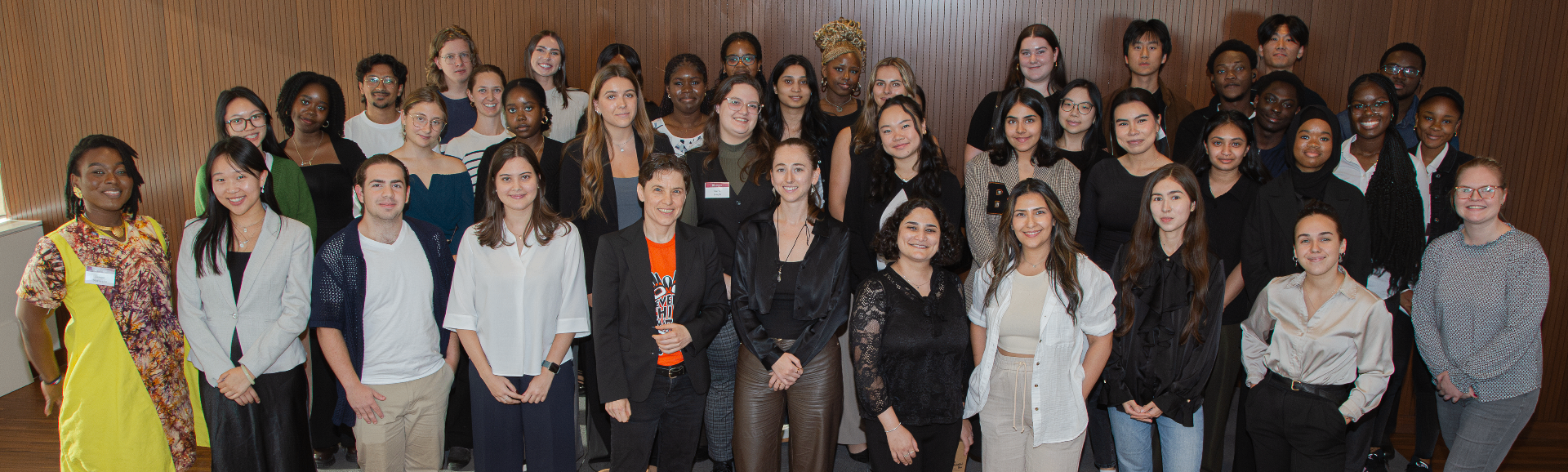
Supported by the Dom Herrick Experiential Learning (ExL) Fund, the project brought 43 students, working across eight teams, into direct collaboration with a community partner: Sustainable Eastern Ontario (SEO).
Their mandate was deceptively simple: analyze the sustainability challenges facing francophone neighborhoods in Eastern Ontario, and propose actionable, realistic recommendations.
Students conducted field visits, stakeholder interviews, and neighborhood diagnostics. They examined issues ranging from waste management and mobility to housing affordability, green space access, and youth employment. They worked with incomplete data. They navigated differing priorities. They learned that community-based work rarely offers clean answers.
And that, precisely, was the point.
From coursework to community
Across the projects, a set of shared priorities began to emerge. Many teams focused on the everyday infrastructures that quietly shape sustainable living: access to active transportation, continuity of cycling networks, and the reliability of local transit. Others turned their attention to waste management and circular practices, proposing community composting initiatives and expanded recycling systems grounded in resident participation. Questions of inclusion surfaced repeatedly, particularly around housing affordability, shared living models, and the social fabric of neighborhoods under pressure. Green spaces, too, featured prominently, not only as environmental assets but as social ones: sites for cooling urban heat, strengthening food security, and rebuilding community ties. Taken together, the proposals reflected a mature understanding of sustainability as something lived daily, embedded in mobility, housing, food systems, and human connection, rather than confined to abstract policy goals.
Learning through responsibility
Throughout the term, Professor Dorra Jlouli guided students through a structured yet flexible process, coaching, challenging assumptions, and adapting the course itself to reflect the expectations and constraints of the community partner. This approach builds on a broader pedagogical vision at Telfer, one shaped in part by the foundational work of Professor Daina Mazutis, whose leadership in integrating sustainability and community engagement into the curriculum has helped create the conditions for courses like this one to exist.
For professor Jlouli, this is where experiential learning proves its value: “Seeing the real impact of students’ work and the credibility it brings to their learning and to the university, is what makes this approach so rewarding.”
When engagement becomes personal
For students, the experience was often transformative.
For Mickaelle Angelo, that growth was deeply human. She described the Community Service Learning (CSL) Program project as one that helped her grow by learning to “listen, prioritize, and act,” emphasizing how the human richness of the team and the exchanges with the community made the learning “deeply concrete” and the experience “as useful as it was meaningful.”
That sense of reconnection resonated strongly with Nagham Fawaz, who spoke candidly about having gradually lost her academic engagement over the course of her university studies. “The CSL project marked a true turning point for me. Through a hands-on sustainability experience rooted in real, community-based issues, I was able to reconnect with my motivation and rediscover a clear sense of purpose in my studies”, something she described as finally making everything feel aligned again.
Working with real partners and real constraints also reshaped how students understood sustainability itself. As Yassine Lachgar, reflected, engaging with a live case revealed the non-linearity of sustainability challenges. “There is no universal approach,” he noted, only “unique conditions that require tailored solutions” to ensure lasting impact. That complexity, rather than being abstract, became tangible through interaction and dialogue.
For Kalkidan Wondem Meshesha, the transformation was both academic and personal. She described moving from being a finance student focused solely on profitability to becoming a leader capable of integrating sustainability and viability into every decision. “Working with real data, conducting field interviews, and developing a quantified action plan for Wateridge Village gave me practical meaning to management concepts. Knowing that my work could genuinely contribute to building a more sustainable and inclusive neighborhood made the experience especially rewarding and helped me cultivate a participatory form of leadership grounded in community empowerment.”
Others echoed this powerful meeting of theory and practice. Marie-Emmanuelle Diby described the course as one of the most impactful of her session, both for the richness of the learning and its applied approach. “Collaborating with a community partner strengthened my analytical and research skills, while the final project allowed me to transform theoretical concepts into real strategies, deepening my understanding of both leadership and sustainability.”
These moments surfaced repeatedly throughout the presentations. Not as rehearsed talking points, but as quiet realizations: learning feels different when it matters to someone beyond the classroom.
Investing in experience
The initiative was supported by a $6,500 Dom Herrick Experiential Learning (ExL) Fund award, an investment designed to deepen the learning experience beyond the classroom. Of that total, $5,400 was dedicated to student prizes, recognizing the work of five teams whose projects stood out for their rigor and relevance. The remaining funds supported a field visit essential to grounding the students’ analysis in lived community contexts, as well as the final presentation and awards event, bringing the project to a close in the same spirit of engagement with which it began.
Importantly, this initiative represents Phase II of a longer pedagogical trajectory. The intention is clear: to build toward future phases that deepen integration across the Bachelor of Commerce program, potentially leading to a dedicated, credit-bearing course focused on community-engaged learning.
Aligned with Telfer’s vision
This project sits squarely within Telfer’s broader commitment to responsible management education. Its learning objectives align with the University of Ottawa’s sustainability priorities, institutional competencies, and Telfer’s emphasis on leadership that is ethical, grounded, and socially aware.
But beyond alignment on paper, the project demonstrates something more difficult to measure: confidence. Students leave not just knowing more but truly believing they can contribute meaningfully.
Learning that stays with you
By the end of the morning, applause filled the room, not for polished slides, but for thoughtful work, honest limitations, and a willingness to engage in complexity.
Experiential learning does not promise certainty. What it offers instead is perspective. The ability to listen, to collaborate, and to act with humility.
And perhaps that is its greatest outcome: students who understand that sustainable change rarely begins with grand gestures, but with careful attention to a neighborhood, a conversation, and the people who live there.
This article was written by Takwa Youssef, coordinator of Telfer's Green Academy.
As coordinator of the Green Academy, Takwa plays a key role in supporting the delivery of the academy's interdisciplinary programs. She oversees logistics, event coordination, and resource management, ensuring the successful execution of courses, workshops, training, and research. Takwa bridges faculties, services, and external partners, cultivating collaboration that enriches the program’s impact. She manages communication, finances and administration, while also driving the Academy’s long-term vision by strengthening connections across disciplines and supporting its ongoing growth.
.jpg)