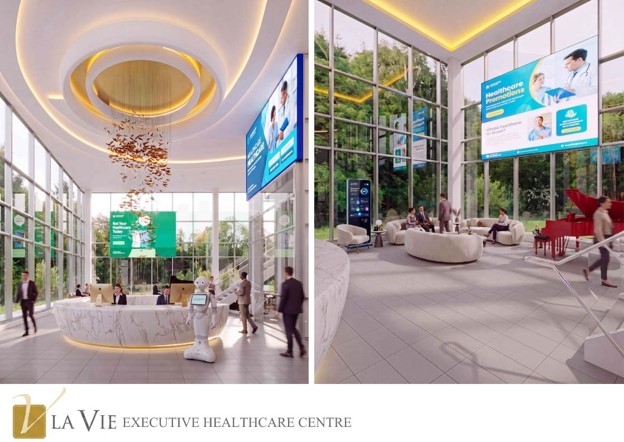
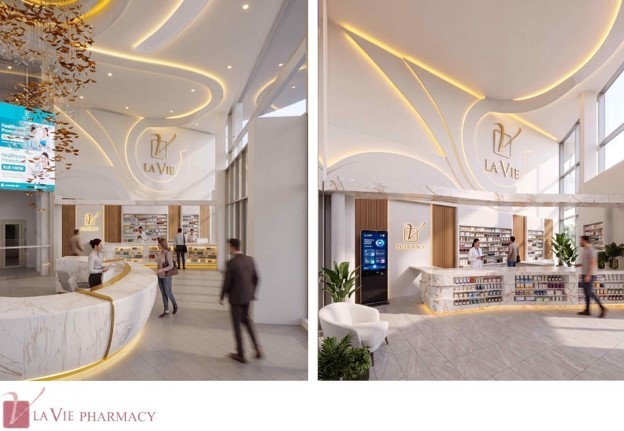
A new company starts with a great idea. The challenge is determining whether the idea can be a viable and sustainable business. For Telfer Executive MBA alumna Reham Sannoufi, the program's Business Development Project (BDP) was a bridge between an innovative healthcare idea and what is now a preventive healthcare organization in Ottawa, Canada - La Vie Executive Health Centre.
A vision for better healthcare
It was Reham’s husband, Dr. Hassan Sannoufi, MD, CCFP (EM) who had the initial idea for La Vie. In his experience as a trained physician, he noticed that the Canadian healthcare system was largely designed to respond to patients when something was already wrong. He felt the system was reactive rather than proactive, lacking the time and resources needed to prevent illnesses or injuries. Together, Reham and her husband started the concept of La Vie with a simple question: What would healthcare look like if we emphasized prevention rather than cure?
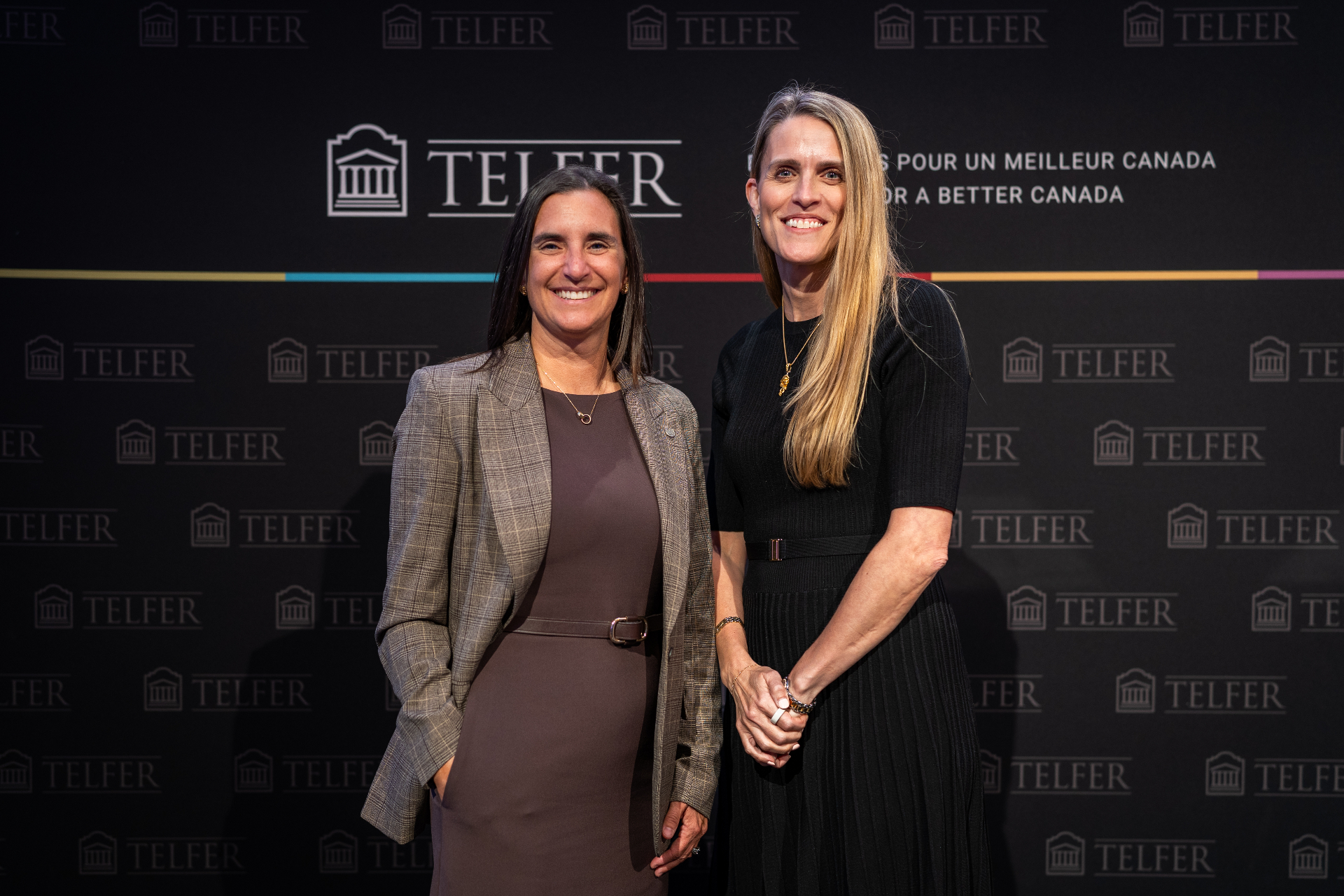
Reham SannoufiTurning an idea into a business case
When Reham joined the Telfer Executive MBA program, she understood the business they wanted to develop and the patient experience they wanted to create. The concept and vision were already developed; however she wanted to challenge their assumptions rigorously, evaluate the business opportunity, and develop the strategic and financial foundation required to bring it to market. "The idea was much more developed in my mind as a concept, but I wasn’t sure how to develop it into a real business," she recalls.
At the end of her first year in the program, Reham had to complete a business development project. She focused her project on developing a business plan for La Vie. “From an academic standpoint, I had to research the market and understand the competitive environment. I had to think about the patients, and I needed to examine the financial model. This was one of the most challenging aspects of the project because I was trying to create a system that was built on a completely different financial model. I did this with the help of a professor who was my project supervisor.”
The value of a structured approach
Reham says the project was one of the best things that she has done for La Vie because it gave her the foundation to explore the idea and to challenge it. “When you build something in an academic environment, you're forced to answer questions like, what are the risks? Where is the evidence? How much do you need to sustain this business? And how can you scale it? The project gave me structure. It really made me focus and understand exactly what I needed to do and what I needed to be aware of before jumping into making this company a reality.”
Seeing the opportunity through multiple lenses
Reham says a valuable outcome of the program was learning how to look at a business holistically. The coursework in strategy, finance, marketing, operations, and leadership, helped her evaluate her concept from multiple angles. Instead of focusing solely on the clinical benefits of preventive medicine, she developed a comprehensive understanding of what was required to build and operate a successful healthcare organization.
She also credits her classmates for their part in the development of La Vie. "As healthcare professionals, that's the lens through which my husband and I look at everything," she says. "My classmates were from completely different backgrounds and industries, and their perspectives were different from ours. This proved to be invaluable because they asked questions that we hadn’t thought of and they challenged some of our assumptions. This didn’t deter me from continuing to develop the idea, it helped me think about the business, the system and the processes from a patient’s perspective. After all, my classmates were a sample market for the company, and their insights helped me strengthen the business model."
Building credibility with investors
The Business Development Project gave La Vie another critical benefit: credibility. When Reham was preparing to present her final business plan for evaluation, she and her husband were simultaneously working on external financing to launch the company. The comprehensive business plan that Reham developed proved to be a credible tool during discussions with financial institutions. The rigorous research, financial analysis, and strategic planning done through the project helped them demonstrate to the bank that La Vie was more than an interesting idea. It was a carefully considered business opportunity supported by evidence and planning. Although the preventive healthcare model was unconventional for the Ottawa market at the time, the bank supported the venture and provided financing.
From classroom to reality
With a validated business plan and financing, Reham and her husband felt ready to launch La Vie (in 2007). There were several challenges in the early years. The company was introducing a healthcare model that was unfamiliar to patients and healthcare professionals. It took time to educate prospective clients, recruit practitioners who would embrace the philosophy of preventive care and develop entirely new processes to support the patient experience. "Although the business plan was a great foundation for us, the reality of building the company often differed. But this taught me that strategy cannot be static," says Reham. "You need to be willing to change as you go."
Lasting impact
Looking back, Reham credits the Telfer Executive MBA with providing her with far more than business knowledge. "The EMBA provided me with the discipline and confidence in myself to go for it.” A testament to the value of the business development project is what La Vie is today. The company employs roughly 130 people, services clients who want proactive and personalized healthcare, and it is expanding its services to include advanced diagnostics, genetic testing, longevity programs, and international medical partnerships.
It started as an idea, then an EMBA project and a business plan that is now a thriving healthcare organization. Since launching in 2007, La Vie has evolved from its original Ottawa location into a multi-location healthcare organization, expanding within Ottawa and into the Greater Toronto area through their Oakville clinic. Their vision continues to evolve as they expand their healthcare ecosystem with integrated technology, advanced diagnostics, personalized preventive programs, and international medical collaborations. Reham’s pride in the company is not only about its growth but more so about its purpose. "One of the most valuable lessons I took away from the EMBA was that building a successful business is not a one-time exercise. It requires continuously questioning assumptions, adapting to change, and identifying new opportunities.”
Reham says the EMBA was not only instrumental in launching La Vie, but that the principles she learned continue to influence how she leads, grows, and evolves the organization today. She encourages entrepreneurs to consider Telfer’s Executive MBA if they are thinking of launching their own company and gives this advice: “Use the program to challenge your idea, not simply to confirm it. If, after rigorous research, testing and honest feedback, you still believe in the opportunity, don't let it remain a final presentation. Go and execute it."
About the author — Jennifer Hyland
Jennifer’s role is to establish and to maintain the Executive MBA Program’s relationship with its alumni by building networking opportunities, supporting employment search, promoting alumni participation, managing the alumni database, maintaining communications with alumni, and assisting in planning and implementing alumni activities. Her other duties include working with the director on special projects, managing Convocation, and overseeing the Telfer Executive MBA Referral Program. A graduate of the University of Ottawa, Jennifer holds a Bachelor of Arts with Honours in English and a minor in Theatre Arts as well as a Bachelor of Education.