
To celebrate 30 years of Black History Month in Canada, Stéphane Brutus, Dean of the Telfer School of Management, shares his thoughts on why it matters.
February is an opportunity to highlight Black excellence and the contributions of Black students, faculty, staff, alumni, and donors to the success of our institution. In your words, what does Black History Month mean to the Telfer community?
Black History Month gives me a chance to step back and marvel at what we've built at Telfer—and honestly it inspires me. As someone who's toured business schools across Canada, I can confidently say we've created something special here.
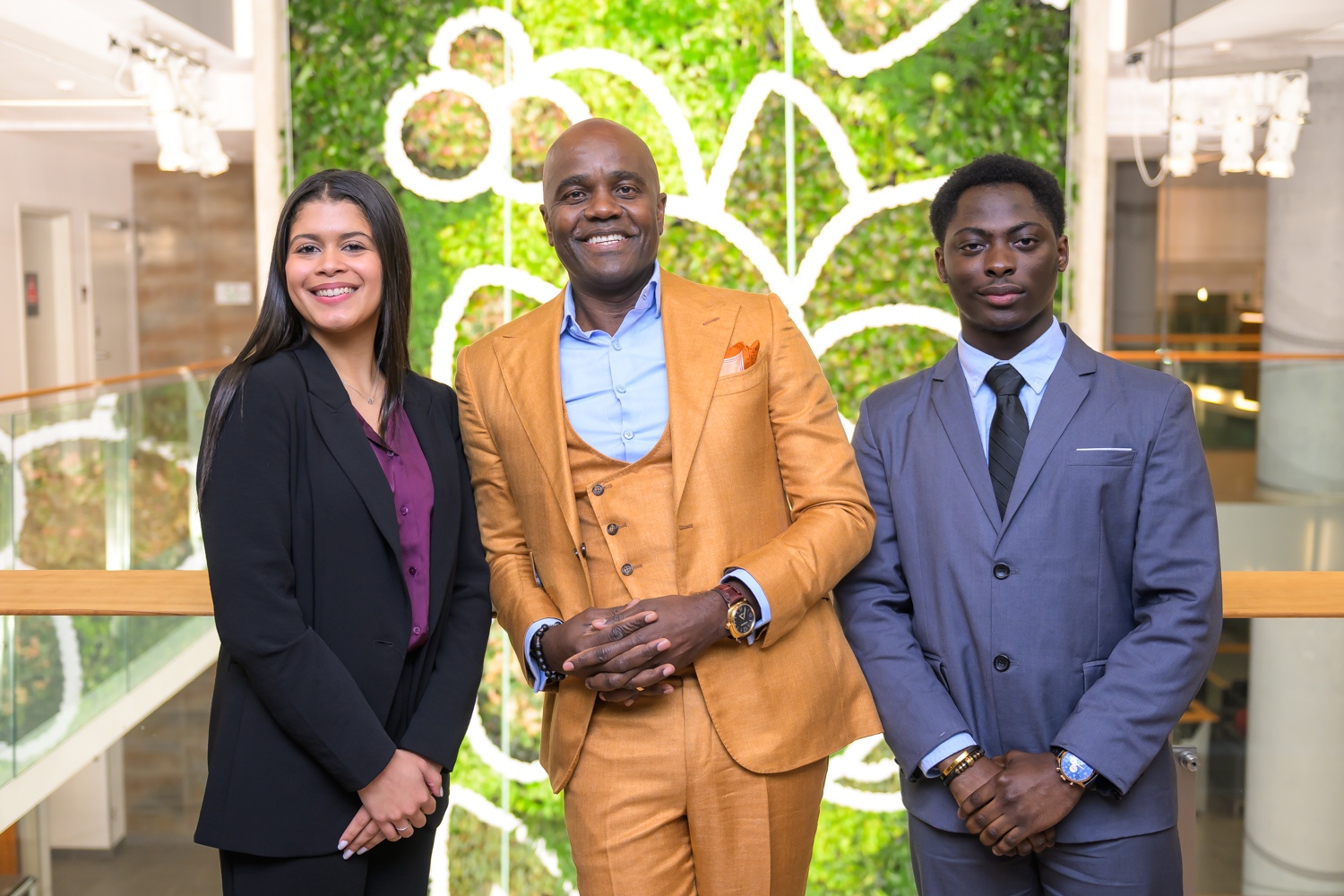
I am proud that half of Telfer’s leadership team is Black. Philippe, our Chief Administrative Officer and all-around superstar, hails from Burkina Faso. Greg Richards, our Vice-Dean of Graduate Professional Programs, brings the wisdom of the island of St. Vincent and the Grenadines to everything he touches. And my own father? He made the journey to Canada from Haiti and has helped shape the values I bring to this role.
This isn't diversity for diversity's sake. This is what happens when you create space for excellence to flourish. Our student body reflects this too. Walk through our hallways and you'll hear conversations in multiple languages, encounter perspectives from every corner of the globe, and feel the vibrant energy that emerges when brilliant minds from different backgrounds challenge each other.
Black History Month reminds us that this rainbow of talent isn't just nice to have—it's our competitive advantage. When our students graduate and step into boardrooms around the world, they're not just carrying business degrees; they're carrying the lived experience of studying and working alongside people who see the world differently than they do. In a global economy, that's not just valuable. It's essential.
So yes, February is a time to celebrate Black excellence at Telfer. But, more than that, it's a time to recognize that the Telfer community at large is living proof that Canada's promise of opportunity for all isn't just a nice idea on a postcard—it's a business strategy that works.
Telfer has benefited from donor funding to support awards for students from Black, Indigenous or racialized communities. How do these awards and other initiatives help address the systemic barriers that persist in post-secondary education?
Let me be blunt: talent is equally distributed, but opportunity isn't. The Wes Hall Admission Scholarship, KPMG Scholarship for Accounting, Telfer Student Association EDI Fund, and Marlene King Patrick Scholarship aren't just feel-good initiatives—they're strategic investments in untapped potential.
Here's how the math works: a brilliant student from a marginalized community faces not just tuition costs but often the additional burden of being the first in their family to navigate higher education, the pressure of financial stress affecting their studies, and sometimes the subtle but real challenge of walking into spaces where they don't see themselves reflected.
Our targeted scholarships break these cycles. When we remove the financial barrier, students can focus on what they do best—excel academically. When we create cohorts of diverse scholars, we build natural mentorship networks that extend far beyond graduation. And when prospective students see successful graduates who look like them, the message is clear: you belong here too.
“When prospective students see successful graduates who look like them, the message is clear: you belong here too.”
— Stéphane Brutus, Dean, Telfer School of Management
But here's the part that excites me most: every study, every piece of research, every real-world example shows that diverse teams outperform homogeneous ones. So when we invest in removing barriers for underrepresented students, we're not just doing the right thing, we're doing the smart thing. We're ensuring that our classrooms, and eventually Canadian businesses, have access to the full spectrum of talent this country has to offer.
What role do you believe business schools like Telfer can play in expanding access, representation, and leadership opportunities for Black communities in Canada and around the world?
Business schools sit at a fascinating intersection—we're part university, part talent pipeline, part community connector. That gives us a unique responsibility and, frankly, an exciting opportunity to shape what leadership looks like in this country.
If you think about it, every CEO, every entrepreneur, and every policy maker who shapes Canada's economic future either went through a business school or works alongside people who did. If we can ensure that our graduates represent the full diversity of Canadian talent, we're not just changing individual lives, we're changing the complexion of Canadian leadership, literally and figuratively.
The real magic happens in our networks. Our alumni, partners, and community connections create pathways that extend far beyond campus. When a Telfer graduate mentors a current student, when one of our corporate partners creates an internship specifically to support underrepresented talent, when our alumni open doors that might otherwise stay closed—that's when individual opportunity becomes systemic change.
We're not just educating future business leaders; we're modeling what inclusive leadership looks like. And if we do this right, in twenty years, the question won't be whether Canadian businesses are diverse enough—it will be how Telfer managed to create such a competitive advantage by getting there first.
.png)