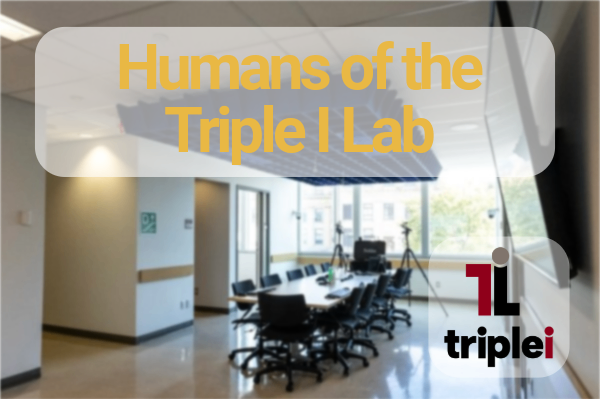
The Humans of the Triple I Lab series shines the spotlight on graduate and undergraduate students who are conducting research in the Triple I Lab. We are pleased to introduce you Shay, an undergraduate student in computer science, and Safi, an undergraduate student in Healthcare Analytics. Shay and Safi are both co-op students who are helping Nina, Manal, Natasha, and Julia conduct research on multiple topics such as stress and predictability, negotiations, emotions, and finances.
How did you become a research assistant/co-op student at the Triple I Lab?
Shay: I applied for the research assistant position through the University of Ottawa’s co-op portal. It was my first time applying for a co-op position, and I was very happy when I received an interview and then an offer. It took me by surprise, but I could not have been happier to accept.
Safi: I applied to the research analyst/assistant role on the portal co-op for my winter work-term, after a short interview, I was offered the role. I was unfamiliar with the Triple I lab prior to this interview, and I was pleasantly surprised by the work and opportunities it offered.
What is the research project you are helping with?
Shay: I’m helping with a few different research projects. Nina uses BIOPAC to measure stress responses while participants complete a work-related task, as well as to examine how predictability can affect stress levels. Another project involves analyzing facial expressions and eye-tracking using Tobii while participants watch a video about financial topics. Finally, Manal is working on a project that involves negotiating between a borrower and a lender, as well as analyzing the personality trait of Machiavellianism.
Safi: I am helping with several research projects, some of which involve the usage of BIOPAC, Tobii, and FaceReader. Each research has a unique focus, the primary themes have been assessing emotional and physical reactions to various situations and specific visual content.

What are your main tasks?
Shay: My main tasks are to help the researchers with the set-up. This includes bringing participants in, informing them about the experiment, and setting up any devices or software such as BIOPAC, Tobii, or Observer. Other tasks include organizing and cleaning data which involves trimming videos using Adobe Premier Pro, analyzing them with Face Reader, and using excel to get some metrics. Lastly, I also create guides on how to use some of the technologies at the lab.

Safi: Data entry, analysis and visualisation. Setting up participants and supporting overall research preparation. I have also had the opportunity to create user guides for BIOPAC, FaceReader, and Tobii, to ensure a consistent workflow and process for future researchers and co-op students. Furthermore, I have been working on research related to physical and psychological signs of stress during interviews for future workshops and events potentially hosted within the lab.
What do you like most about being a research assistant/co-op student?
Shay: What I like most about being a research assistant/co-op student is the opportunity to learn new skills. As someone who had never done research or worked in a research lab before, it has been fascinating to learn how researchers design and run experiments, as well as to become familiar with the different types of technologies available in the lab.
Safi: There is a great variety in the work I do, and all days of the week have a unique focus. The research I am involved in is also interesting and provides a learning opportunity everyday. The ability to utilize the available technology to learn and experiment also makes my role more enjoyable.
If you had to give one key piece of advice to undergraduate students interested in research and the types of technology we have in the lab, what would you say?
Shay: My advice would be to dive in! Don’t be afraid to explore and test the different technologies in the lab. It can feel a little overwhelming at first, but little by little, it becomes easier and more enjoyable. I also found it helpful to watch tutorials available for the technologies - for example, Tobii Academy offers many resources on how to use Tobii’s features.
Safi: I would say to take your time in learning the technologies used within the lab, and to test them as much as possible before getting involved in any research. Testing and experimenting is the best way to learn, and no matter how complicated the process seems, its much easier than you may think. Getting involved in future workshops hosted by the lab will allow for such opportunities, and volunteer roles with different researchers are almost always available.
What’s your favorite spot or piece of equipment in the Triple I Lab, and why?
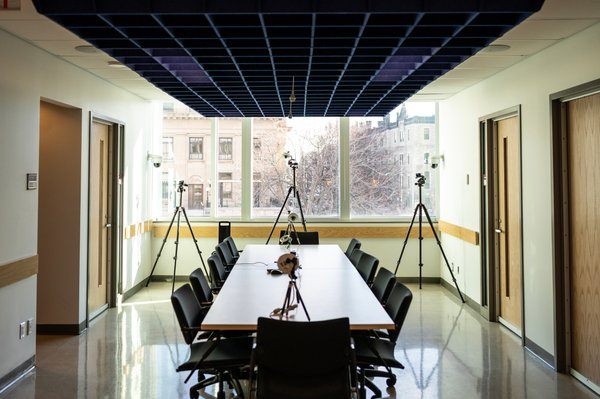
Shay: My favorite place in the Triple I Lab is the boardroom. I enjoy sitting around the table while we work on our individual tasks or talking about interesting topics. It’s the perfect blend of productivity and connection - a space where work is enjoyable, and spending time together feels meaningful.
Safi: My favourite part of the lab in general is the main computer room, or the “control room” which contains the main computer used for most software’s we have access to. All the software set-up and the overall process begins from that room, making it a great place to spend my time experimenting with different tools.