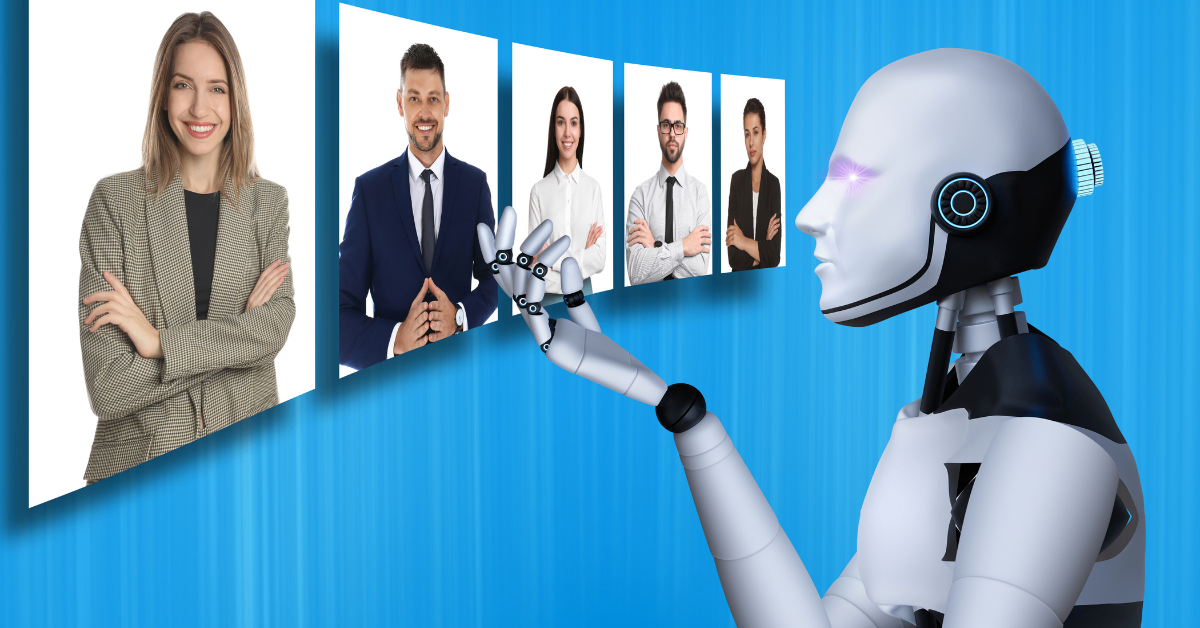
When AI meets the real world
Artificial intelligence is rapidly changing how organizations make decisions. From forecasting customer behavior to identifying risks and improving operational efficiency, organizations have more access to more data and predictive insights than ever before. But accurate predictions do not automatically change how decisions are made. Predictions create value only when they change what the people making those decisions know and do.
In his FT50 and UTD24 article, When Data Scientists Meet Domain Experts: Artificial Intelligence, Epistemic Conflict, and Knowledge Transformation, published in Organization Science (one of the Most Read articles), Mayur Joshi, Assistant Professor at the University of Ottawa Telfer School of Management, and his coauthors Ning Su and Mark Zbaracki, explore what happens when data scientists and domain experts attempt to work together to build and use predictive AI models to transform knowledge in the banking domain. Their findings suggest that the challenge is often not the technology itself, but rather helping data scientists and domain experts figure out a way to work together in making decisions with AI without compromising the standards for producing and evaluating knowledge on either side.
The challenge isn't the data
Organizations often assume that better data will lead to better decisions. With the help of AI, companies can identify patterns, generate predictions, and uncover insights that may not be visible through traditional analysis alone.
The challenge begins when those insights are placed in the hands of the people expected to use them.
Data scientists and domain experts often approach problems from different perspectives. Both groups rely on data, but approach it differently. Domain experts use data to monitor business performance, identify problems, and develop solutions within established procedures. Data scientists, in contrast, explore data to discover previously unknown relationships and develop predictive models that may reveal new problems and opportunities.

As a result, the two groups may not always agree on what problems are worth pursuing or how to evaluate proposed solutions powered by AI models. These differences become most apparent when AI-generated insights challenge existing assumptions or established ways of working. What one group views as a valuable prediction, another may view with skepticism.
This raises an important question: What happens when data scientists and domain experts disagree about how to produce and evaluate knowledge with AI?
When expertise collides
To answer this question, Joshi and his co-authors spent 18 months studying how data scientists and domain experts worked together in three large Indian banks. What they found was that the challenge wasn't necessarily getting people to use AI. Rather, it was making AI-generated discoveries relevant to how business experts identify and solve problems.
What looks like a clear answer to data scientists was not always viewed the same way by domain experts, and vice versa.
Over time, the researchers found that successful collaboration did not come from one group convincing the other to change its way of thinking. Rather, progress occurred when data scientists learned how to present AI-generated insights in ways that connected to the tools, processes, and decision-making practices that domain experts already leveraged in their ongoing work.
The findings suggest that successful AI integration depends not only on generating accurate predictions, but also on embedding AI-generated insights into the tools and practices domain experts already use, allowing them to discover new problems and opportunities for themselves.
What surprised Joshi the most was that the conflict wasn't about who should do whose job. The data scientists didn't want the bankers' jobs. The two groups disagreed about what was worth knowing, how to produce knowledge with AI, and how to evaluate it. And the dashboards that data scientists initially resented as routine reporting requests eventually became a way to introduce their discoveries into the bankers' work. What looked like resistance to AI in individual projects revealed a different story when we followed the work across projects: data scientists were learning how to bridge two different approaches to producing knowledge.
Why good predictions are not enough
The study found that while data scientists generated AI-driven insights, domain experts played a critical role in determining whether those insights were accepted and used. AI-generated insights gained traction when they were introduced through the tools, processes, and decision-making practices that domain experts already leveraged.
For organizations, even accurate AI models may fail to create value if their insights do not become part of ongoing business work. Ultimately, successful AI integration depends as much on people and relationships as it does on technology.
Making AI work for people
Organizations are investing heavily in AI to support decision-making, improve efficiency, and uncover new opportunities. Yet Joshi's findings suggest that successful AI integration depends on more than building accurate models.
Data scientists and domain experts bring different forms of expertise to the table. While one group may rely on predictive models and data-driven insights, the other often draws on years of experience, professional judgement, and contextual knowledge. Organizations should recognize these different approaches to knowledge and create conditions for both to contribute, without trying to prioritize one at the cost of the other.
This means giving data scientists opportunities to understand how business experts identify problems and set priorities, and to introduce discoveries through the practices those experts already use. Rather than requiring both groups to develop a shared approach to producing knowledge, organizations can help them build bridges between their different ways of working.
The lesson is not that organizations need to choose between domain expertise and data-driven expertise in building AI models. Rather, the greatest value often emerges when the two complement one another.
Ultimately, the study suggests that successful AI integration is about more than technology. It is about creating conditions where people with different forms of expertise can work together to make better decisions.
As Joshi explains, you should not judge AI solely one project at a time, and should not expect the model alone to change how your organization works. The data scientists Joshi and colleagues studied learned by working across many projects, and their discoveries became meaningful to managers when introduced through the dashboards, procedures, and conversations where managers already identified problems and set priorities. Leaders who keep data scientists close to that work, and resist favoring one group’s way of thinking over the other, give AI a real chance to change what the organization knows.
Building better AI systems is important, but helping data scientists and domain experts bring new discoveries into existing business practices by creating bridges is just as critical to applying its full value.