Written by Zain Ibrahim
When one in five Canadians struggle with their mental health every year, leadership in this space isn’t just admirable—it’s urgent. Few people understand this urgency better than Sarah Downey (MHA ‘92).
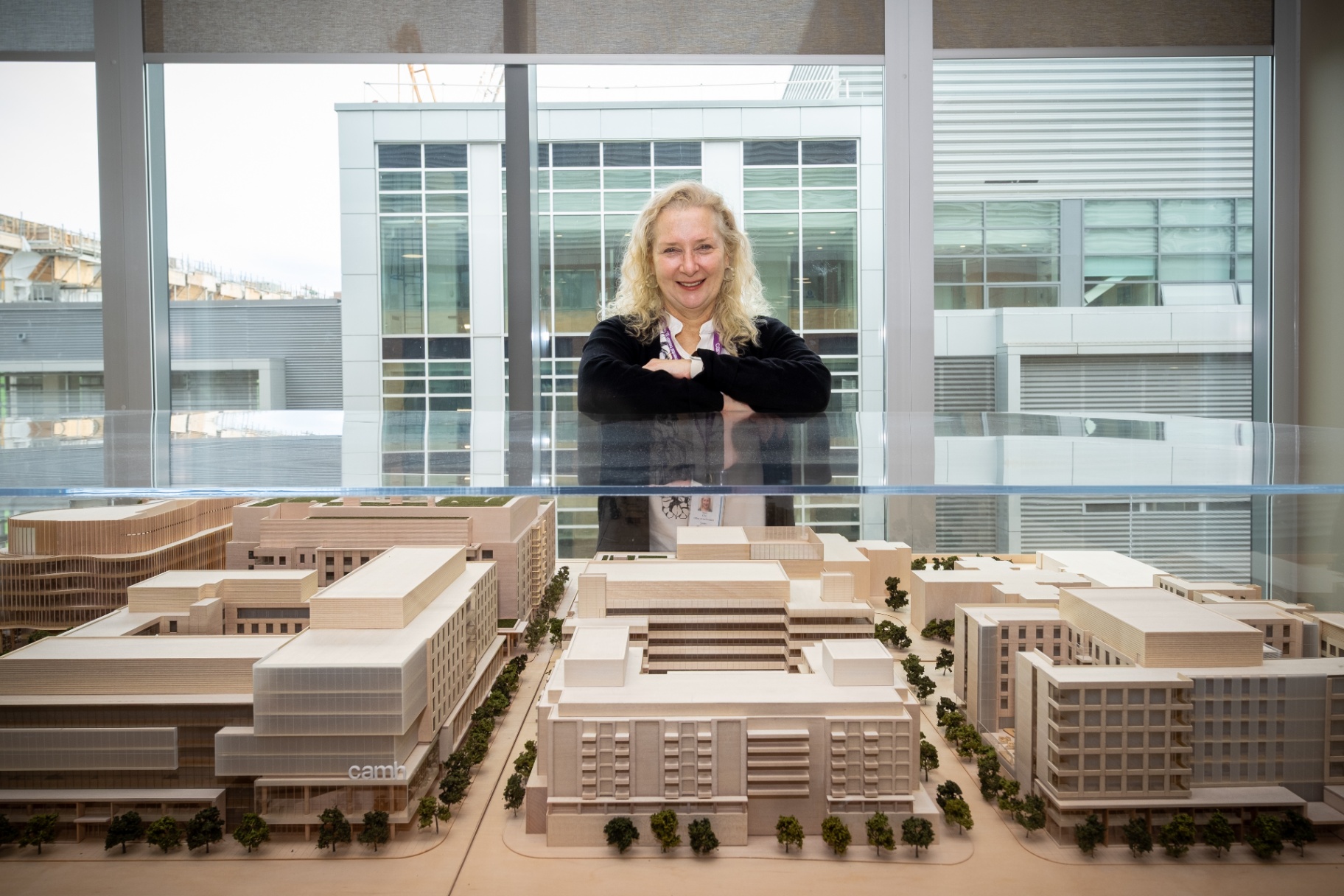
As president and CEO of the Centre for Addiction and Mental Health (CAMH), Sarah leads an organization that sits at the intersection of clinical care, research, and advocacy. Her career spans more than 25 years of building, transforming, and championing healthcare institutions across the country, including The Ottawa Hospital, the University Health Network, and Michael Garron Hospital. Her “why” has always been the same—that all people deserve dignified, comprehensive care.
Since 2025, Sarah has carried her passion for healthcare into her role as a volunteer member of Telfer’s Strategic Leadership Cabinet, where she supports initiatives that strengthen the school’s programming and reach. I sat down with Sarah to talk about the principles that guide her leadership as well as the optimism that drives her forward.
Zain: For business students preparing to enter an increasingly complex and fast-changing world, what leadership skills or mindsets do you think are most important to develop now?
Sarah: I think the pace of change will continue for a long time to come, so I'd say there are three important things to keep in mind. The first is that you have to keep learning, and you have to find environments where you can keep learning. Some will be opportunities formally offered to you, and some may be things you choose to pursue on your own. But you have to adopt a continuous learning mindset, otherwise you won't keep pace with all the changes.
The second thing is to be curious—not just about the topics that directly apply to your job, but also things that are peripheral and linked to it. As I often say to colleagues and people I encounter through my work, I didn't just hire the professional: the accountant, or the engineer, or the doctor, or the nurse. I hired the “all” of people: the parent, the caregiver, the athlete, the community volunteer, the hobbyist. In mental health care, I need the “all” of people to help make us a better organization. So be curious and develop the “all” of you to make you an even better employee and a more comprehensive person overall.
“As I often say to colleagues and people I encounter through my work, I didn't just hire the professional: the accountant, or the engineer, or the doctor, or the nurse. I hired the “all” of people: the parent, the caregiver, the athlete, the community volunteer, the hobbyist.”
—Sarah Downey, president and CEO of the Centre for Addiction and Mental Health
The last thing is to work in a field where you feel a passion for the cause. When I do job interviews, the first question I ask is “Why do you care about mental health?” I think it's important to feel that passion and commitment to your chosen field, because you put so much of your life and energy into where you work that it's extra special when you feel a connection to a cause. You don't always fall in love [with your work] at the beginning, but it can grow over time.
Zain: Telfer’s vision focuses on building a greener, healthier, happier, wealthier, and more prosperous Canada for all. Which of these pillars resonates most strongly with you, and how has it influenced your leadership or professional journey?

Sarah: I recognize they're all interconnected and important, but I'll focus on two: greener and healthier. Within the greener pillar, climate change has an impact on mental health. People who live with serious mental illnesses like bipolar disorder or schizophrenia suffer more from climate crises—they face higher rates of hospitalization, harm, and death, and they are more likely to be underhoused. I also think about climate anxiety. My organization has been surveying youth across Ontario for nearly 50 years, and our 2023 survey showed that one in six students are very or extremely worried about climate change. And about 45% of students report feeling depressed about the future because of climate change.
As a leader, I think about the impact of not being green on the people we serve, so I think focusing on the greener pillar is a great strategy for Telfer. I support the school leading in this space—for example, developing future leaders who think about people with serious mental illness when addressing environmental challenges.
The second pillar that resonates with me is healthier. When we think of health, we often think about dieting, exercising, and reducing alcohol consumption. But as our slogan says, mental health is health. So, I would love to see a comprehensive vision of health that considers the impacts of stress, trauma, genetics, and lived experiences, and ensures that mental health is as important as physical health.
“My organization, in addition to being a hospital, works to destigmatize mental illness and addictions through various public awareness campaigns. It motivates us to say, ‘Please ask for help—it's okay to not be okay’.”
—Sarah Downey, president and CEO of the Centre for Addiction and Mental Health
Zain: Outside of your professional life, what helps you recharge and maintain perspective as a leader?
Sarah: It starts with something I said earlier, which is that I hire the “all” of you. I think ensuring that there's an “all” of you that shows up to work and comes home at the end of the day is important, and I don't always see those as dichotomies. I just think they're part of the comprehensive person that each of us is.
What fills my cup is my connection to community, friends, and family. I have kids who are teenagers, and while they're getting ready to leave the nest now, they were in grades 1 and 3 the first time I became a CEO. I also have my mom who lives with dementia. Staying connected with them and my friends gives me energy and hope, and while I'm not perfect every day in that, I try hard to be balanced on a weekly or monthly basis.
Volunteerism is also really important to me. My kids used to ask, “Why would you volunteer?” Because it helps fill my cup. I care about primary care in my community. I care about other healthcare agencies that need help going forward. I care about seniors who live in my neighbourhood. My children have now grown up understanding that sometimes you volunteer and do things that aren’t for money–it's an important lesson.
Third, I love mentoring people and being mentored. I deeply appreciate the two-way conversations and the opportunity to stop, reflect, and answer really thoughtful questions. It allows me to do something beyond my day-to-day job to advance my field in a different way.

Zain: Looking ahead, what gives you the most optimism about the future of business in Canada?
Sarah: I feel motivated by the time and attention that major businesses and the public sector are putting into the mental health of their employees. Mental illnesses are incredibly common, but historically they have been hard to recognize and support in workplaces because people tend to be ashamed of illness.
I've seen great change. Many incredible Canadian businesses are investing substantially in their health programs and becoming leaders in psychological safety. They are being recognized for their incredible approaches to a full spectrum of employee health–physical, mental, and financial health. Some benefit plans have expanded to cover therapists, employee assistance programs, and child support.
I’m also excited by businesses doing comprehensive surveys to understand the mental and physical health of their employees. Many organizations have been far more explicit about stress and engaging people in conversations about stress. The idea is: if I can keep you well and engaged, you’ll want to stay longer.

Zain Ibrahim is a third-year marketing student at the Telfer School of Management. As part of her co-op program, she serves as communications and special projects assistant with the Engagement and Development teams at Telfer.